
issue 48 | 22 may 2022
The integrity flash
Analysis of Developments in the Space Domain
in this issue
10 May 2022: On Tuesday, the US and European Union said Russia was responsible for a cyberattack in Feb that crippled a satellite network in Ukraine and neighboring countries, disrupting communications and a wind farm used to generate electricity.
– The 24 Feb attack unleashed wiper malware that destroyed thousands of satellite modems used by Viasat’s customers.
– Security firm SentinelOne said an analysis of the wiper malware used in the attack shared multiple technical similarities to VPNFilter, a piece of malware discovered on more than 500,000 home and small office modems in 2018.
– Multiple US government agencies attributed VPNFilter to Russian state threat actors.
– AcidRain, the name of the wiper analyzed by SentinelOne, is a previously unknown piece of malware.
– AcidRain, using an executable file for the MIPS hardware in Viasat modems, is the seventh distinct piece of wiper malware associated with Russia’s ongoing invasion of Ukraine.
– Wipers destroy data on hard drives in a way that can’t be reversed. In most cases, they render devices or entire networks completely unusable.
– “After those modems were knocked offline it wasn’t like you unplug them and plug them back in and reboot and they come back…They were down and down hard; they had to go back to the factory to be swapped out” according to NSA’s Director of Cybersecurity, Rob Joyce.
– One of the first signs of the hack occurred when more than 5,800 wind turbines belonging to the German energy company Enercon were knocked offline. The outage didn’t stop the turbines from spinning, but it prevented engineers from remotely resetting them.
– Ahead of Russia’s invasion of Ukraine, Western intelligence agencies warned of potential cyberattacks which could spread elsewhere and cause “spillover” damage on global computer networks.
– There was a flurry of cyber operations against Ukrainian targets in the weeks ahead of Russia’s invasion on Feb. 24.

– In January, researchers discovered destructive malware called WhisperGate circulating in Ukraine. WhisperGate closely mirrored a 2017 Russian cyberattack against Ukraine, known as NotPetya, that similarly destroyed data on thousands of local computer systems.
– After WhisperGate’s discovery, a spate of distributed denial of service (DDoS) attacks briefly knocked Ukrainian banking and government websites offline. The DDoS flood was later attributed to Russia by Britain and the United States.
– Another potential target for Russian cyber operations is the SpaceX Starlink network which is now in use throughout Ukraine. According to Elon Musk, “Starlink has resisted Russian cyberwar jamming & hacking attempts so far, but they’re ramping up their efforts”
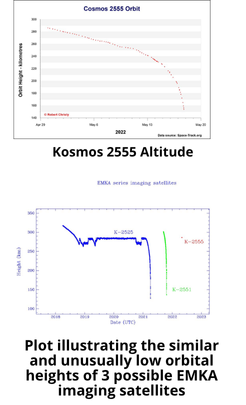
18 May 2022: The satellite Russia launched on 29 Apr 2022 using the Angara 1.2 rocket re-entered the Earth’s atmosphere and was destroyed. Kosmos 2555 was believed to have been a small imagery satellite similar to Kosmos 2525 and Kosmos 2551. Kosmos 2525 operated for 3 years while Kosmos 2551 also re-entered the Earth’s atmosphere after 1 month.
– Originally launched into a 279 x 294 km x 96.5° orbit, the orbit of Kosmos-2555 decayed to a 227.7-km perigee and a 247.9-km apogee by 14 May. Over the next 3 days the satellite continued to lose altitude.
– On 17 May Kosmos 2555’s altitude had decreased to 113.6 x 131.9kms. Russian space analysts stated Kosmos 2555 apparently decayed on 17 May and was lost.
– There were no clear attempts to raise Kosmos 2555, potentially an indication that the satellite was never activated.
– There is some speculation that Kosmos 2555 was just a mock-up and not an actual operational satellite.
– Short of Russia releasing additional information (unlikely) it will be difficult to discern between a mock-up and a failed operational satellite, especially when a new launch vehicle is introduced.
– Assuming Kosmos 2555 was the third EMKA (experimental) imagery satellite this makes the EMKA success rate 33%. Kosmos 2551 also did not make orbital adjustments and appears to have failed, reentering a month after launch.
– Only the original EMKA satellite, Kosmos-2525 appears to have been a success, having stayed on orbit for over 2 years.
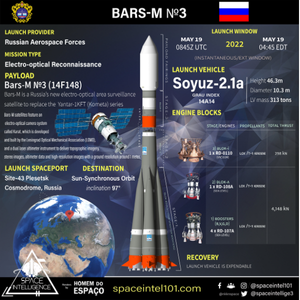
19 May 2022: Russia launched a Soyuz 1.2a from the Plesetsk Cosmodrome and placed the BARS-M topographic surveillance satellite payload into a Sun-synchronous orbit. This was the 5th military launch by Russia in the past few months, which is much higher than normal. Launch Video.
– The Bars-M series is the third generation of Russia’s topographic surveillance satellites used to provide imagery of the Earth’s surface mainly for military use.
– The satellite has been given the moniker Kosmos-2556 and is in a 337×557 km 97.70° orbit.
– The Bars-M satellites reportedly mass around 4000 kg and have a planned operational life of five years. This is the third Bars-M satellite in total to be launched, following the first launch on February 27, 2015, and the second on March 24, 2016, with both being launched on a Soyuz 2.1a rocket from the Plesetsk Cosmodrome.
– Indications are that the first two satellites are no longer operational.
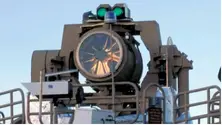
18 May 2022: Russia on Wednesday said it was using a new generation of powerful lasers in Ukraine to burn up drones. The new weapons are believed to be derived from the Peresvet which Russia claims has already being widely deployed and it could blind satellites up to 1,500 km above Earth.
– Yury Borisov, the deputy prime minister in charge of military development, said there were already more powerful systems than Peresvet that could burn up drones and other equipment. Borisov cited a test which he said had burned up a drone 5km away within five seconds.
– “If Peresvet blinds, then the new generation of laser weapons lead to the physical destruction of the target – thermal destruction, they burn up,” he told Russian state television.
– Borisov said: “Yes. The first prototypes are already being used there (in Ukraine).” He said the weapon was called “Zadira”.
– Almost nothing is publicly known about Zadira but in 2017 Russian media said state nuclear corporation Rosatom helped develop it as part of a programme to create weapons-based new physical principles.
– A senior U.S. defense official said Wednesday the U.S. has seen nothing to corroborate Russia’s claims that it used laser weapons in Ukraine.
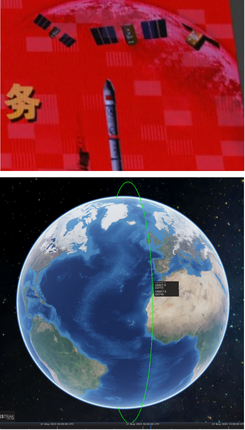
21 May 2022: China launched three payloads onboard a Chang Zheng 2C (CZ-2C) rocket and confirmed the success of the launch an hour later. For this flight, the additional Yuanzheng-1S third stage was used. The launch was conducted from the Jiuquan Satellite Launch Center. Launch Video.
– China did not release any details about the payloads, and only minimal information is out regarding their purpose. All are in an 870 x 896 km x 86.0° orbit.
– Two of the satellites are developed by Chang Guang Satellite Technology Co. Ltd (CGSTL). CGSTL also operates the Jilin series of remote sensing satellites.
– CGSTL confirmed the satellites launched today are for LEO communication as the company might expand its business envelope.
– The third payload was also referred to as a technology verification test and has the designator Digui Tongxing Shiyan Weixing, LEO Comm Test Sat. It was built by the China Association for Science and Technology (CAST). No further details were given for this payload.
– The optional Yuanzheng-1S upper stage was used for the launch and places payloads in higher energy orbits. It was last used on the Yaogan 32-02 A/B mission in Nov 2021.
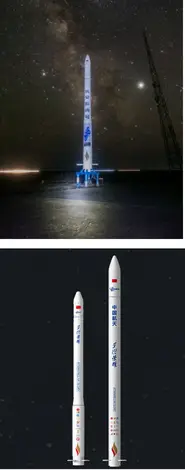
13 May 2022: An orbital launch attempt by Chinese startup iSpace suffered failure early Friday, following on from two failures last year. The fourth Hyperbola-1, a four-stage solid rocket, lifted off from the Jiuquan Satellite Launch Center in the Gobi Desert. While official reports do not mention a reason for the failure, it is understood that shortly after stage separation, the second stage failed to ignite and there may have been a gas leak in attitude & orbit control systems. There has been no confirmation from i-Space. See Video.
– The Jilin-1 Mofang-01A(R) was onboard the rocket as a replacement satellite for the Jilin Mofang-01A, launched on the previous Hyperbola-1 and failed to reach its intended orbit.
– Beijing-based iSpace became the first Chinese company from outside of the state-owned, traditional space sector to successfully launch a satellite into orbit in July 2019. The firm suffered two subsequent failures in February and August of last year
– The only successful Hyperbola-1 (Y1) was smaller than the failed three (Y2, Y5 & Y4).
– The Hyperbola-1 is a four-stage solid propellant launch vehicle that stands 24 meters tall, 1.4 meters in diameter, and has a launch mass of 42,000 kg.
– Each of the four solid stages contains four liquid fuel attitude control engines. The vehicle can lift 300 kg into low Earth orbit.
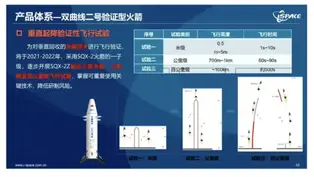
– iSpace is also developing the much more complex Hyperbola-2, a larger, methane-liquid oxygen launcher with a reusable first stage.
– Vertical takeoff, vertical landing (VTVL) tests had been planned for 2021 following progress with testing of the methalox engines and software, grid fins and landing leg deployment, but updates have been sparse in recent months.
– Hyperbola-1 is one of a wave of new Chinese light-lift solid launchers to boost the country’s overall space capabilities, but the record is patchy so far.
– While the China Aerospace Science and Technology
Corporation (CASC), the country’s main space contractor, successfully operates the Long March 11 from inland sites and a sea platform, Kuaizhou-1A and Kuaizhou-11 rockets developed by the China Aerospace Science and Industry Corporation (CASIC) and its affiliates remain grounded after failures in 2021 and 2020 respectively.
– China’s government has sought to foster commercial space ecosystems beyond the state sector dominated by CASC through incentives, policy support and a military-civil fusion technology transfer national strategy. The moves are seen as a response to the earlier rise of commercial space activities in the U.S. in the shape of SpaceX and others. The latest failure adds pressure onto upcoming launches to deliver success.
Summer Vacation? China's Shijian 20 Westward Bound
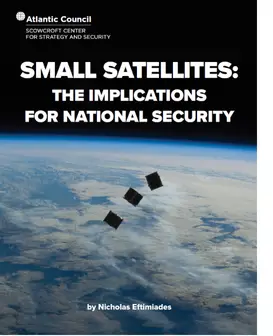
5 May 2022: The Scowcroft Center for Strategy and Security released its report on the potential impacts of commercial space, specifically those involving small satellites, on US national security. The report highlights that the US government’s lack of understanding of commercial markets, outdated institutional processes, and a defense bureaucracy unwilling or unable to adapt to the changing environment threatens the US ability to utilize commercial space capabilities and US space superiority as a whole.
– If the US is to maintain space superiority, it will need to make substantive cultural, doctrinal, and operational changes to its multidimensional relationship with the commercial space industry
– Commercial space activities increase the number of operational satellites by nearly a full order of magnitude, mainly through the development of small satellites.
– A new space ecosystem is coming into being, with profound implications for the world’s security and economic development. The speed at which commercial space companies are putting thousands—soon to be tens of thousands—of satellites into orbit presents unique challenges for US security in space, as well as for deployed armed forces.
– In order to adapt to increased congestion in certain orbits, competition for communications bandwidth, new types of space operations, increased transparency, and a changing threat paradigm…the US must make substantial changes in long-established defense acquisition processes.
Key Findings:
- United States will most likely lose space superiority to China within the next decade.
- The IC is increasingly investing in commercial small-satellite data, to increase collection capabilities and provide military support
- DoD does not generally take a “buy commercial first” approach to space services. Rather, there is an established culture that ignores legislated “commercial first” mandates, and that behavior has become increasingly detrimental to national security interests…this negative culture has eroded US space superiority, and will continue to do so as the world moves toward quickly developed and deployed, low-cost commercial space systems
- No commercial small-satellite service has proven itself viable without government support.
- DoD acquisition processes are designed to reduce risk and, as a result, are ill prepared for the high-speed commercial space environment
- US Department of Commerce (DoC) Office of Space Commerce (OSC) has made little progress over the last year in executing its responsibilities for Space Traffic Management.
10 May 2022: Colombia joined NASA’s quickly growing Artemis Accords program, becoming the 19th nation to sign on, after recent pacts with Bahrain, Singapore and Romania.
– Colombia has not yet disclosed its specific contributions to NASA’s moon-bound Artemis program.
– Marta Lucía Ramírez, the country’s vice president and foreign minister, said Colombia is looking forward to developing its space work rapidly.
-Signing with NASA “is a substantial stepping stone for my country as we continue to develop our knowledge, national capacity, and understanding of the importance of space for future generations of Colombians to come,” Ramírez said.
– The Artemis Accords outline peaceful and responsible exploration of the moon and beyond. NASA is planning to send astronauts back to the moon later in the decade under the Artemis program.
– NASA and the U.S. Department of State unveiled the Artemis Accords in 2020, with eight nations signing on at that point: Australia, Canada, Japan, Luxembourg, Italy, the United Kingdom, the United Arab Emirates and the United States. Since then, Bahrain, Brazil, Colombia, Israel, the Republic of Korea, Mexico, New Zealand, Poland, Romania, Singapore and Ukraine have also signed it.
– The first Artemis mission, called Artemis 1, may launch later this year pending treatment of several glitches during a “wet dress rehearsal” of the new Space Launch System megarocket to send an uncrewed Orion space capsule around the moon.
– NASA rolled back the rocket to shelter in late Apr to assess the issues at Kennedy Space Center’s Vehicle Assembly Building, near the launchpad.
– Following Artemis 1, a crewed lunar orbit mission called Artemis 2 is slated to launch no earlier than 2024, with Artemis 3 achieving the first crewed landing.

– The total output value of China’s satellite navigation and location services industry reached 469 billion yuan (about $69.6B) in 2021, up 16.3 percent from the previous year
– China remained the top source of international satellite navigation patent applications last year, with a total of 98,000 applications, said the white paper issued by the Global Navigation Satellite System and Location Based Service Association of China.
– Applications of the homegrown BeiDou Navigation Satellite
System have been widely introduced into business fields and daily life, said Sun Zhongliang, deputy head of the association, adding that mass consumption has become one of the major sectors for BeiDou applications.
– Sun highlighted bike-sharing services, saying the number of shared bicycles equipped with a BeiDou positioning chip has reached 5 million in over 450 cities across the country.




You must be logged in to post a comment.