
16 Jan 2026: As noted in the 7 December 2025 Flash, Cosmos 2589 (64467) began conducting maneuvers to circularize its orbit on 19 Nov 2025 when it began lowering its apogee and raising its perigee. This trend continues and as a result Cosmos 2589’s eccentricity has dropped from 0.364 to 0.231 (0.0 = perfect circle). To date, Cosmos 2589 apogee has decreased ~5,500km and its perigee has increased 5,340km. Russia continues conducting in-track maneuvers every 12hrs and is likely to continue to do so until Cosmos 2589’s orbit has circularized, at which time it will be in proximity with the Geostationary belt. From this orbit it will be able to patrol GEO and potentially conduct inspection missions. Cosmos 2589’s RPO partner, its subsatellite Cosmos 2590 (64527), has not maneuvered since early-December 2025. The two satellites now briefly cross paths twice per orbit (see graphic).
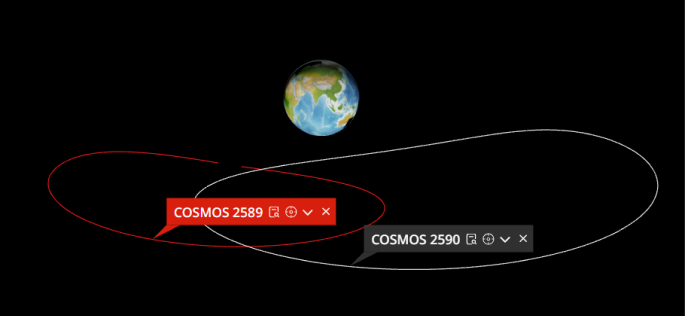
Cosmos 2589’s Orbit Continues to Circularize (get skinny in this view), while Cosmos 2589 remains consistent (spacemap42.com)
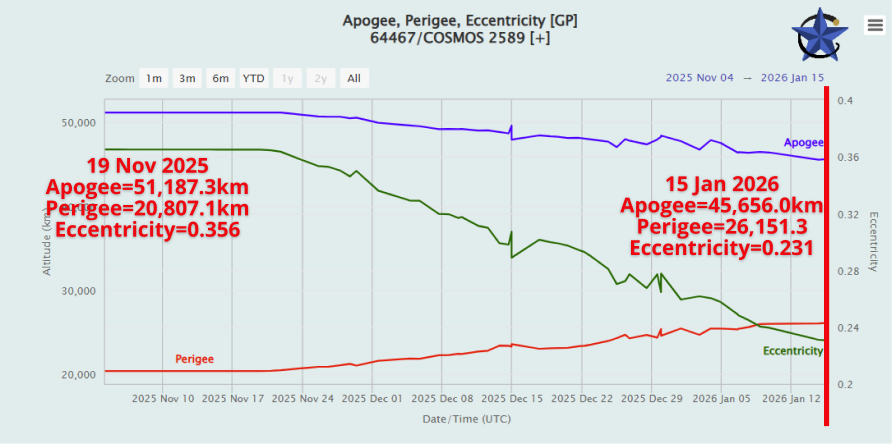
Cosmos 2589 Orbit History Showing Steady Increase in Perigee and Decrease in Apogee Resulting in Declining Eccentricity (celestrak.org)
By Dr. Larissa Beavers
PBS News reports two NATO intelligence services suspect that Russia is developing an anti-satellite weapon specifically designed to disrupt or disable SpaceX’s Starlink satellite constellation, a system that has become critical to both civilian connectivity and modern military operations. The reporting highlights growing concern that commercial space systems are now treated as legitimate military targets, blurring the line between civilian and defense infrastructure in orbit. If deployed, such a capability would mark a significant escalation in counterspace threats and further reinforce space as a contested operational domain. The development also raises alarms about debris creation, escalation dynamics, and the resilience of space-enabled command and control.
Impact to Space Operations:
- Targeted counterspace threat: PBS news reports Russia is suspected of developing an ASAT capability aimed at Starlink.
- Commercial systems no longer neutral: Military-supporting constellations are treated as legitimate targets.
- Debris risk: Kinetic or area-effect attacks in LEO could create widespread, long-lasting debris threatening satellites beyond the intended target.
- LEO degradation: NATO reports suggest debris-producing attacks could disrupt orbital operations for years.
- Operational impact: Starlink disruption would affect military C2, ISR dissemination, and logistics.
- Escalation risk: Attacks on commercial satellites blur proportional response thresholds.
- Resilience pressure: Operators may accelerate redundancy, reconstitution, and hardening.
- Traffic management strain: Contested LEO complicates collision avoidance and maneuvering & possibly small enough making it difficult to track.
- Norm erosion: Such weapons further undermine international space norms.
- Experimental: Some analysts doubt it could work without significant risks to the space domain and Russian space assets.
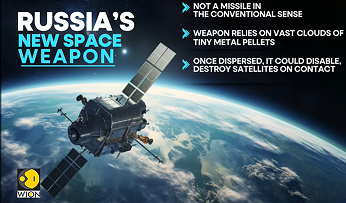
WION – Russia’s New Space Weapon

Editor’s Comment: The wartime utility of such a weapon is questionable. While undoubtedly catastrophic to several orbital planes and the LEO orbital regime in general, the release of debris clouds would have unpredictable results in terms of timeliness and effect. These tactics would also endanger non-targeted satellites, some of which belong to Russia and other nations such as China. Then again, it is Russia, so you never know.
Lessons Learned from the Russia - Ukraine Conflict
By Dr. Larissa Beavers
The CNA report “Russian Concepts of Future Warfare Based on Lessons from the Ukraine War” examines how Russian military elites’ strategic and operational thinking has evolved after three years of high-intensity conflict in Ukraine, finding that core Russian warfighting concepts have changed little despite significant tactical innovations on the battlefield. Russian thinkers view the Ukraine war as confirming pre-existing strategic assumptions, and they continue to prioritize long-range precision strike, combined arms maneuver, and air dominance concepts. While technological advances—especially uncrewed systems—have altered the character of conflict tactically, no fundamental doctrinal shifts have emerged at the strategic level. This persistence suggests that future Russian planning will build on traditional frameworks rather than wholly new concepts.
Summarized CNA lessons-learned that intersect with space-enabled capabilities::
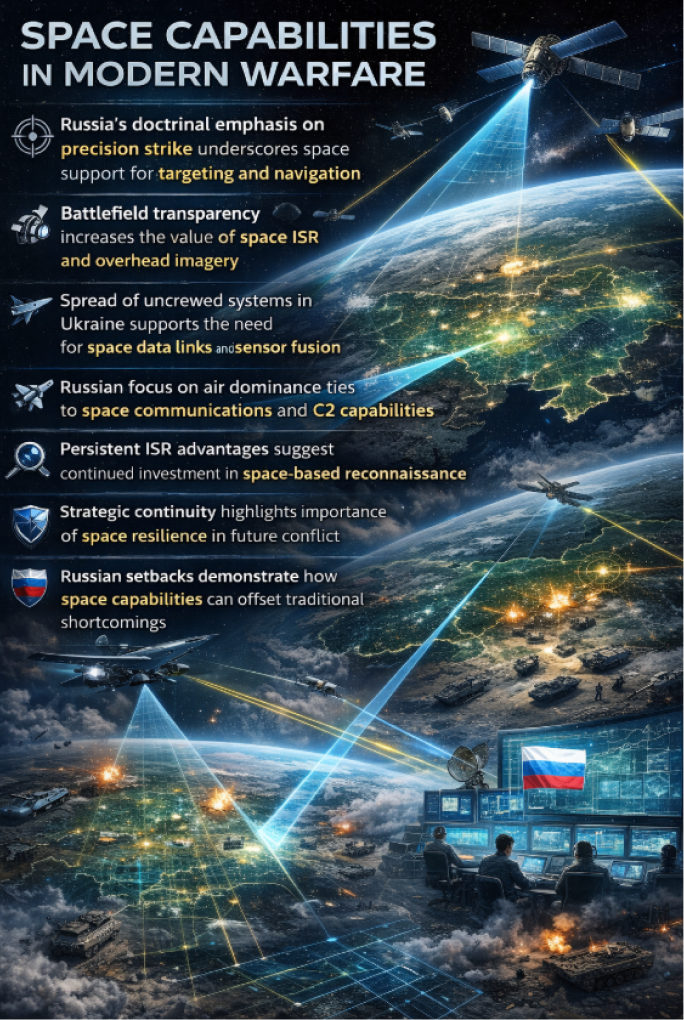
- Russian emphasis on battlefield transparency highlights the value of ISR, including space-based sensors for detection and targeting.
- Continued focus on long-range precision strike implies reliance on space-enabled communications, navigation, and targeting support.
- The widespread use of uncrewed systems highlights the increasing need for space-supported ISR feeds and C2 links.
- Tactical innovations still depend on real-time intelligence, which in modern war is often derived from space assets.
- The persistence of traditional concepts despite battlefield lessons reinforces the need for space resilience and redundancy.
- Even as ground and air components adapt, space remains central to indications & warning (I&W) and integrated warfighting concepts
- Sustained high-intensity conflict reinforces the need for resilient PNT and SATCOM to maintain operations when terrestrial networks are degraded.
- Integrated fires, maneuver, and ISR show that space-enabled kill chains are critical for cross-domain synchronization in contested environments.
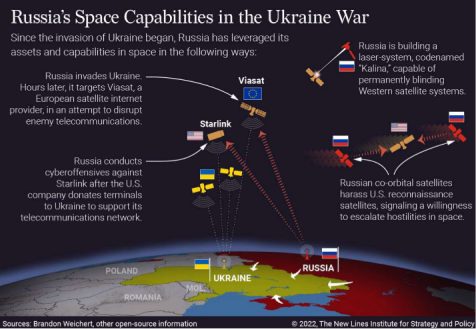
Russia Space Assets used in Ukraine War
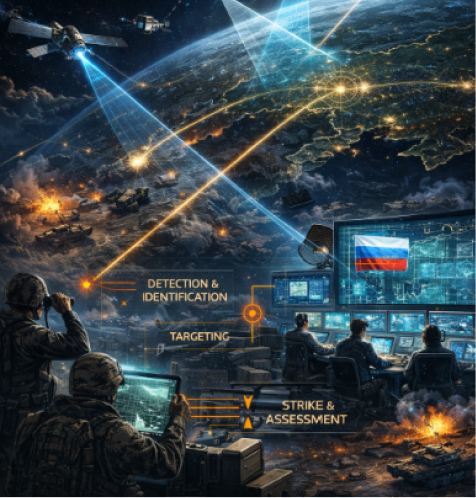
Space-enabled kill chains in action
AI generated image
Jack’s Astro Corner: To the Moon!
By Jack Anthony
Editor’s Comment: Jack was nice enough to put together an article examining the upcoming Artemis 2 mission currently scheduled to launch as soon as 6 Feb 2026. Thank you again Jack!
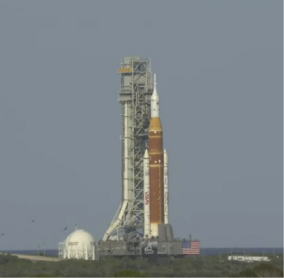
10 Jan 2026: We are 1 week from NASA rolling out the Artemis 2 rocket (SLS) and Orion space capsule (editor’s comment: SLS rolled out to the pad on 17 Jan 2026). Launch is still planned for early February. Have you ordered your Artemis 2 hoodie on sweatshirt? I have. OK, in an effort to make you most awesome at the dinner table, in the workplace, or school, here’s a blurb on the Artemis 2 Earth orbits they will do BEFORE heading for the Moon on a free-return 3-body orbit (astro dynamos use cool words, you can too). Enjoy and whatcha think of my retro NASA attire, cool 1960’s look?

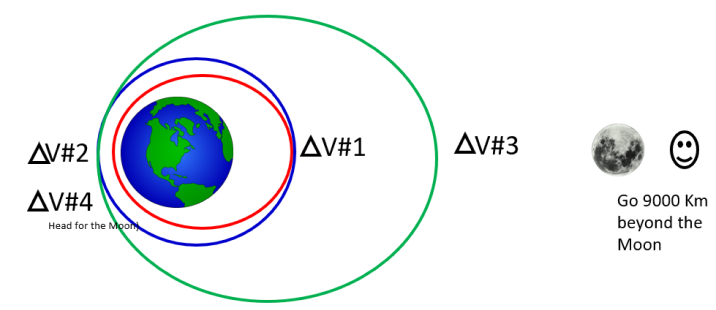
Here’s a review of the Artemis 2 orbits around the Earth before the Orion and crew head for the Moon on a Free-Return trajectory. I use altitude perigee x altitude apogee to denote low and high points of the orbit (I use Km). Artemis 2 is launched into the RED orbit from Kennedy Space Center into a 25 km x 2200 Km orbit. Now that 25 Km low point (called perigee) is not so good, the atmosphere would cause trouble on the first perigee pass. So Delta V#1 occurred about 45 minutes into the flight and puts Artemis 2 on the blue orbit 185 km x 2200 Km. Ahhh, much better! Then at Delta V#2 a big maneuver is executed to raise apogee to 70000 Km (that’s twice as high as geosynchronous satellites operate. This 185 km x 70000 Km has a 24-hr period in an elliptical orbit (egg shaped). In this orbit they will execute rendezvous and proximity operations with the Interim Cryo Propulsion Stage (ICPS) which they separate from and is tagging along in a 2 spaceship formation. They will do a bunch of orbital dancing (RPO is dancing in space, really!). Delta V#3 is a small tweak to the perigee altitude in preparation for the Trans Lunar Insertion (TLI) that is 12 hrs away at that point. TLI is the Delta V#4 that sends Orion and crew on their way to the Moon in a free-return trajectory. That means they will reach the Moon, pass beyond it and be slung back to Earth. It’s using what astro enthusiasts call a 3-body orbit (Earth, Moon and wee little spaceship). That free return trip takes 4 days out, 4 days back. 10 day mission! Enjoy your new knowledge, so explain it to someone!

Pics o’ the Fortnight!
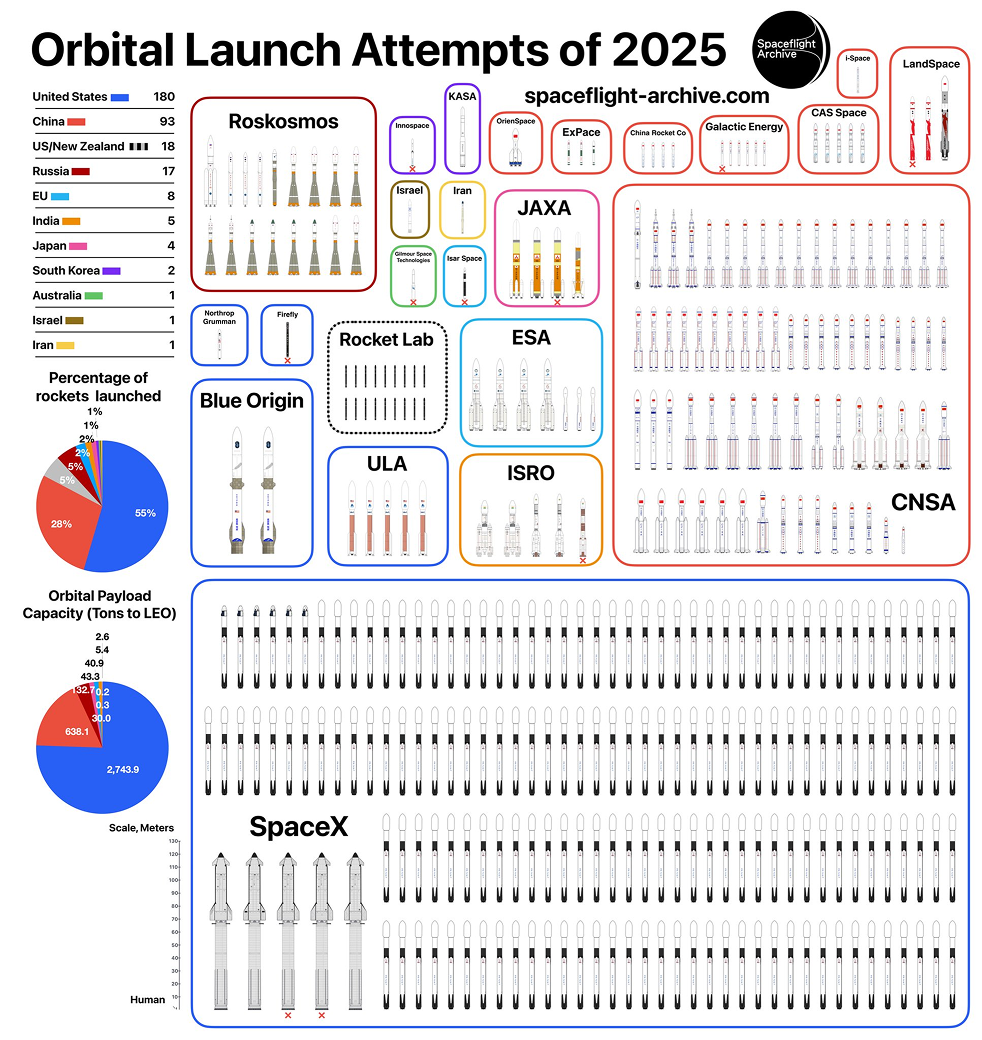
Awesome 2025 Launch Summary Graphic from Spaceflight Archive
(@S_F_Archive via X)
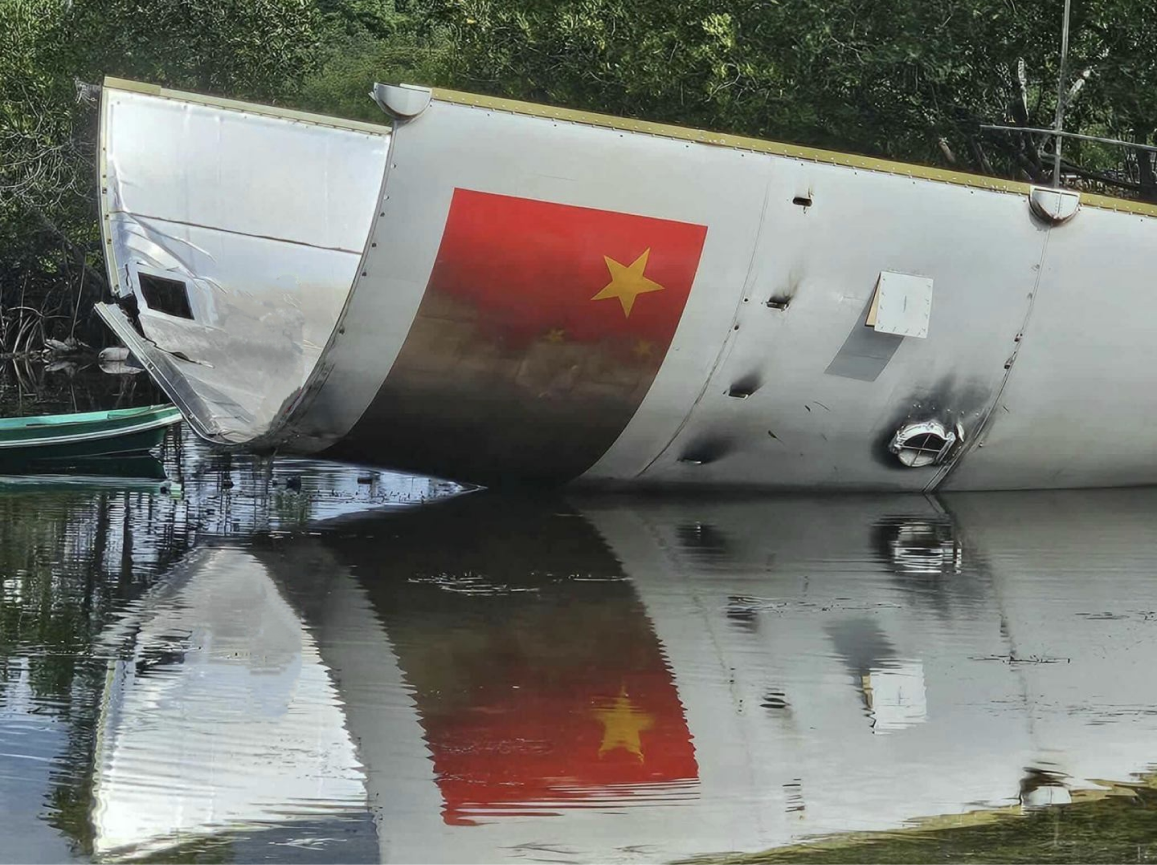
Some fishermen towed a LM-8A fairing back home, according to the Philipine coast guard (@PhazzeeYeehaw via X)
Pics o’ the Fortnight!
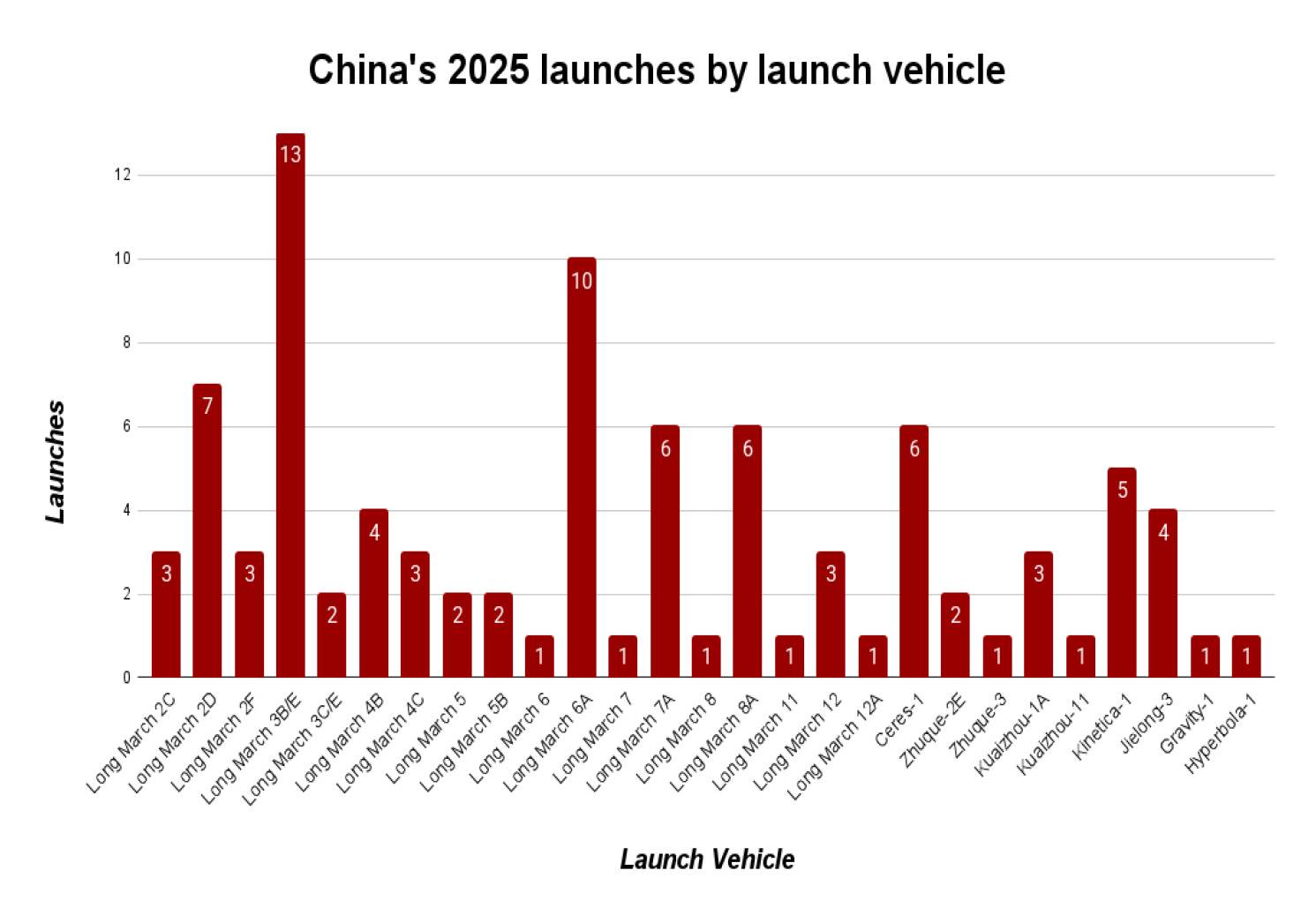
“Interesting stat from 2025 is that the old generation hypergolic Long March launch vehicles performed 50.72 percent of Long March missions, and 37.63 percent of the national launch total.” (@PhazzeeYeehaw via X)
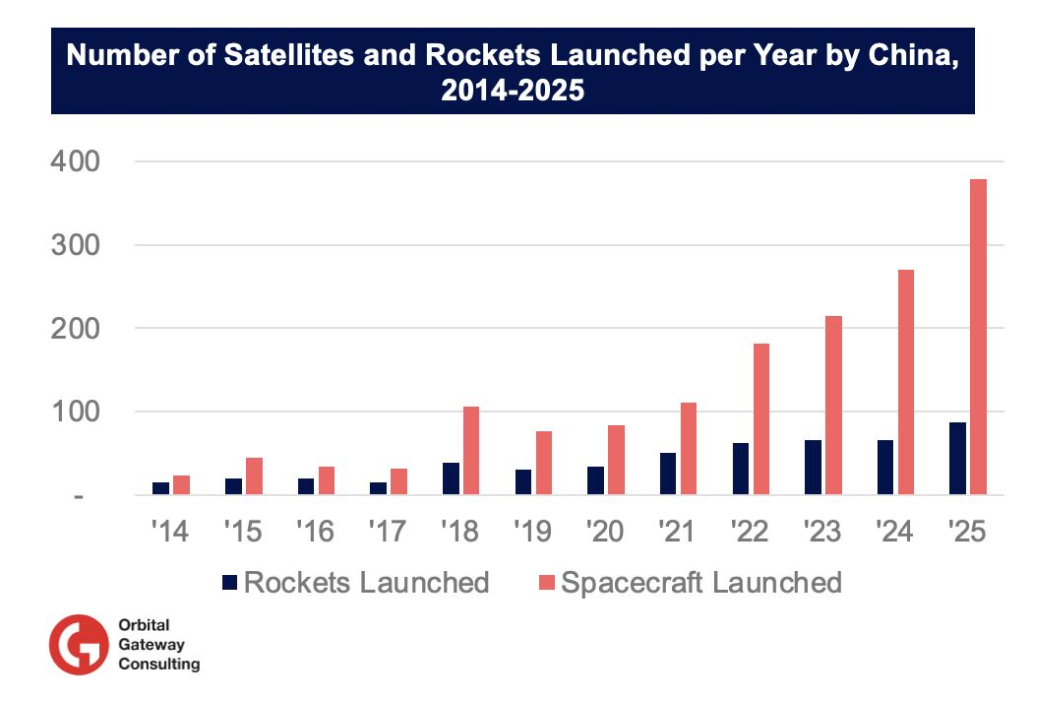
Excellent LinkedIn Post from Orbital Gateway Consulting: “The hockey stick and the doorstop: a story of two growth curves” (https://www.linkedin.com/in/blaine-curcio/)
Pics o’ the Fortnight!

December 29, 1964, this photo of the starship Enterprise studio model that would be used in filming Star Trek was taken at the production model shop in Burbank, California. (@airandspace via X)