
ISSUE 150 | July 28, 2026
The integrity flash
Analysis of Developments in the Space Domain
Space X
In This Issue
Exit Stage Right: Cosmos 2589 Heads East
Ever Vigilant: US GSSAP Monitoring of Cosmos 2589
Ukraine's Attacks Against Russian Space Infrastructure
Russia Launches Second Group of 16 Rassvet 3 Satellites
A Primer on China’s Seven Sons of National Defense
China Launches Tianlian-2 06 Relay Satellite
China’s Tianlian Data Relay Constellation: A Deep Dive
Qianfan Update: Groups 13 & 15 Now Tracked
Pics o’ the Fortnight!
Exit Stage Right: Cosmos 2589 Heads East
20 – 24 Jul 2026: Russian space operators reduced Cosmos 2589’s (64467) average altitude by at least 33km. The maneuvers have generated a 0.4°/day eastward drift. Observations on 25-26 July show that the satellite had levelled out and continues to drift eastward. This is the first significant maneuver from Cosmos 2589 since it arrived at 98.0°E in April 2025. Recall Russia launched Cosmos 2589 in June 2025 into a Geosynchronous & Highly Elliptical orbit back in June 2025. The satellite released a sub-satellite, Cosmos 2590 (64527) two-weeks later and for the next 5 months the sub-satellite conducted several RPOs against its parent satellite. From Nov 2025 through April 2026 Russian space operators methodically circularized Cosmos 2589’s orbit and it eventually parked at 98.0°E where it was joined by USA 325 (51281) for several weeks. USA 325 departed the area in early July and was replaced by USA 271 (41745) (see next article.)
Now we wait to see where Russia decides to park Cosmos 2589. Even more importantly observers will also be keen to identify the release of any additional sub-satellites which may be on board Cosmos 2589. Cosmos 2589 is of particular interest due to its potential GEO inspector mission. As noted in the 22 June 2025 Flash, excellent research from Bart Hendrickx links Cosmos 2589 with the CNIIHM Insitute which has, in-turn, been linked to Russian inspection/anti-satellite programs.
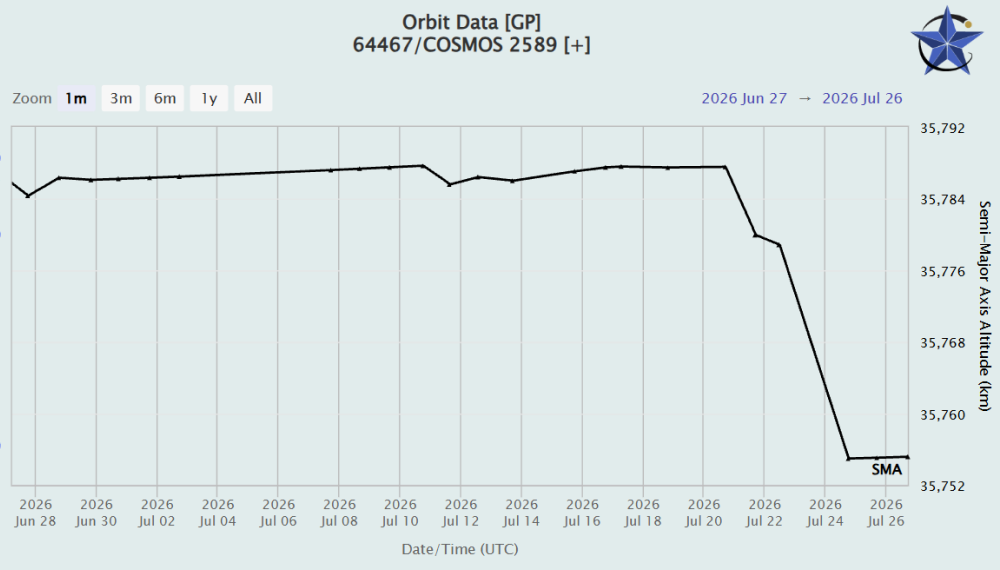
21-24 July 2026: Cosmos 2589 Decreases SMA at least 33km Initiating Eastward Drift Departing its 98.0°E location where it had resided Apr-Jul 2026. (celestrak.org)
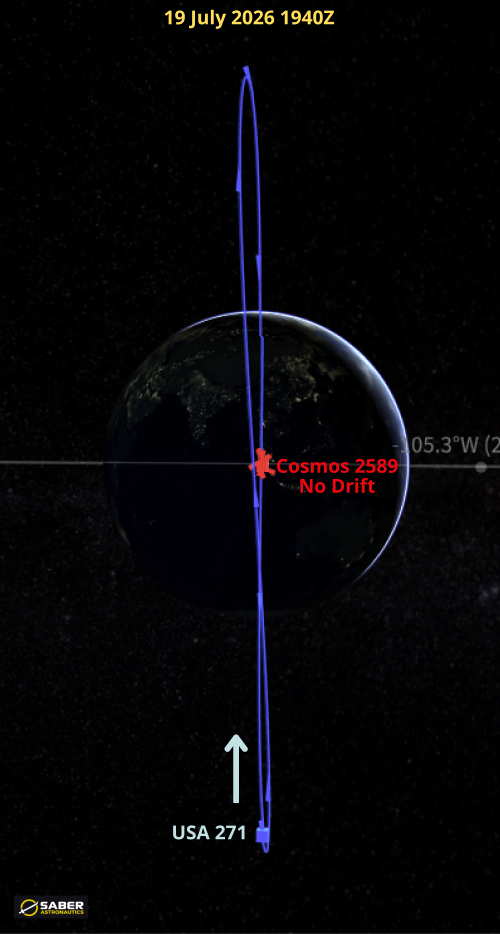
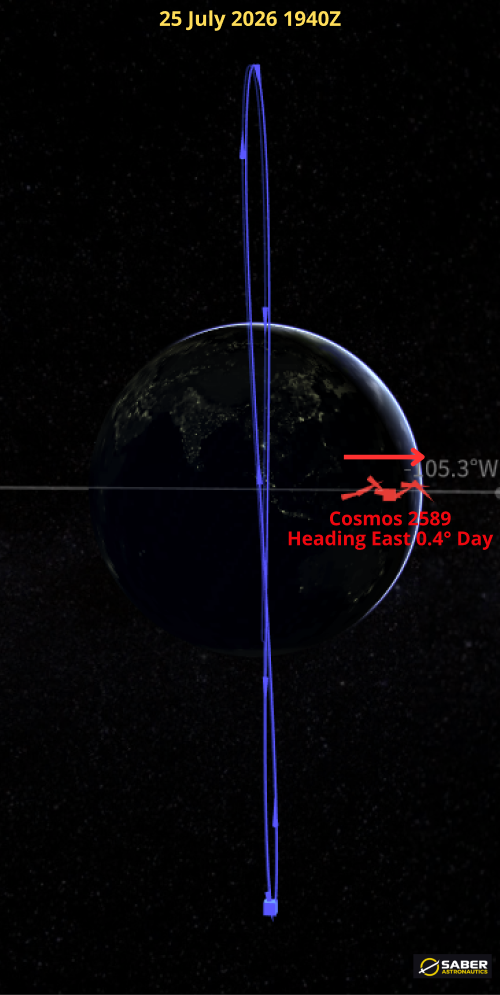
25 July 2026: Skipping Town. Cosmos 2589 Now Moving Eastward at 0.4°/Day
Per Available Observation Data USA 271 Has Not Responded (saberastro.com)
Ever Vigilant: US GSSAP Monitoring of Cosmos 2589
4 – 16 Jul 2026: As we discussed in the Flash edition 148, the US has maintained a close watch over Cosmos 2589 since it arrived in the GEO belt in early May 2026. From May through early-July USA 325 (51281, GSSAP 6 launched in Jan 2022) remained in vicinity of Cosmos 2589 at 98.0°E longitude. USA 325 decreased its average altitude nearly 250km 3-4 July resulting in a 3.17° eastward drift. As USA 325 was conducting its maneuver, USA 271 (41745, GSSAP 4 launched in Aug 2016) arrived at 98.0°E. From its new location USA 271 appears to have taken over responsibility for monitoring Cosmos 2589 as USA 325 heads east toward its next mission. <NOTE: we’re waiting to see if USA 271 responds to Cosmos 2589 maneuvers 20-24 July>
There are some important differences between USA 271 and 325. USA 271 hasn’t conducted a North/South Stationkeeping maneuver since late-2021 and over the last 5+ years its inclination has increased from 0° to 4.27°. By comparison USA 325 has an inclination of 0.678° while Cosmos 2589 is inclined 0.034°. USA 271, like USA 325 had 2 close approaches/day with Cosmos 2589, however with the large inclination difference US space operators will need to contend with a differential velocity at time of closest approach of ~228m/sec or 7.6x greater than the ~30m/sec for USA 325. (For reference a 9mm bullet travels at ~330m/sec as it leaves the barrel).
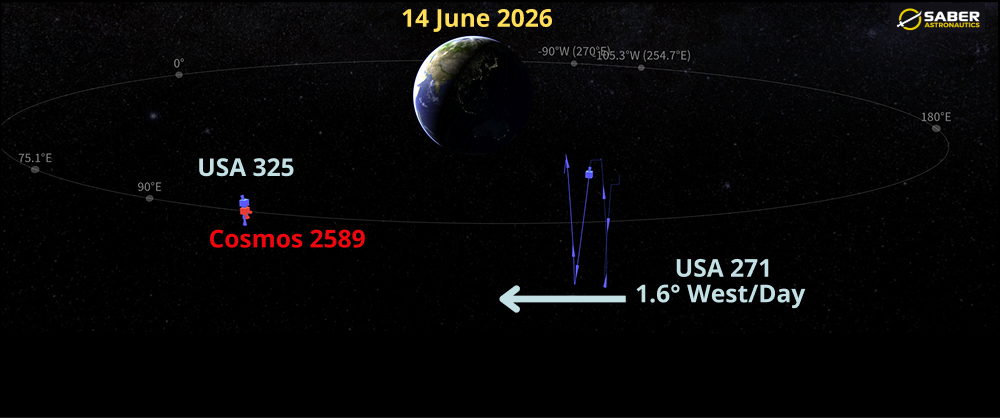
14 June 2026: USA 271 Has Initiated Westward Drift at 122.6°E and Is Heading Toward Cosmos 2589 & USA 325 at 98.0°E (saberastro.com)
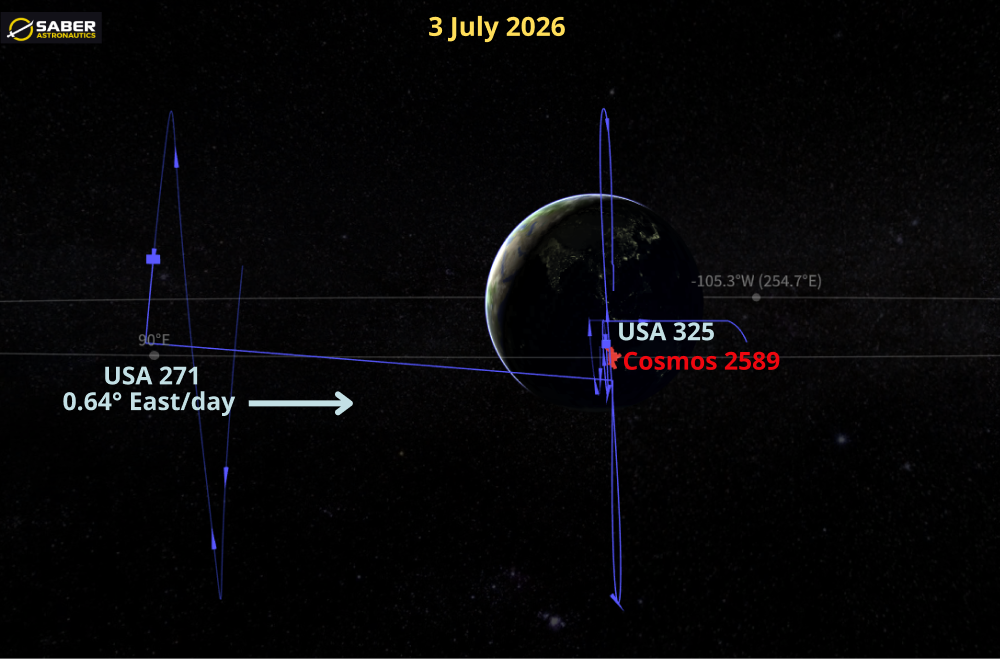
3 July 2026: Per Publicly Available TLE Data USA 271 Drifted to the West of Cosmos 2589 25 Jun – 3 Jul. On 3 July USA 271 Decreased its SMA & Headed East toward Cosmos 2589. USA 325 Remains On Station at this time.
(saberastro.com & celestrak.org)
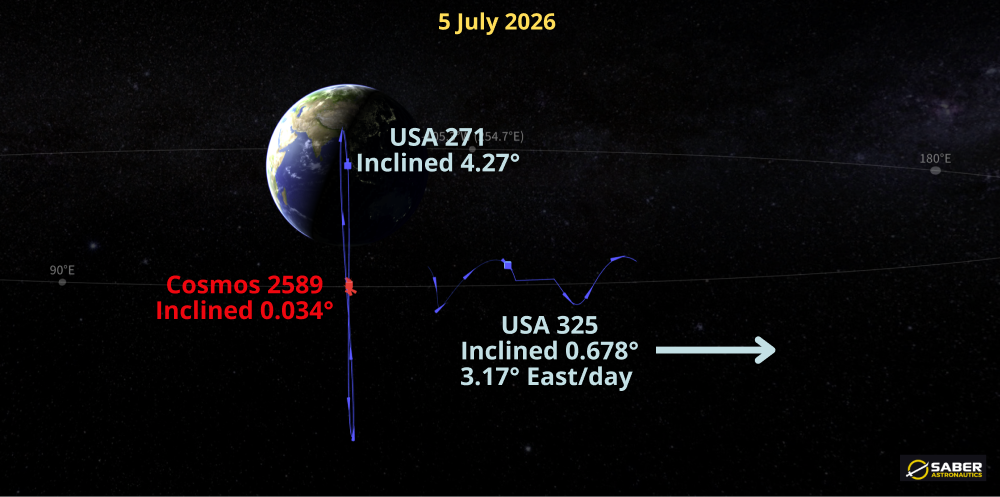
5 July 2026: USA 271 Arrives at 98.0°E & Increases SMA to Join GEO.
Begins Inspection Operations of Cosmos 2589.
USA 325 Reduced SMA ~250km & Is Now Heading East at 3.17°/Day.
(saberastro.com & celestrak.org)
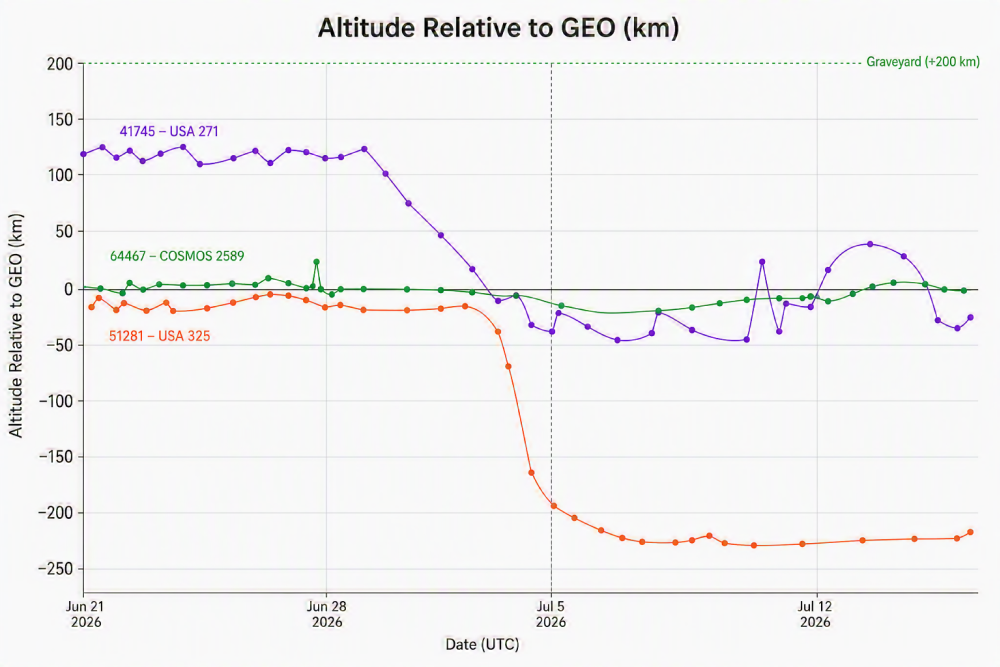
21 June – 16 Jul 2026: Graph Showing USA 271 Over GEO Belt (westward drift) Until 4 July.
As USA 217 Re-Joins GEO, USA 325 Decreases SMA and Heads East.
Cosmos 2589 Remains Virtually Unchanged During Encounter
(based on data from saberastro.com)
POCA Analysis: For 12-15 July the best imaging opportunities occurred as USA 271 passed Cosmos 2589 when traveling from North to South. At ~1500Z the range between the two satellites was 40-80km with favorable lighting conditions for USA 271. 12 hours later as USA 271 passed Cosmos 2589 as it traveled from South to North the range is 70-100km with marginal lighting conditions. <NOTE: again this is prior to Cosmos 2589’s maneuvers 20-24 July.>
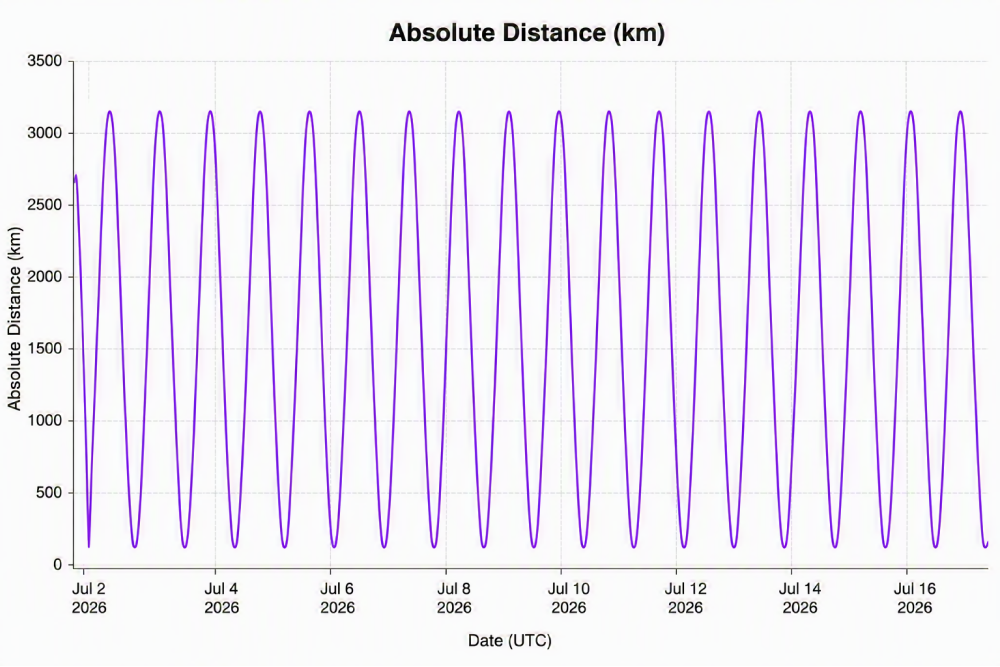
2-16 Jul 2026: Graph Showing Absolute Distance Between USA 271 & Cosmos 2589.
Due to Large Inclination Difference Range Varies from less than 50km to over 3,000km.
(based on data from saberastro.com)
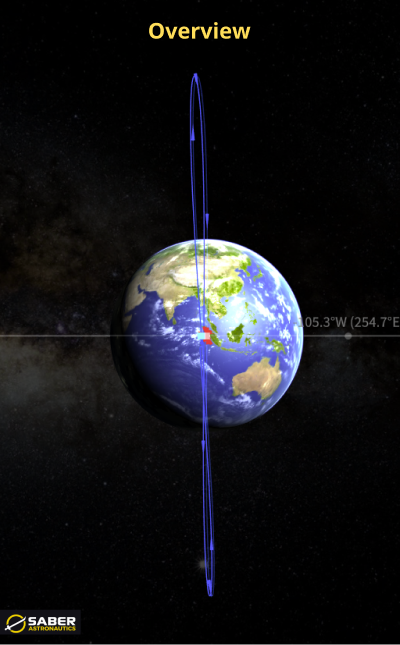
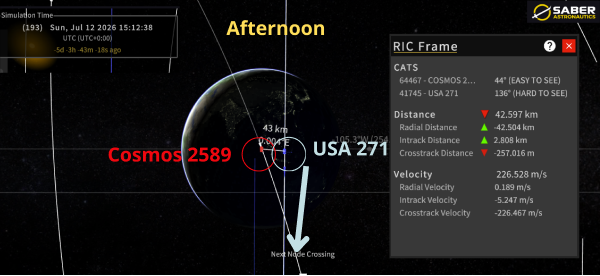
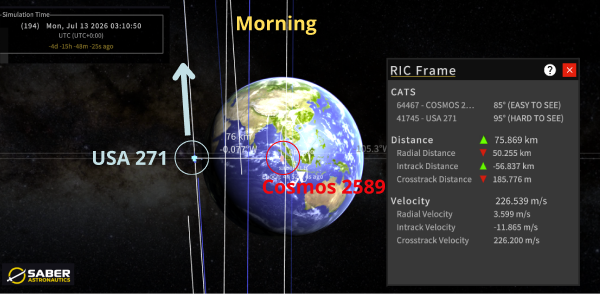
12-13 Jul 2026: USA 271 has 2 Passes/Day (~0300 & 1500Z) of Cosmos 2589.
Afternoon Pass Provides Closer Range & Favorable Lighting Conditions
All Passes Must Contend with High Differential Velocity
(saberastro.com)
Final Thoughts: US Space Operators likely faced an interesting choice with USA 271 from 2021-2023…whether to use their remaining fuel to conduct North/South Stationkeeping which requires ~50m/sec every year, or conserve their fuel and be able to respond to evolving mission requirements such as Cosmos 2589. By not conducting N/S stationkeeping operators now must mission plan to image a target that has 1/125th of USA 271’s inclination which generates a differential velocity of ~228m/sec at time of closest approach. Of course, if operators had conducted N/S stationkeeping for the past 5 years (about 250m/sec total) they may have completely used up their propellant and been taken out of mission months or years ago.
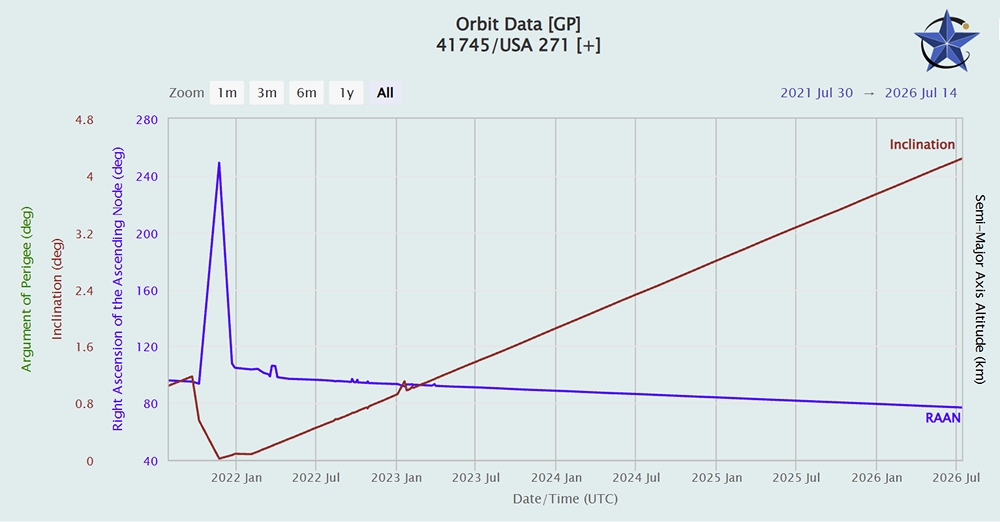
USA 271 Inclination/RAAN Values 2021-2026. Last North/South Stationkeeping Manuever Occurred in Late 2021. Inclination Has Since Grown from 0 to 4.27° (celestrak.org)
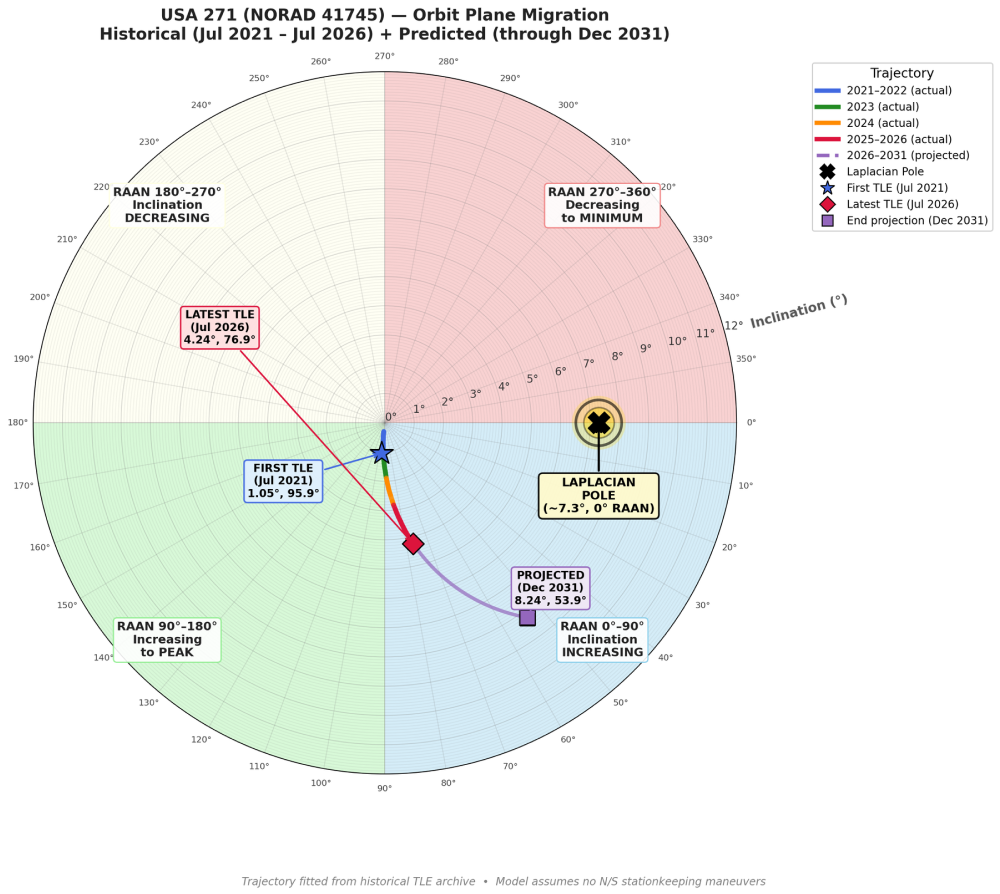
USA 271 Inclination/RAAN Values 2021-2026. Last North/South Stationkeeping Manuever Occurred in Late 2021. Inclination Has Since Grown from 0 to 4.27° & Will Reach 8.24° In the Next 5 Years
(based on data from celestrak.org)
Ukraine's Attacks Against Russian Space Infrastructure
by Alison Sayer
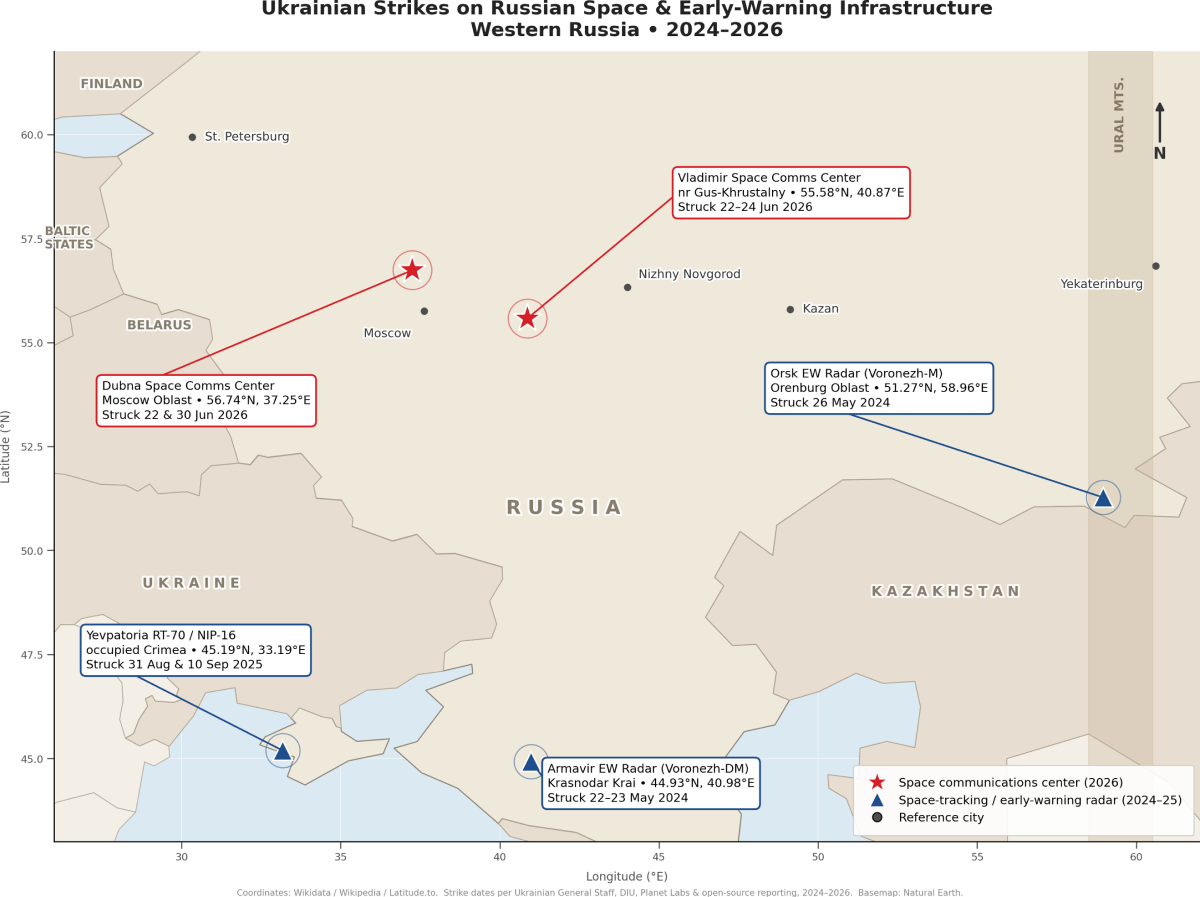
Ukraine’s long-range strike campaign appears to be entering a new phase. Rather than focusing solely on airfields, logistics hubs, and energy infrastructure, Kyiv has begun targeting the ground systems that support Russia’s space-enabled communications, including capabilities used by its military.
In late June 2026, Ukraine announced strikes against the Dubna Space Communications Center in Moscow Oblast and the Vladimir Space Communications Center near Gus-Khrustalny in Vladimir Oblast. Ukraine later reported that the Vladimir strike critically damaged the facility’s main 25-meter antenna and associated communications equipment, an assessment later supported by commercial satellite imagery showing damage to the antenna and nearby buildings. Days later, President Volodymyr Zelensky said Ukrainian forces had struck Dubna a second time and stated that Ukrainian forces had previously targeted four similar satellite communications centers in the Moscow and Vladimir regions. While not every Ukrainian claim has been independently verified, the repeated attacks on publicly identified satellite communications facilities point to more than an isolated strike. They suggest an emerging effort to disrupt the ground infrastructure that enables Russian space-enabled operations.
The broader question is whether these strikes represent isolated battlefield actions or the early stages of a shift in how states contest space power. If the pattern continues, future counterspace campaigns may increasingly focus on the ground segment rather than satellites themselves.
Russia has acknowledged at least part of the campaign. Following the initial strike on Dubna, Russian officials confirmed the facility had been targeted during a large-scale drone attack but stated that no personnel were injured and that television broadcasting and communications services were not disrupted. After the later strikes, Moscow largely shifted its messaging toward the number of Ukrainian drones intercepted rather than addressing the reported attacks on the satellite communications facilities themselves. As with many strikes in the conflict, the full extent of the damage remains difficult to verify from open sources.
These attacks underscore the strategic value of targeting the ground infrastructure that supports space operations. Rather than attacking satellites themselves, striking fixed ground facilities can disrupt space-enabled capabilities while forcing Russia to invest additional resources in repairing, replacing, and defending critical infrastructure.
It’s worth noting that these latest attacks are not the first time space-related infrastructure has been targeted during the war. Ukrainian forces previously struck the space communications complex near Yevpatoria in occupied Crimea, and earlier attacks on Russia’s strategic ballistic missile early warning radars at Armavir and Orsk highlighted the vulnerability of other large, fixed terrestrial systems. The June 2026 strikes, however, represent one of the clearest publicly reported examples of repeated attacks against satellite communications facilities located within Russia itself.
Whether the immediate operational effects prove significant is almost secondary. The broader lesson is that modern counterspace operations do not have to begin in orbit. As military operations become increasingly dependent on space-enabled capabilities, the ground segment is becoming an attractive target in its own right. Future conflicts may demonstrate that the quickest way to degrade an adversary’s space capabilities is not by attacking satellites, but by striking the infrastructure on Earth that keeps them connected.
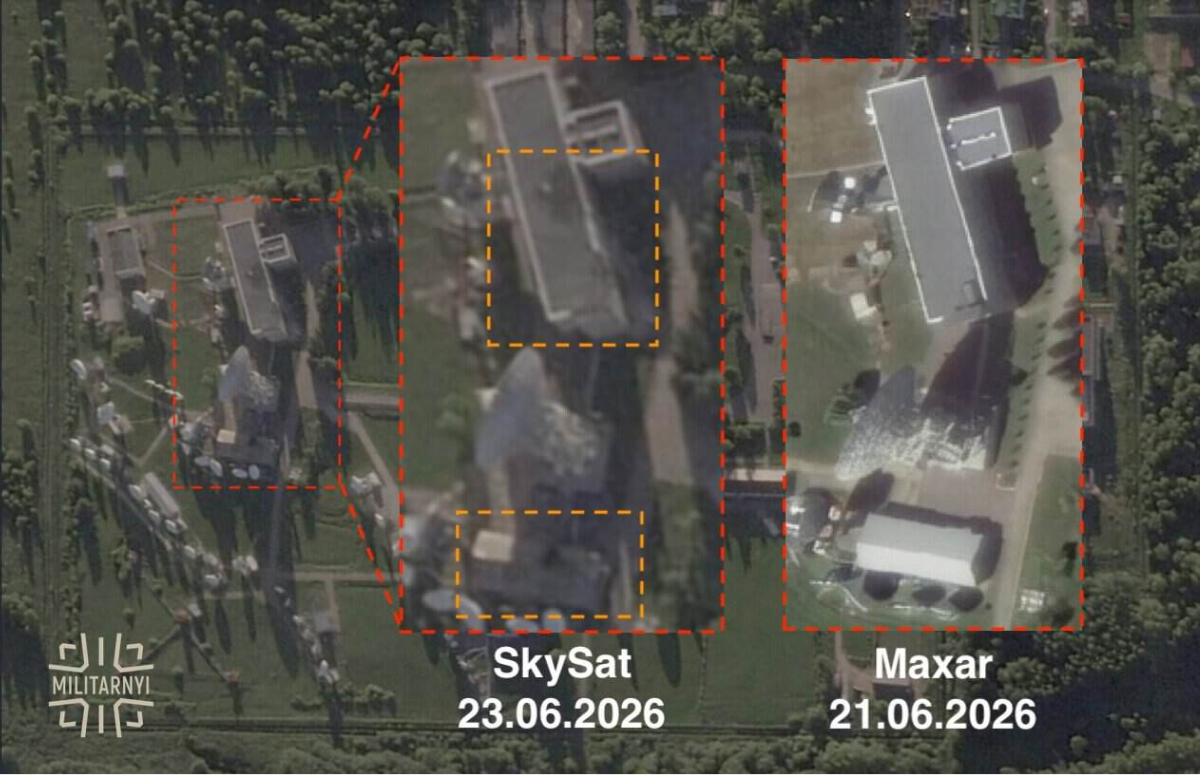
Post-Strike SkySat Image and Pre-Strik Maxar Image Revealed Damage to the Main Building of the Dubna Satellite Communications Center Photo credits: https://militarnyi.com/
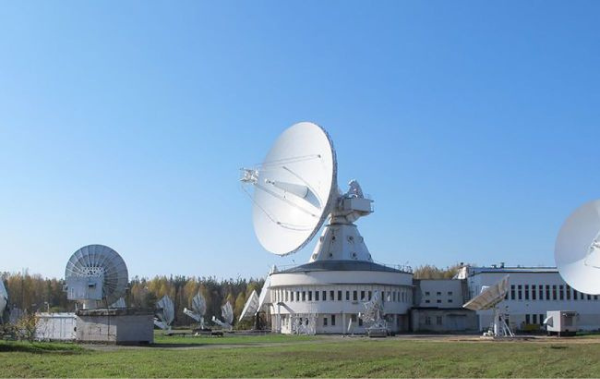
Vladimir Space Communications Center
in Happier Times
Photo credits: Russian media
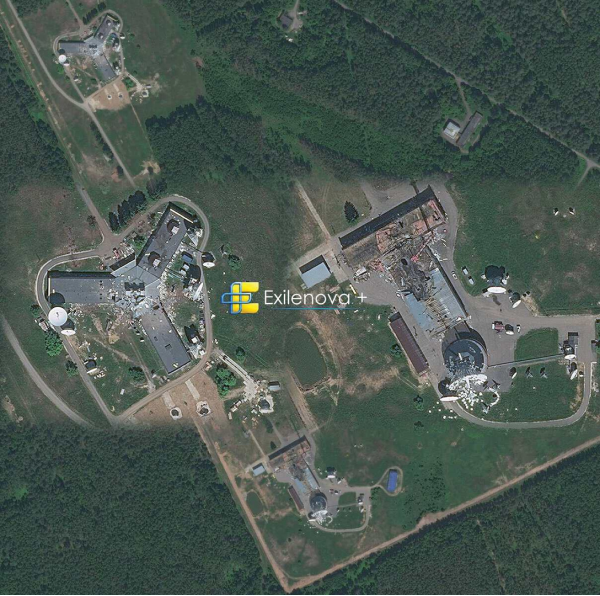
26 June 2026: Post-Strike Commercial Satellite Imagery of Vladimir Space Communications Center
Photo credits: Exilenova+
The moment the RT-70 (P-2500) radio telescope antenna hit in Yevpatoria.
Watch Video Photo credits: Defense Intelligence of Ukraine
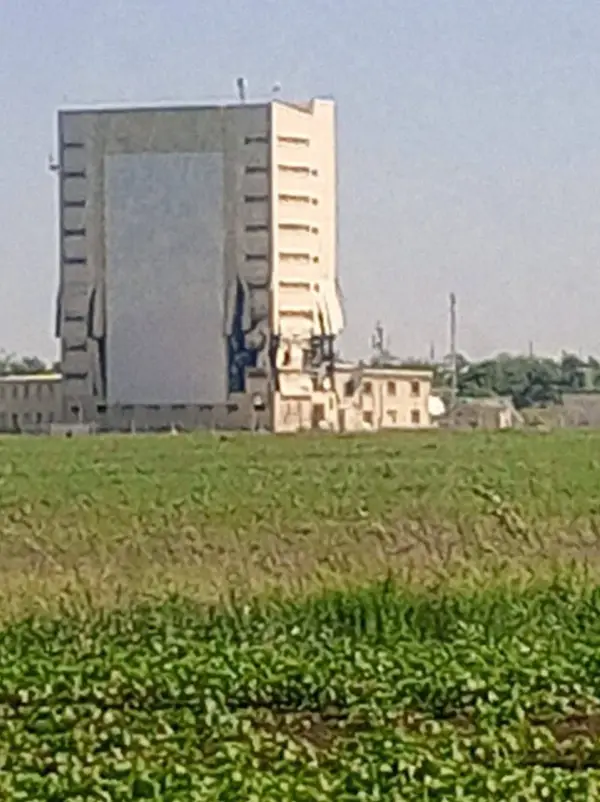
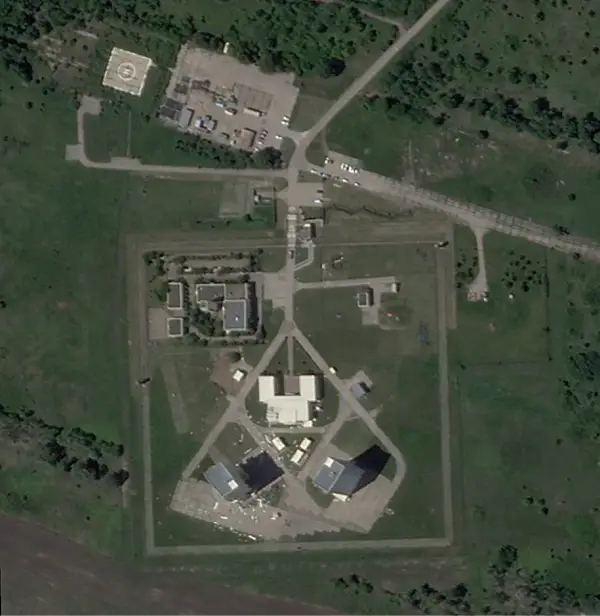
May 2024 Post-Strike Image of
Russian Early Warning
SHF radar Voronezh DM near Armavir
(@baklitskiy via X & www.twz.com)
20 Jul 2026: Russia launched the second group of 16 Rassvet 3 satellites (100083-98) using a Soyz 2.1b from Plesetsk. The satellites join Group 1 (68360-68376) which launched 23 Mar 2026. With this launch there are now 31 Rassvet 3 satellites in orbit (one of the Group 1 satellites re-entered weeks after launch). There was no video for the Group 2 launch.
The Rassvet (meaning “dawn”) satellites are part of a new Russian proliferated Low Earth Orbit (LEO) broadband internet constellation developed by Bureau 1440 a Russian private company. Bureau 1440 aims to create a sovereign alternative to SpaceX’s Starlink with global broadband coverage with speeds of up to 1 Gbps per subscriber terminal. While primarily designed for civilian commercial communication, the constellation is also expected to offer secure military command-and-control applications. Watch Buro 1440 Satellite Separation Video! Watch video describing Rassvet constellation development and deployment goals.
Rassvet launch goals for 2026 are 156 satellites. The project plans to have over 250 satellites in orbit by 2027, with a target of 900 by 2035. Color me skeptical.
– Russia launched the Rassvet Group 2 satellites into a ~308km orbit with an inclination of 82.3°. Rassvet Group 1 satellites are also inclined at 82.3° and began with a similar 306km initial orbit.
-Group 2 is not co-planar with Group 1. Group 2 has an ~109° east RAAN offset with the Group 1 satellites. This offset will change as Group 2 satellites increase their average altitudes in the coming weeks. Calculating the exact desired RAAN offset is challenging as the Group 1 satellites are not co-planar themselves due to orbit raising challenges.
– Group 1 satellite deployment has been problematic. Ten of the satellites have plateaued at ~512km which may turn out to be their intended operating altitude…publicly available information notes target altitudes for Rassvet as 500-800km. Five satellites are struggling to increase their altitude to match the previous 10 while 1 satellite (68363) has already de-orbited.
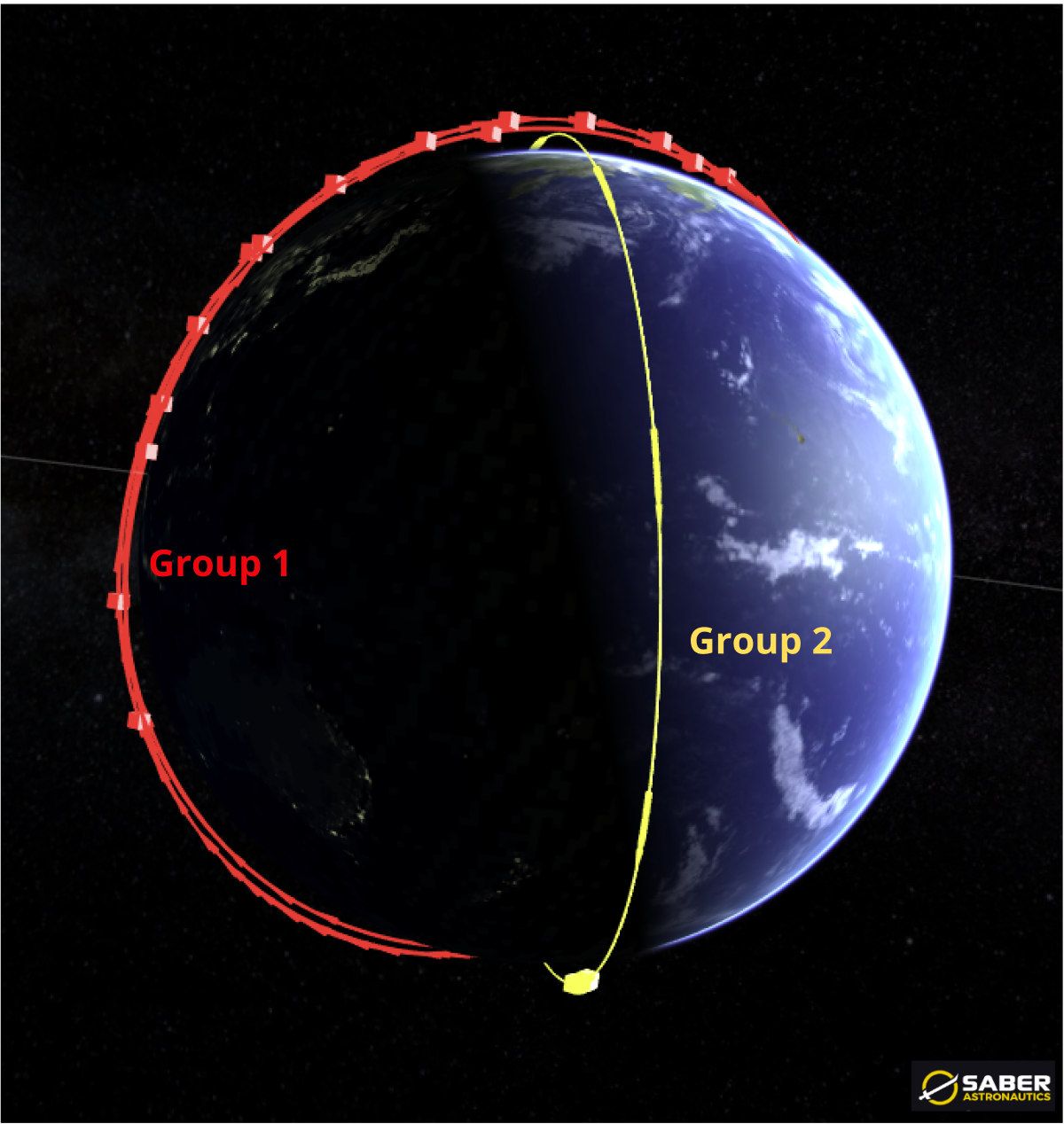
25 July 2026: Rassvet 3 Group 2 Has an ~109° East RAAN Offset With Group 1 (saberastro.com)
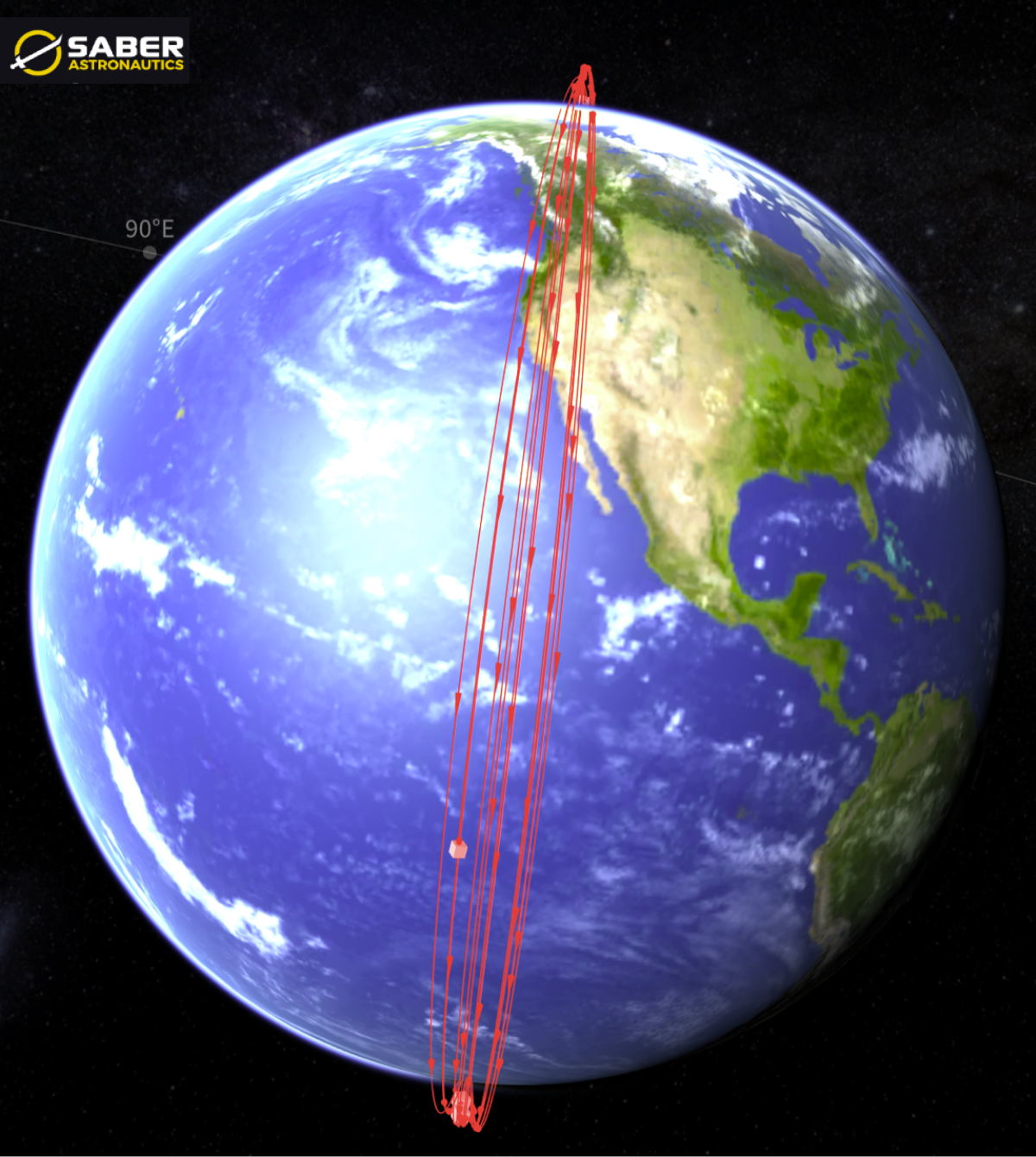
Messy Beginnings: RAAN Precession Rates vary with Inclination and SMA (J2 effect). Due to orbiting at varying altitudes for months many of the 16 Rassvet satellites no longer share the same Orbital Plane. (saberastro.com)
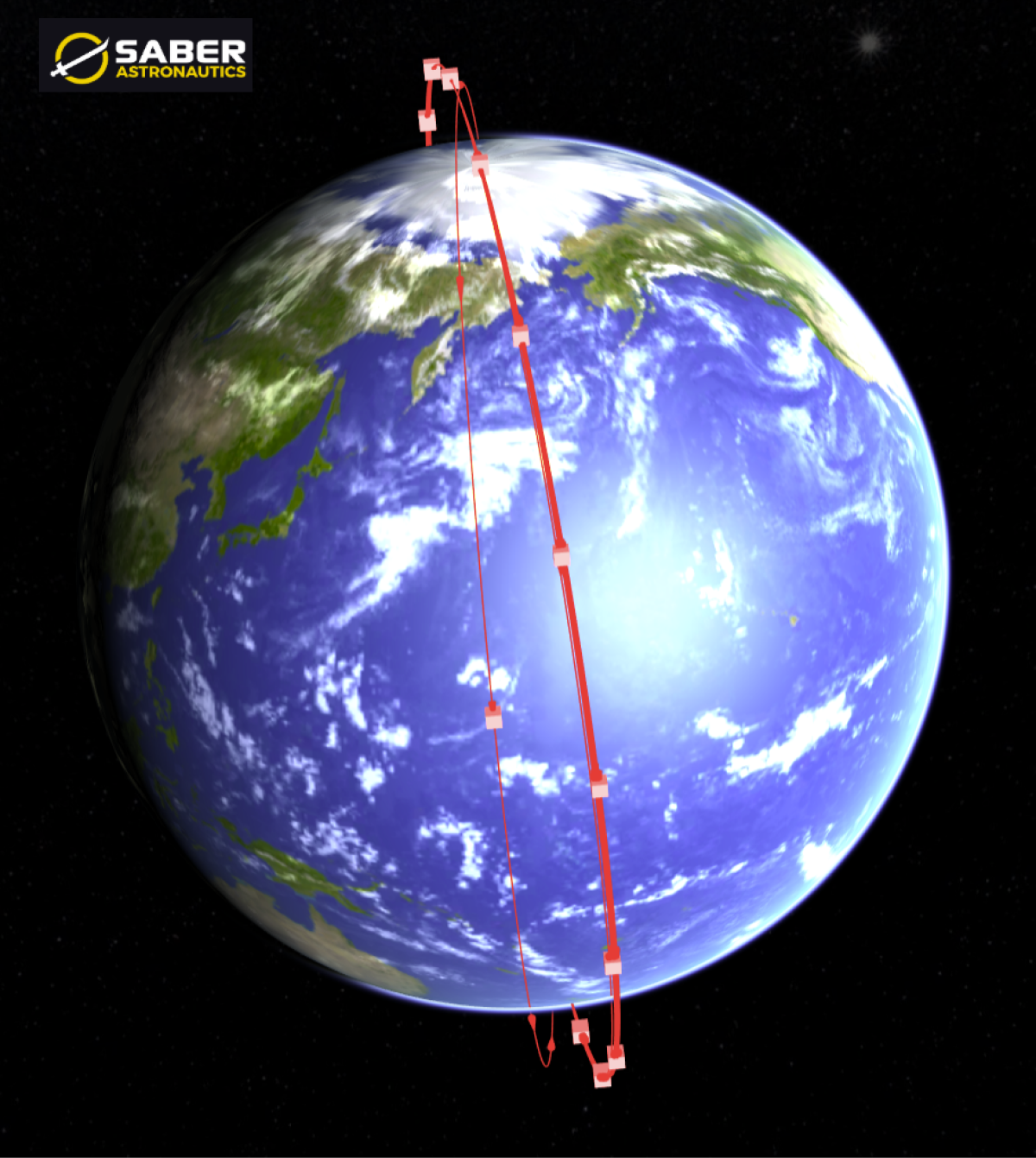
Comparison with Qianfan 1-18. 17 Satellites Co-Planar with Equal Spaceing. 1 Failed Satellite (Qianfan 7) which now has a RAAN Offset
(saberastro.com)
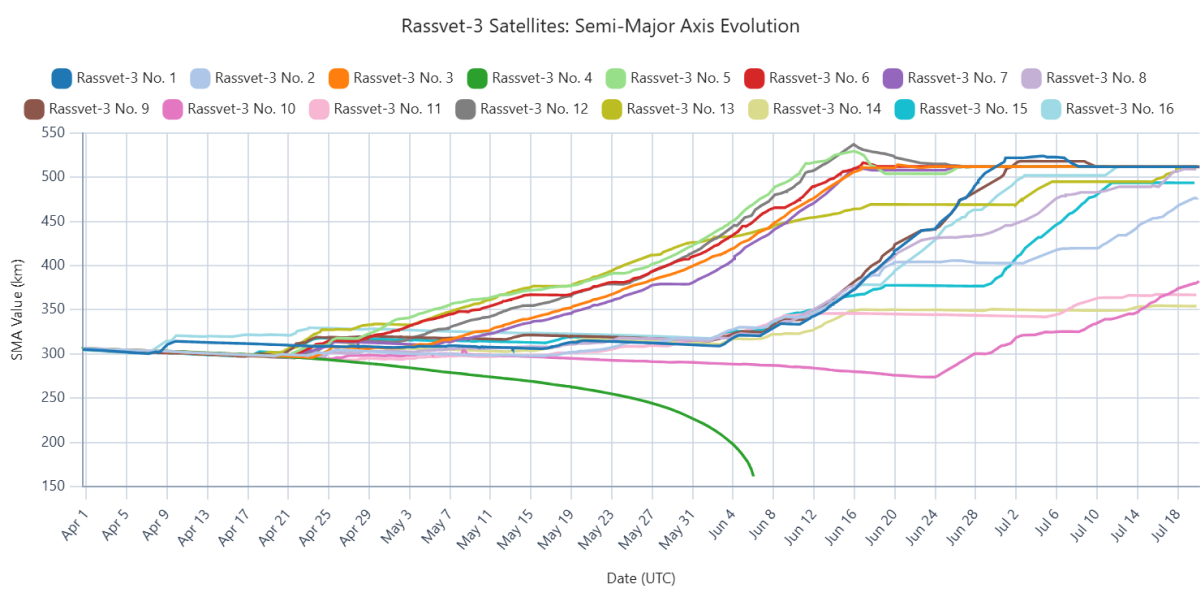
22 Jul 2026: Average Altitude for 16 Rassvet Satellites launched 23 Mar 2026.
1 Satellite has de-orbited, 5 have yet to reach operational altitude (SMA) &
10 have reached 512km SMA (data via Celestrak.org)
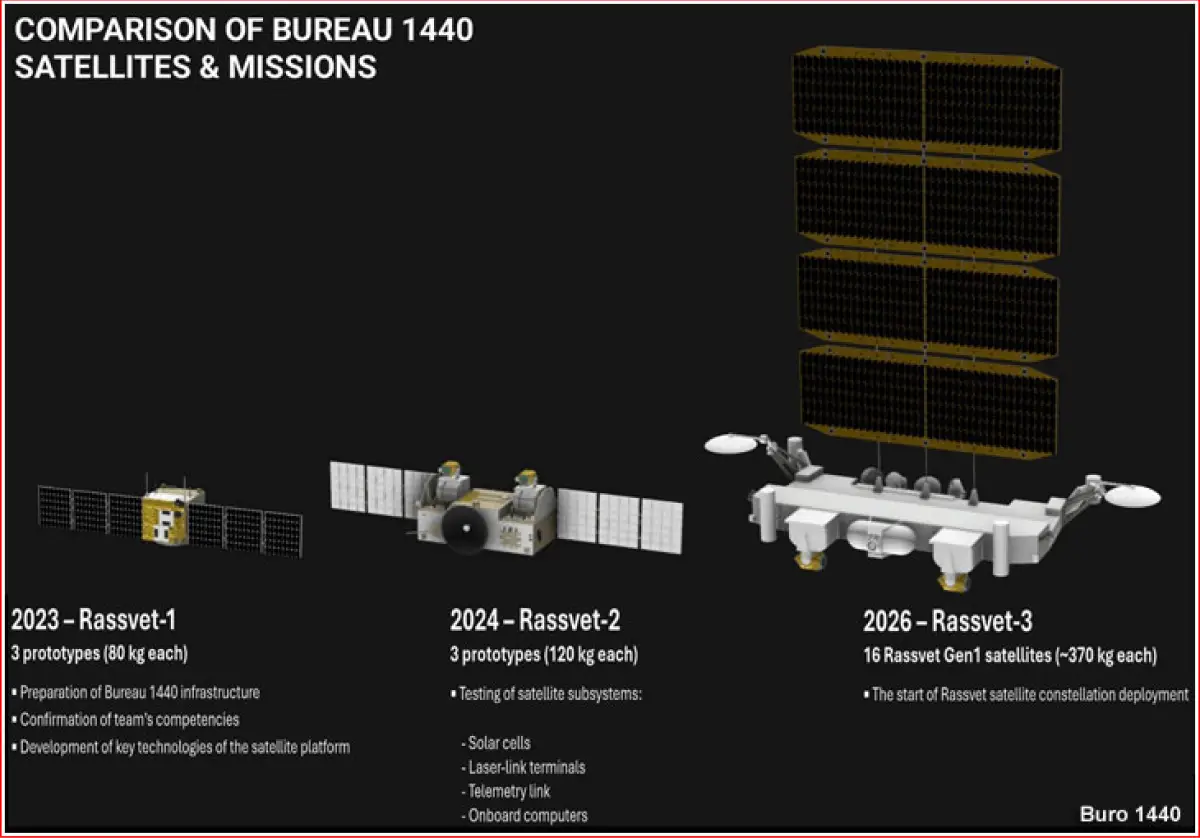
Rassvet-1, -2 & -3 Comparison (russianspaceweb.com)
A Primer on China’s Seven Sons of National Defense
by Ron Lerch
In January of 2022, the GEO-based Shijian-21 grabbed onto, and moved a defunct satellite. During the summer of 2025, Shijian-21 again stole headlines–this time alongside Shijian-25–as the two satellites approached each other and likely conducted a refueling operation. Two major events that have highlighted the increasingly competitive nature of space. But, neither of them should have been a surprise. In reality, Chinese universities have been conducting extensive research into rendezvous and proximity operations, on-orbit robotics, and even refueling for over a decade. Some universities have much closer ties with the Chinese government and military than others. Perhaps none more notorious than those known as the Seven Sons of National Defense.

Seven Sons of National Defense
So, who are the Seven Sons? The group is comprised of Beihang University (formerly Beijing University of Aeronautics and Astronautics), Beijing Institute of Technology, Harbin Engineering University, Harbin Institute of Technology, Nanjing University of Aeronautics and Astronautics, Nanjing University of Science and Technology, and Northwestern Polytechnical University. The group is directed by and subordinate to China’s Ministry of Industry and Information Technology (MIIT), which focuses primarily on oversight, policy, and funding. Under MIIT is the State Administration for Science, Technology, and Industry for National Defense (SASTIND). While MIIT sets national industrial and defense-tech policy, SASTIND executes those policies and coordinates research and development efforts.
These universities serve as “talent feeders” for China’s defense sector. For example, back in 2019 6,000 graduates were hired directly into defense State Owned Enterprises. 75% of those recruited came from Seven Sons universities.
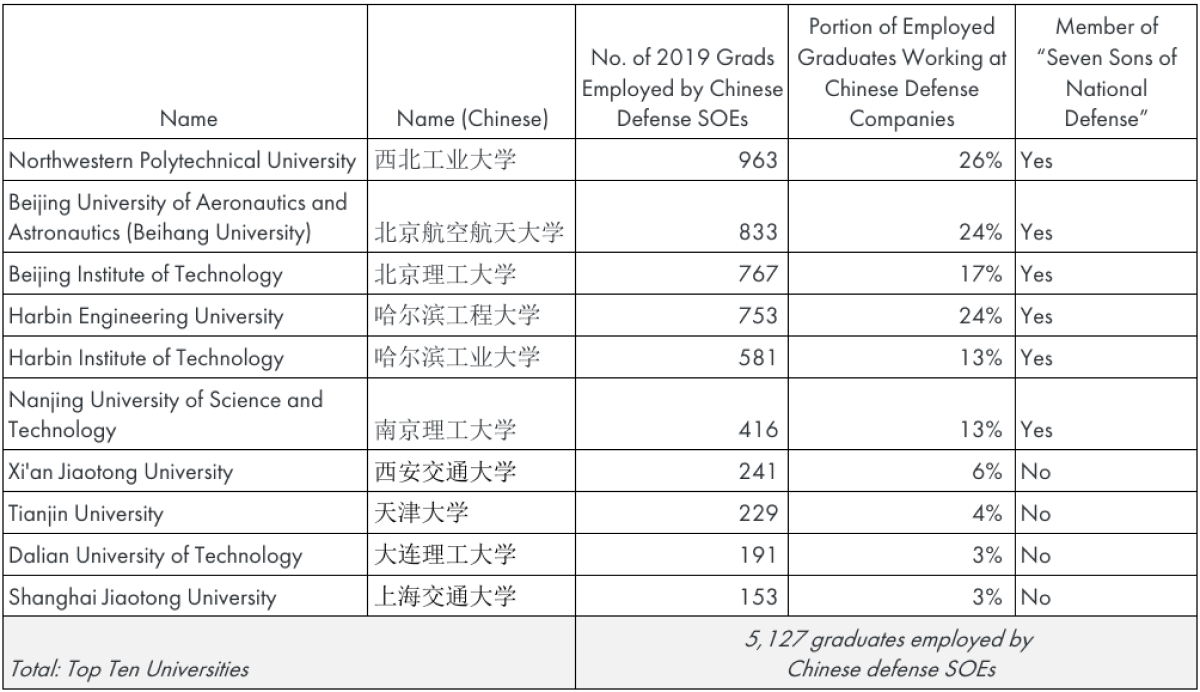
Chinese Universities Employment Reports (CSET)
However, these universities are certainly more than just talent feeders. Their research is foundational to the on‑orbit activity we have seen over the past decade. Take, for example, the SJ‑25 / SJ‑21 probable refueling activity during the summer of 2025. All of the Seven Sons were deeply involved in critical research in the decade leading up to the demo. The table below provides a broad overview of the contributions these universities made to various critical areas, along with where their work was published.
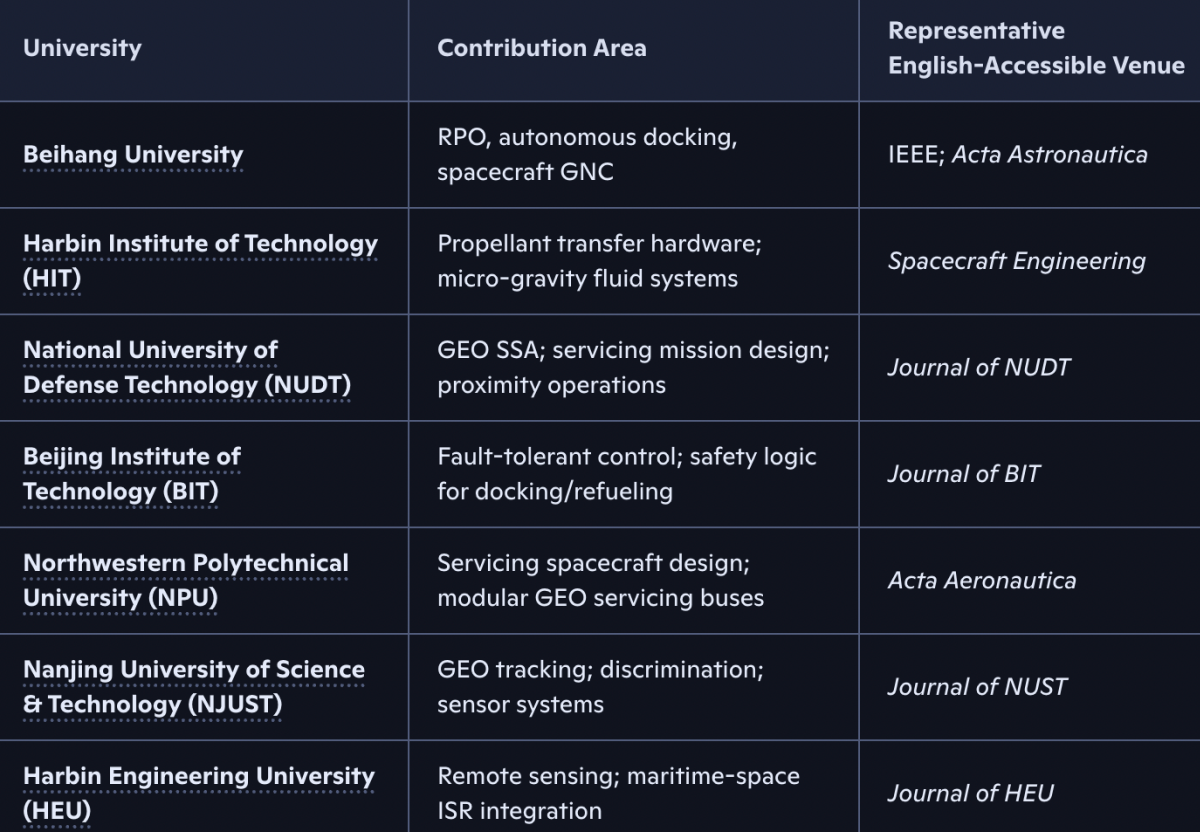
Seven Sons Contributions to Foundational Research for On-Orbit Refueling
So why does this matter? Understanding the ecosystem behind China’s most significant developments in the space domain today provides essential insight into where they are headed in the future—especially as they continue to openly publish much of their work. While this primer offers a broad overview of the Seven Sons, stay tuned for in‑depth analysis of specific efforts from select universities. Next time, we’ll explore Nanjing University’s long‑storied history of research into stealth applications for satellites.
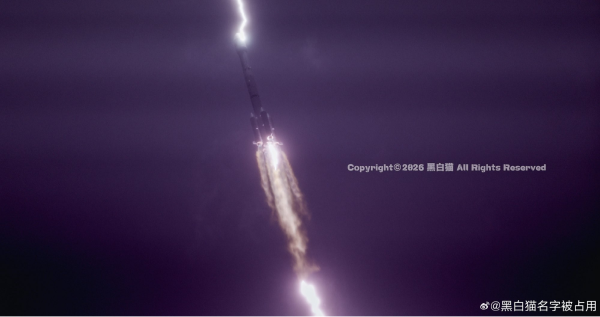
23 July 2026: China launched a Long March-3B/E with data relay satellite Tianlian 2-06 (100140) from Xichang. Launch video captured the moment the rocket was struck by lightning. There were no apparent affects to the launch, impacts to the satellite onboard are unknown. TL 2-06 is now in Geosynchronous Transfer Orbit (GTO) and will likely remain so for the next 10-14 days. Launch Video (including Lightning Strike).
TL 2-06 brings the number of operational Chinese data relay satellites to 8 (see table).
A data relay constellation enables China to task and stream their sensor data to Chinese ground stations for near real time processing and exploitation without the risks/delays associated with using ground-stations in foreign countries.
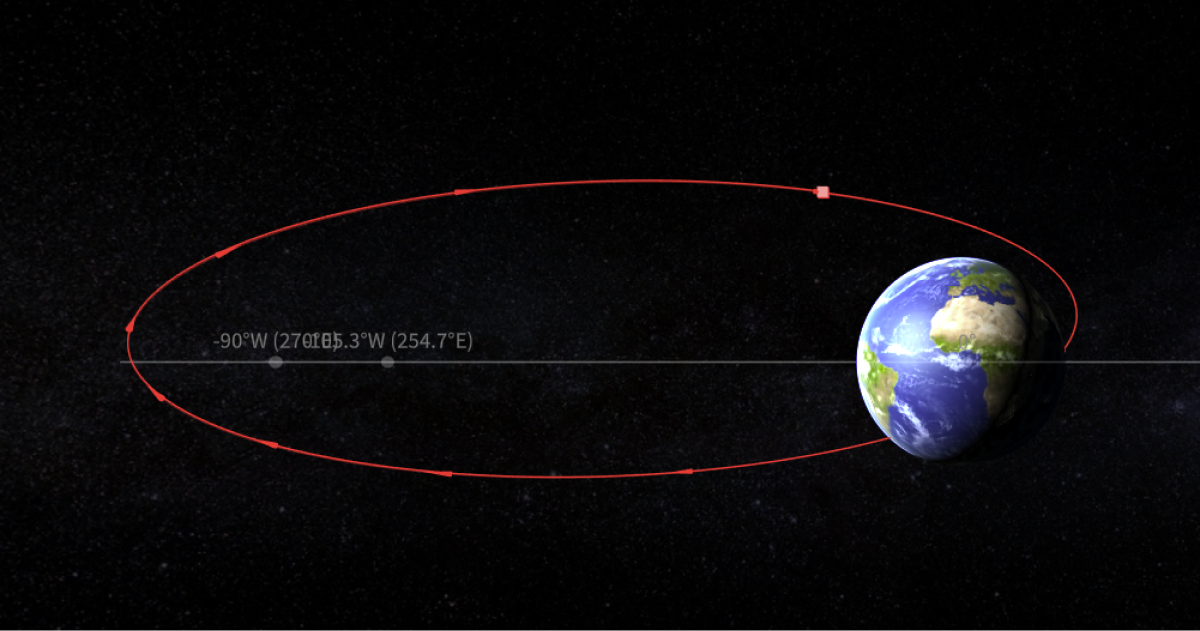

Tianlian 2-06 in GTO: Apogee = 35,822km Perigee = 196km Eccentricity = 0.73 (top)
LM-3B/E Lightning Strike & Launch Patch (below)
(saberastro.com & nasaspaceflight.com)
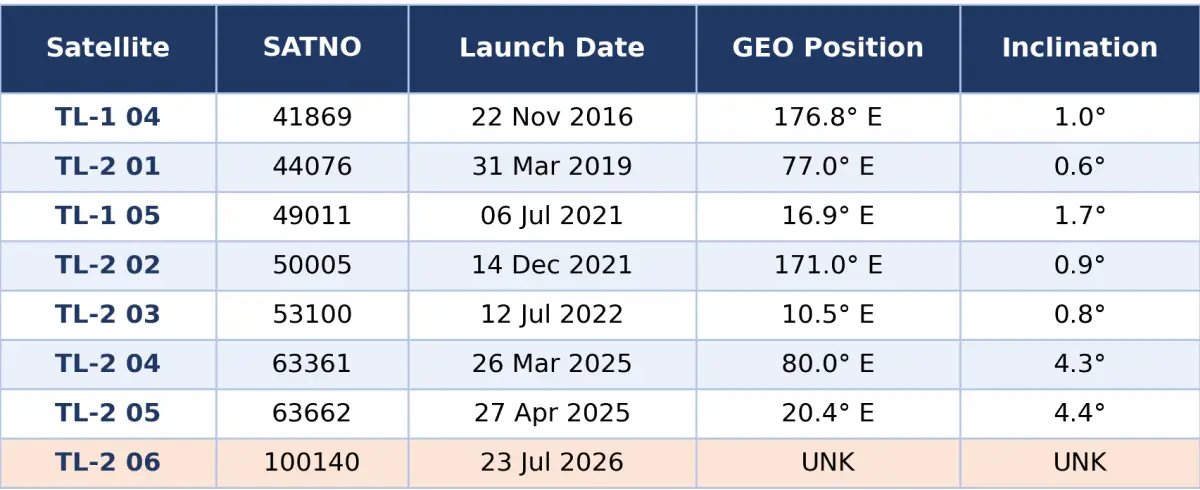
Table of Operational Tianlian Relay Satellites
(based on Celestrak.org data)
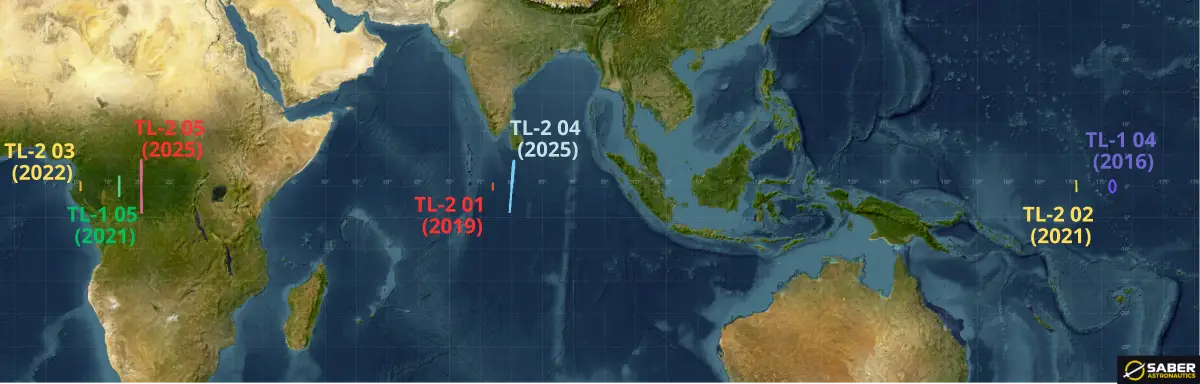
Locations of Operational Tianlian Relay Satellites
(saberastro.com)
China’s Tianlian Data Relay Constellation: A Deep Dive
26 July 2026: While we wait for China to park TL 2-06 into GEO I thought it would be a good chance to do a deeper dive into the Tianlian constellation. Here goes.
China has launched a total of 11 Tianlian data relay satellites to Geosynchronous orbit (see table). The first three, TL 1-01 (32779), TL 1-02 (37737) and TL 1-03 (38730), launched in 2008, 2011 & 2012 respectively, have concluded their operational lives and are now in graveyard orbit. They provide a good starting point for analyzing China’s evolving use of Inclination Biased orbits.
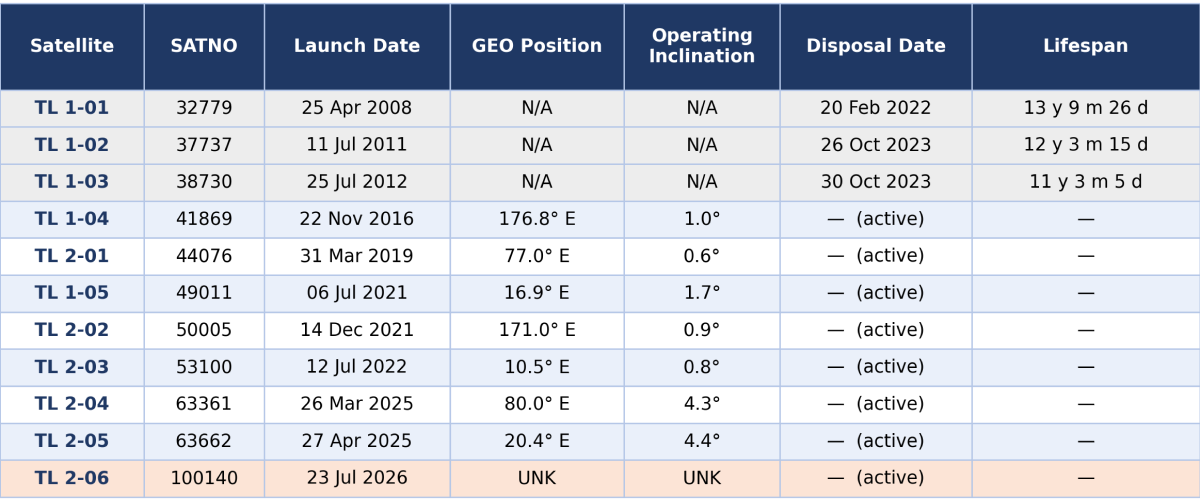
China Has Launched a Total of 11 Tianlian Data Relay Satellites to Geosynchronous Orbit
(based on data from Celestrak.org)
First Generation: TL 1-01 – 03
TL 1-01: The operational lifespan of TL 1-01 reveals China initially did not follow an Inclination Biased approach. China inserted TL 1-01 into GEO at an inclination of just ~0.48° and then actively held it near 0° inclination for the first 5 years of the satlellite’s operational life. Then China ceased N/S stationkeeping from 2014-2017 during which time the sun/moon gravity increased TL 1-01’s incilnation to nearly 3°. China then resumed N/S stationkeeping maneuvers for 2 years before ceasing N/S maneuvers in 2019 and allowing the inclination to grow steadily and unchecked.
In February 2022, after nearly 14 years of service and having drifted to ~5.5° inclination, China boosted TL 1-01 ~821 km above GEO into a graveyard orbit — far exceeding the IADC-recommended ~235km protected-region minimum — permanently removing it from the operational GEO belt, where its inclination has since continued climbing past 10°.
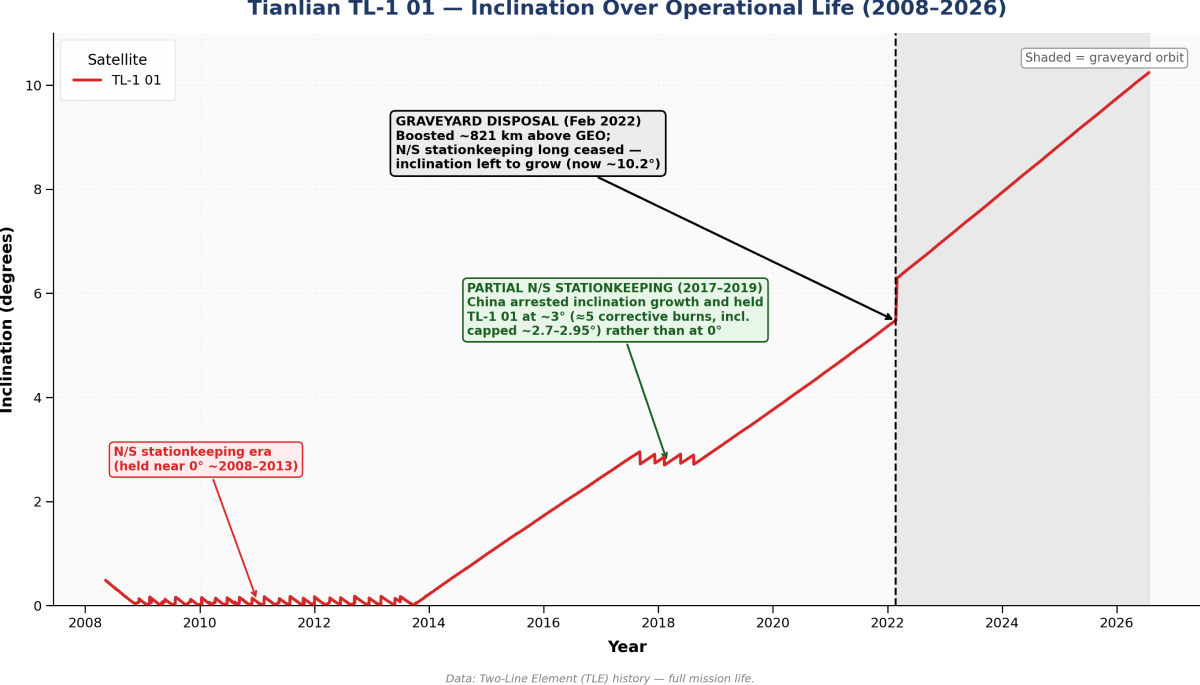
TL 1-01 Inclination from 2008-2026
(based on Celestrak.org data)
TL 1-02: China used a partial inclination bias for TL 1-02 launching the satellite into an ~1.0°
inclined orbit and then allowing the sun/moon gravitational influence to reduce TL 1-02’s inclination for about the first year on orbit. China conducted several N/S stationkeeping maneuvers from 2013-2014 to maintain a near 0°, then allowed inclination to naturally increase from 2014-2017. Once TL 1-02 reached ~3° inclination China resumed N/S stationkeeping for the next 6 years. China finally maneuvered TL 1-02 into GEO in November 2023.
TL 1-03: Unlike TL 1-01 and TL 1-02 which China launched directly into Geosynchronous orbit, China launched TL 1-03 into Geosynchronous Transfer Orbit before circularizing into Geosynchronous Orbit. Once TL 1-03’s orbit was circularized it had an initial inclination of 2.07°. Again, China used the sun/moon gravitational influence to naturally lower TL 1-03’s inclination to near 0°. China then conducted N/S stationkeeping maneuvers to maintain the satellite’s inclination for the next 5 years (2015-2020). From 2020-2023 China continued to conduct E/W stationkeeping while allowing TL 1-03’s inclination to naturally increase. Finally, in November 2023 China increased TL 1-03’s SMA 362km to place the satellite into graveyard orbit. TL 1-03’s inclination just prior to the graveyard maneuver was 3.3°.
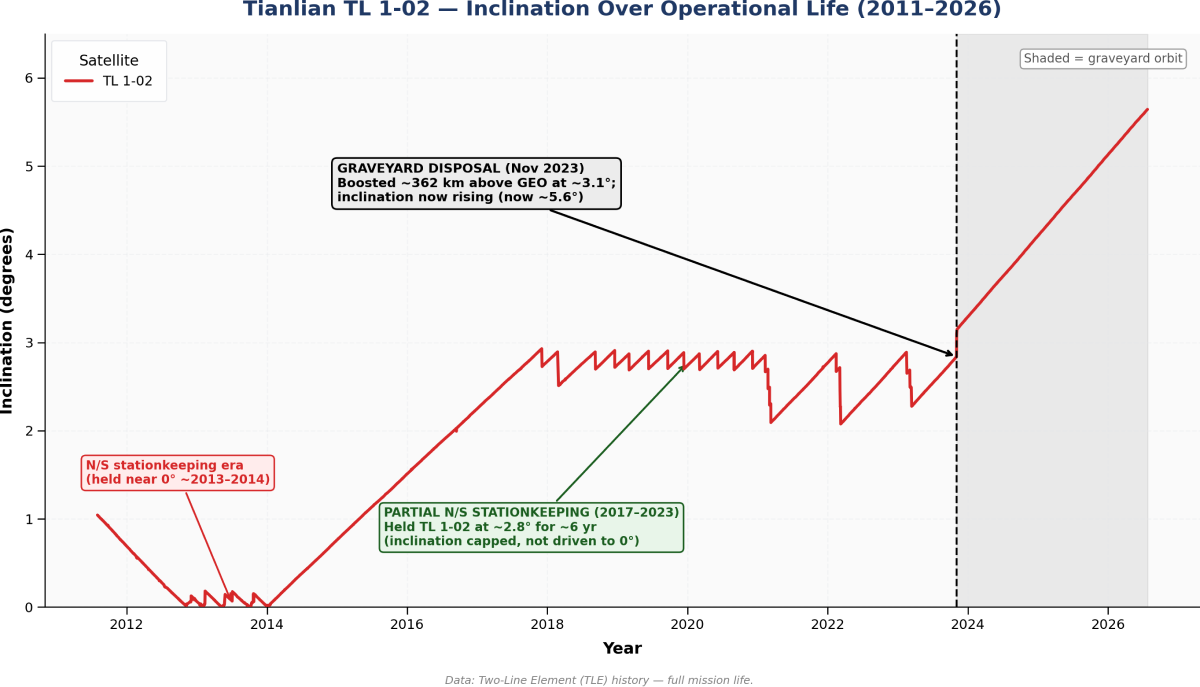
TL 1-02 Inclination from 2012-2026 (based on Celestrak.org data)
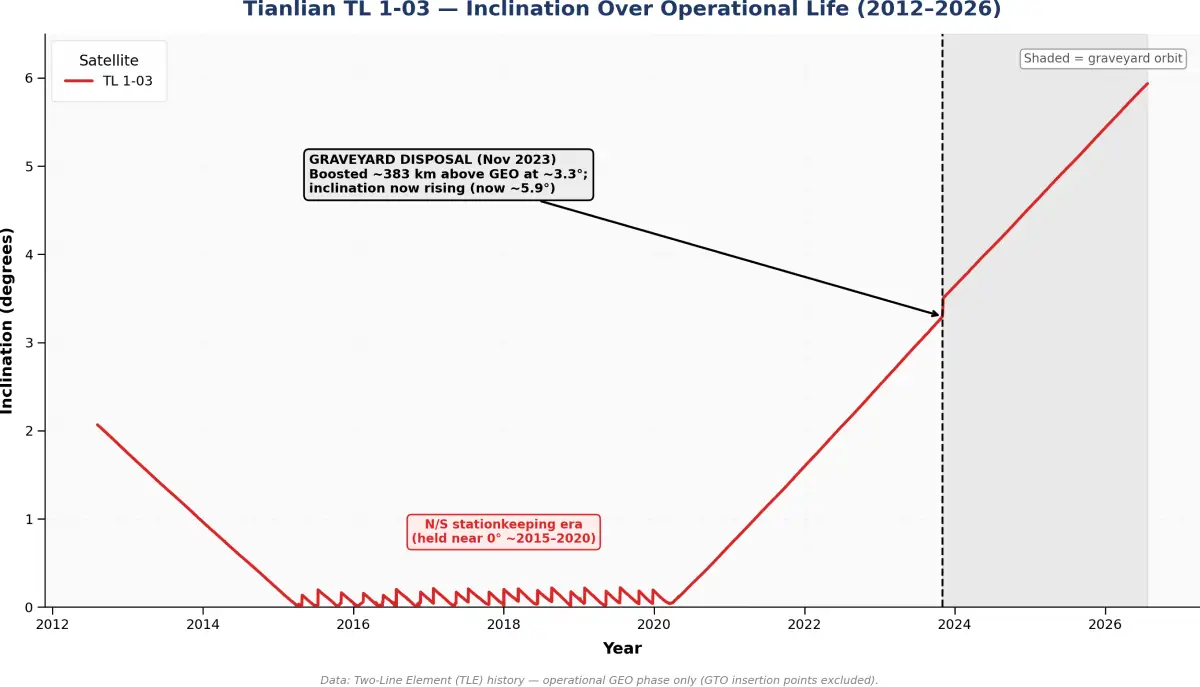
TL 1-03 Inclination from 2012-2026 (based on Celestrak.org data)
Hybrid Approach: TL 1-04 & TL 2-02
Both TL-1 04 and TL-2 01 were placed on orbit using an inclination bias technique, but they also executed significant N/S stationkeeping maneuvers. China injected each into GEO at roughly 3° of inclination — TL 1-04 at ~3.06° following its November 2016 launch, and TL 2-01 at ~2.99° after its March 2019 launch — and then allowed both to coast downward under natural solar-lunar gravitational torque, expending no propellant during the descent. Both took a very similar ~3 years to glide down to near-zero inclination (TL-1 04 reaching ~0° by May 2020, TL-2 01 by May 2022). The critical distinction is what happened next: China then actively held both at ~0° inclination through repeated N/S station-keeping burns (see graph). China maintained TL-1 04 at near-zero inclination ~4.8 years (mid-2020 through its final N/S burn in March 2025), while TL-2 01 maintained near-zero inclination for ~3.1 years (mid-2022 through July 2025). In both cases the maneuvers have since stopped, and each satellite’s inclination is now climbing unchecked under the same luni-solar forces — in July 2026 TL-1 04’s inclination is nearing 1° and TL-2 01 has reached ~0.64° — indicating China has ceased N/S station-keeping on both, likely to conserve propellant as they age. Importantly, China is continuing to execute E/W station-keeping maneuvers for both satellites, so they are being kept on-slot longitudinally while allowed to drift in inclination. Both satellites likely remain operational.
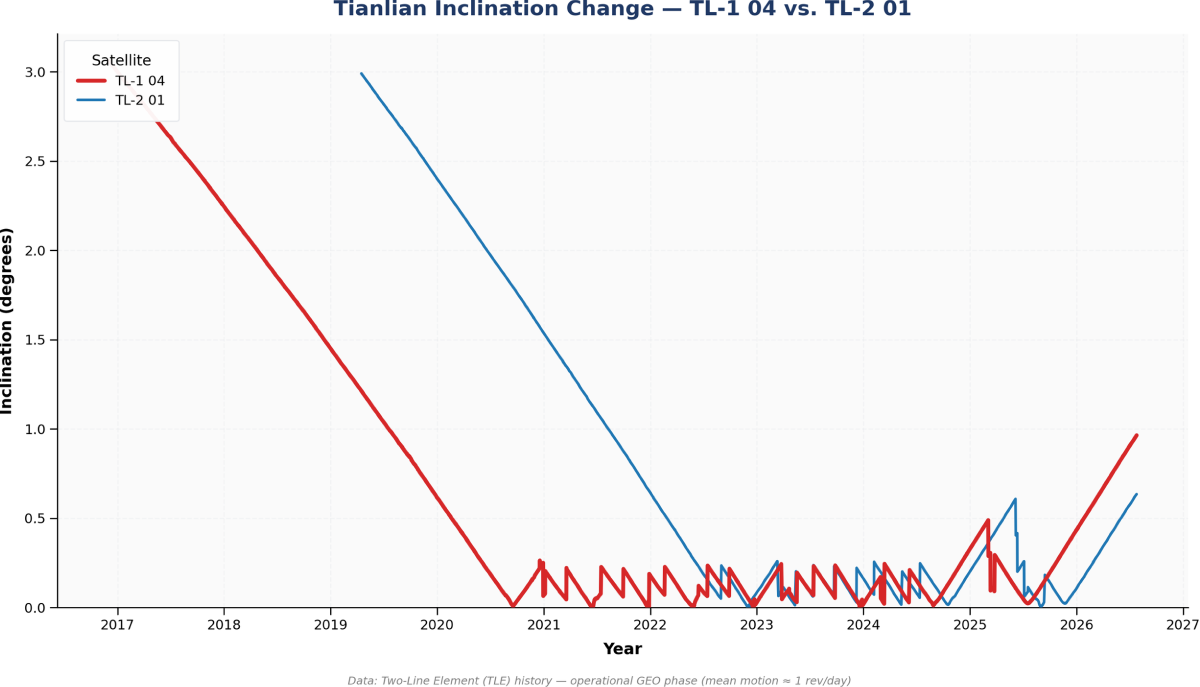
Extended 10yr View of TL 1-04 & 6.5yr View of TL 2-01 Inclination Pattern
China Launched Both into 3.0° Inclination & Allowed Sun/Moon Gravitational Influence to Reduce Inclination to Near 0° the 1st Three Years on Orbit (based on Celestrak.org data)
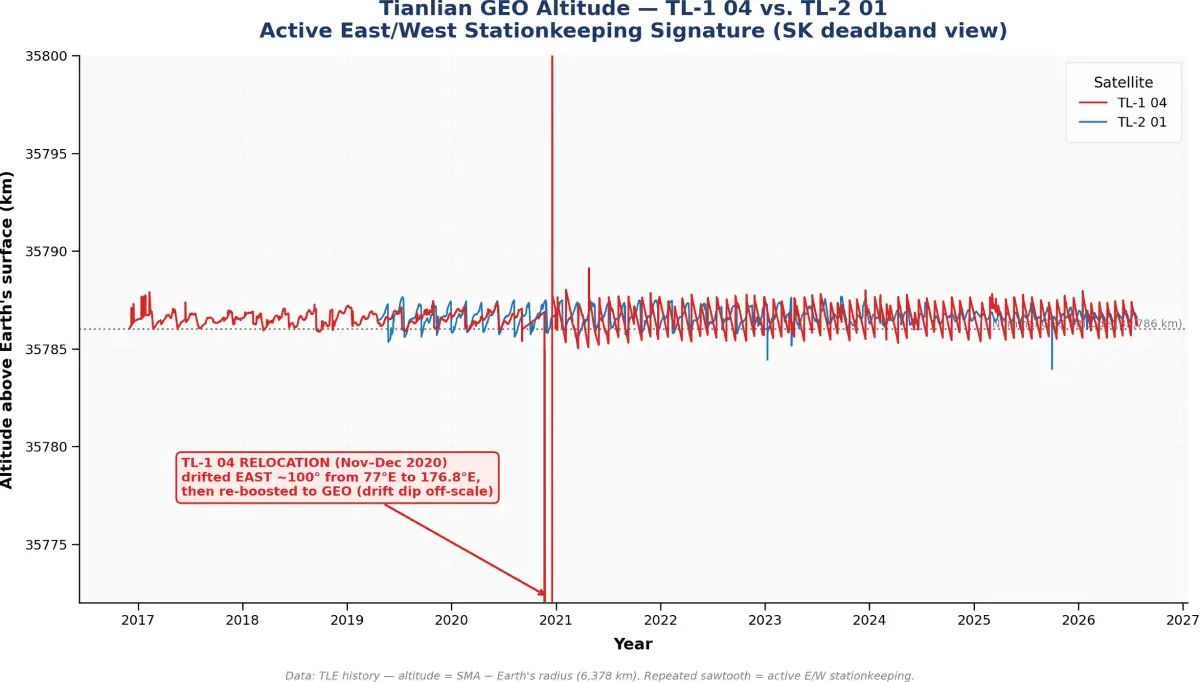
Extended 10yr View of TL 1-04 & 6.5yr View of TL 2-01 SMA Pattern
China is Clearly Continuing to Conduct East/West Stationkeeping with Both Satellites Indicating that Both Likely Remain Operational. (based on Celestrak.org data)
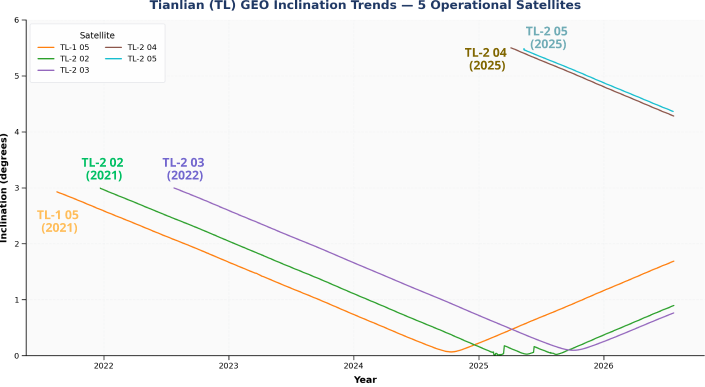
5 Year Inclination Trends for Tianlian Relay Satellites: TL-1 05, TL 2-03/04/05 Show Clear Pattern of Inclination Biased approach.
TL 2-02 Conducted 2 N/S Stationkeeping Maneuvers in 2025 to Delay Reaching Minimum Inclination.
(based on Celestrak.org data)
All In On Inclination Biased Approach: TL 2-02 and Beyond
TL 2-02 marks the transition point. Launched in December 2021 and likewise injected near 3°, it decayed to its minimum inclination on the same luni-solar “free ride,” but instead of keeping the satellite at 0° for years, China conducted just 2 N/S stationkeeping maneuvers (12 Mar & 22 May 2025) and then allowed the satellite to pass through 0° inclination in Aug 2025. Since that time TL 2-02’s inclination has naturally increased and as of July 2026 it was at ~0.90°.
China appears to have abandoned N/S stationkeeping with its most recent Tianlian satellites. TL-1 05 (now rising through ~1.69°) and TL-2 03 (now ~0.76°) both reached a minimum inclination just above 0° and were then allowed to precess back upward without conducting any N/S station-keeping maneuvers at all — no propellant spent to hold zero inclination. The two newest satellites, TL-2 04 and TL-2 05, extend the tactic even further: injected at a much higher ~5.5° inclination and still descending (~4.3°), they are riding the luni-solar torque down and, based on the behavior of their predecessors, appear unlikely to be held at zero once they arrive.
Taken together across all seven operational satellites, the data indicate a deliberate change in Chinese operational doctrine — away from the older TL-1 01-04 & TL-2 01 practice of expending years of propellant to maintain a rigid 0° inclination, and toward a fuel-conserving approach that lets each satellite orbit through a shallow inclination minimum and drift naturally, reserving fuel for E/W longitude control only.
Qianfan Update: Groups 13 & 15 Now Tracked
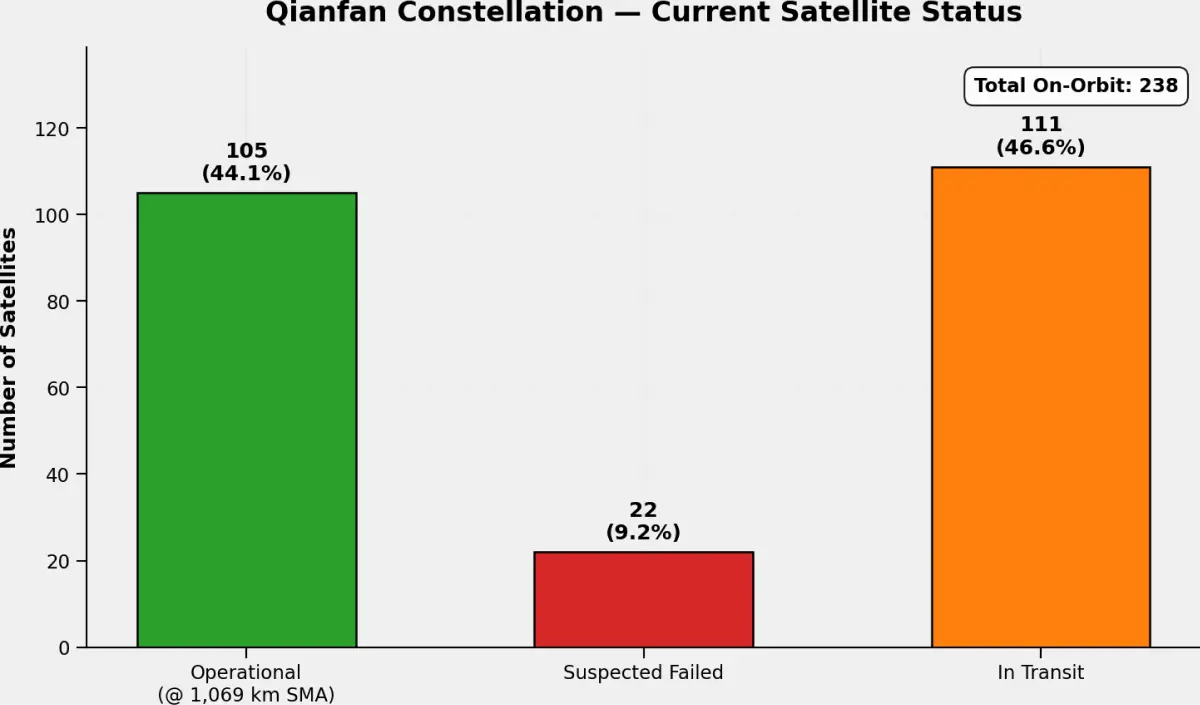
17 July 2026: As we noted in the 12 July Flash, China conducted 2 Qianfan launches earlier this month. It usually takes about 2 weeks for new satellites (especially those launched in large numbers) to show up in the space-track.org catalog. With their orbital data now available I can now say that China launched the 18 Group 13 satellites into a co-planar orbit with Group 11. I did note that one of the Group 13 satellites, Qianfan 201 (69800), is in an orbit 100km lower than other satellites (714km v ~810-820km), so we’ll keep an eye on that one. China launched the 20 Group 15 satellites into a co-planar orbit with the Group 2. Recall that the Group 2 satellites had a high failure rate and only 3 of the 18 satellites actually made it to their operational orbits. Group 15 used the improved LM-8A which allowed China to launch 20 satellites instead of 18. The new launch vehicle did not deliver its payload to a higher orbit, all of the Group 15 satellites are starting their journey at ~800-830km which is consistent with previous launches.
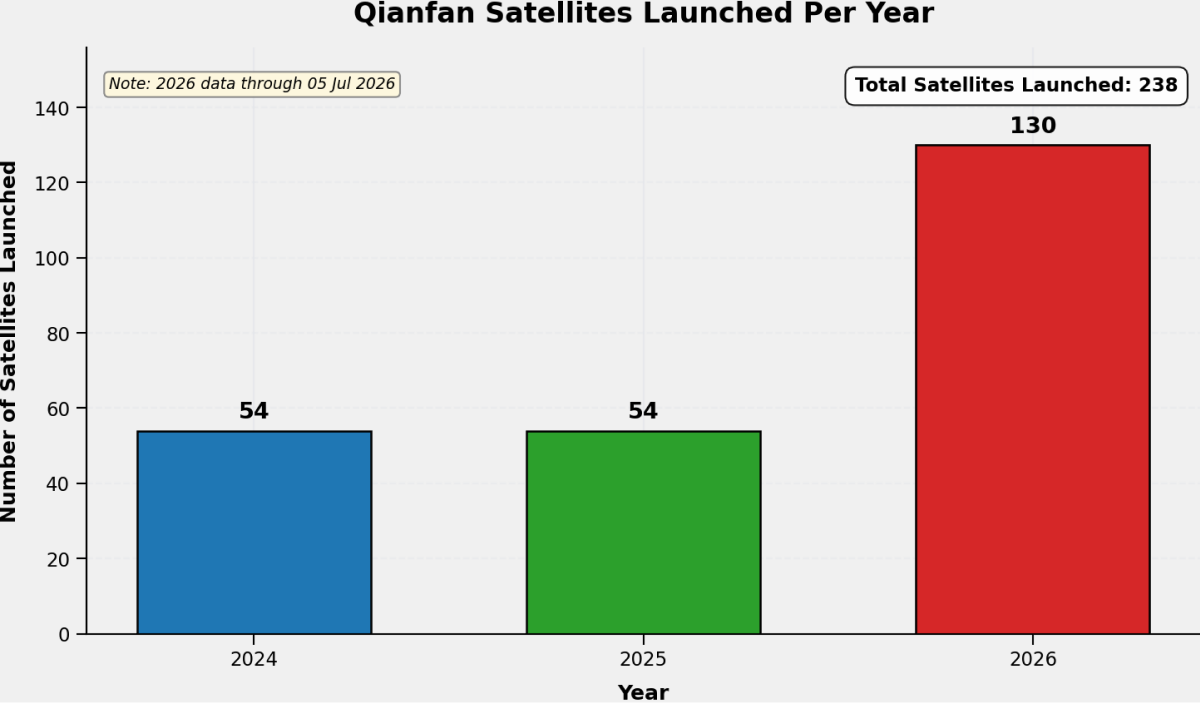
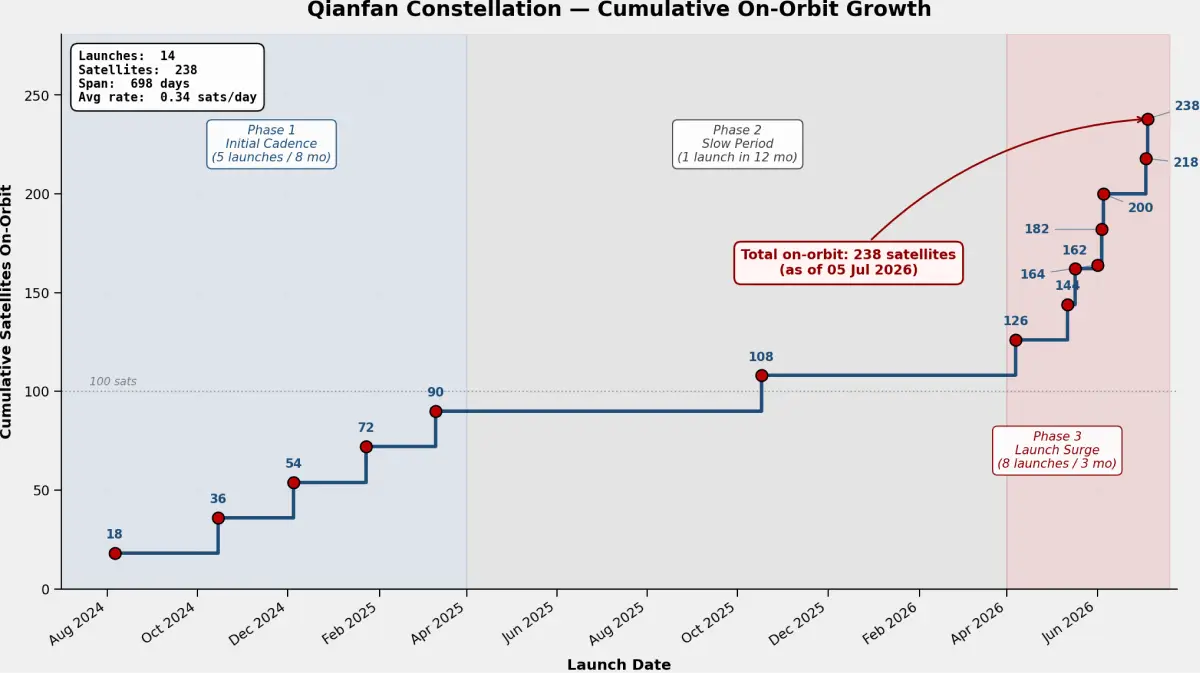
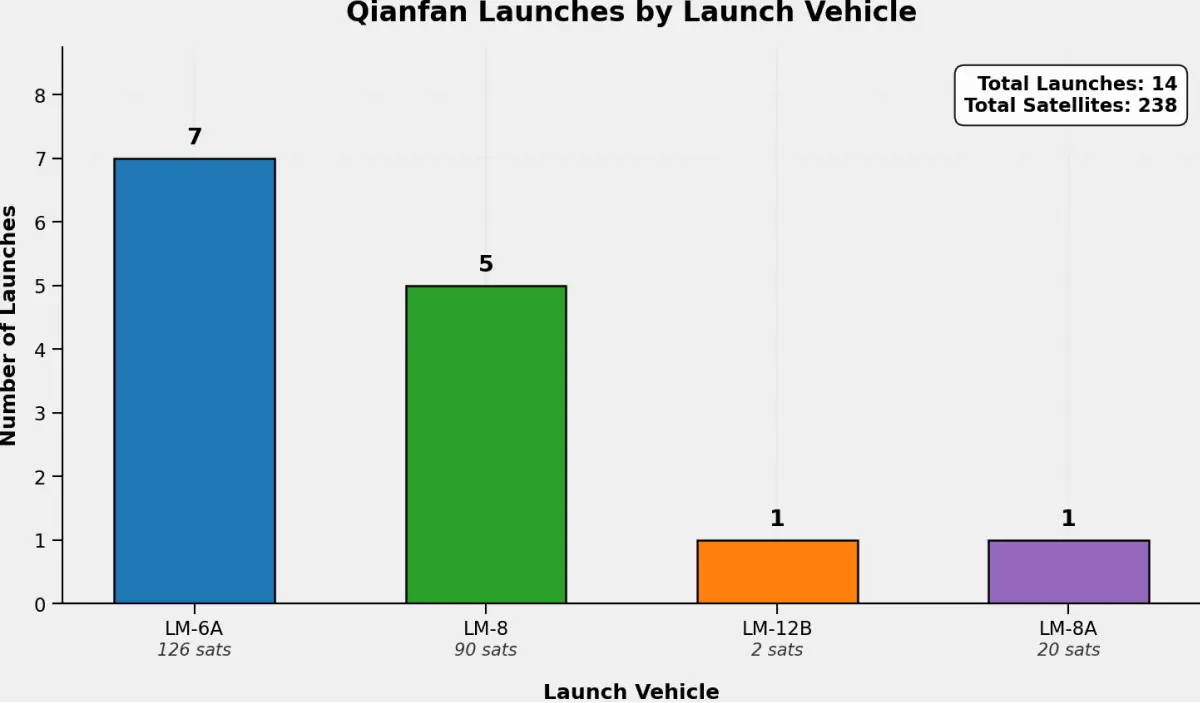
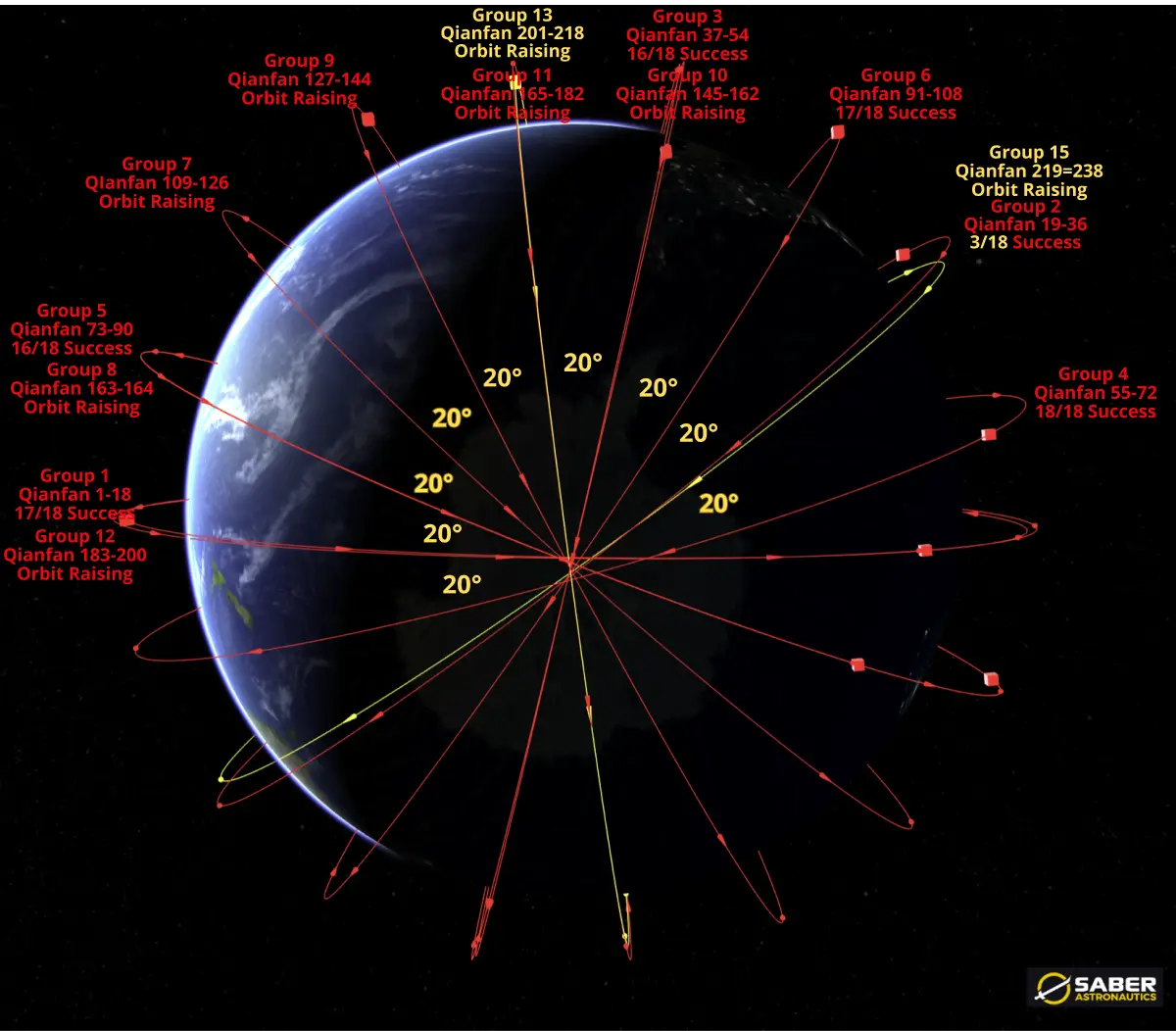
14 July 2026: Polar View of Current Qianfan Constellation.
238 satellites operating in 9 orbital planes.
Planes are inclined 89° & separated by ~20° RAAN.
(saberastro.com)
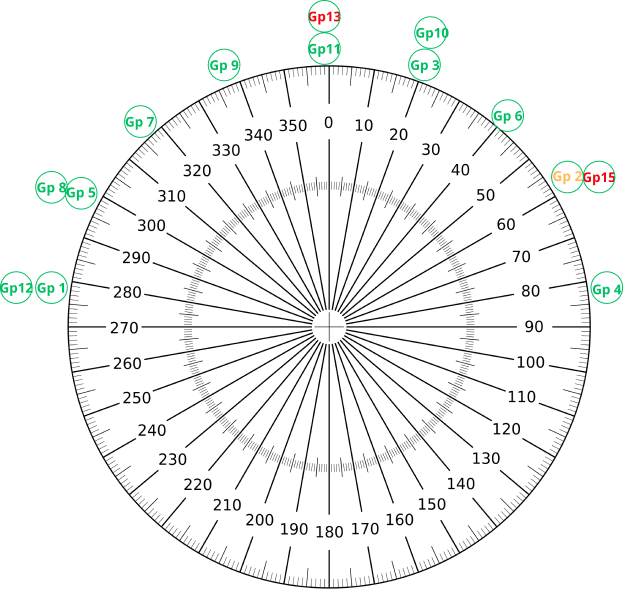
Current Qianfan Constellation consists of 238 satellites operating in 9 orbital planes. Planes are inclined 89° & separated by ~20° RAAN. (saberastro.com)
Pics o’ the Fortnight!
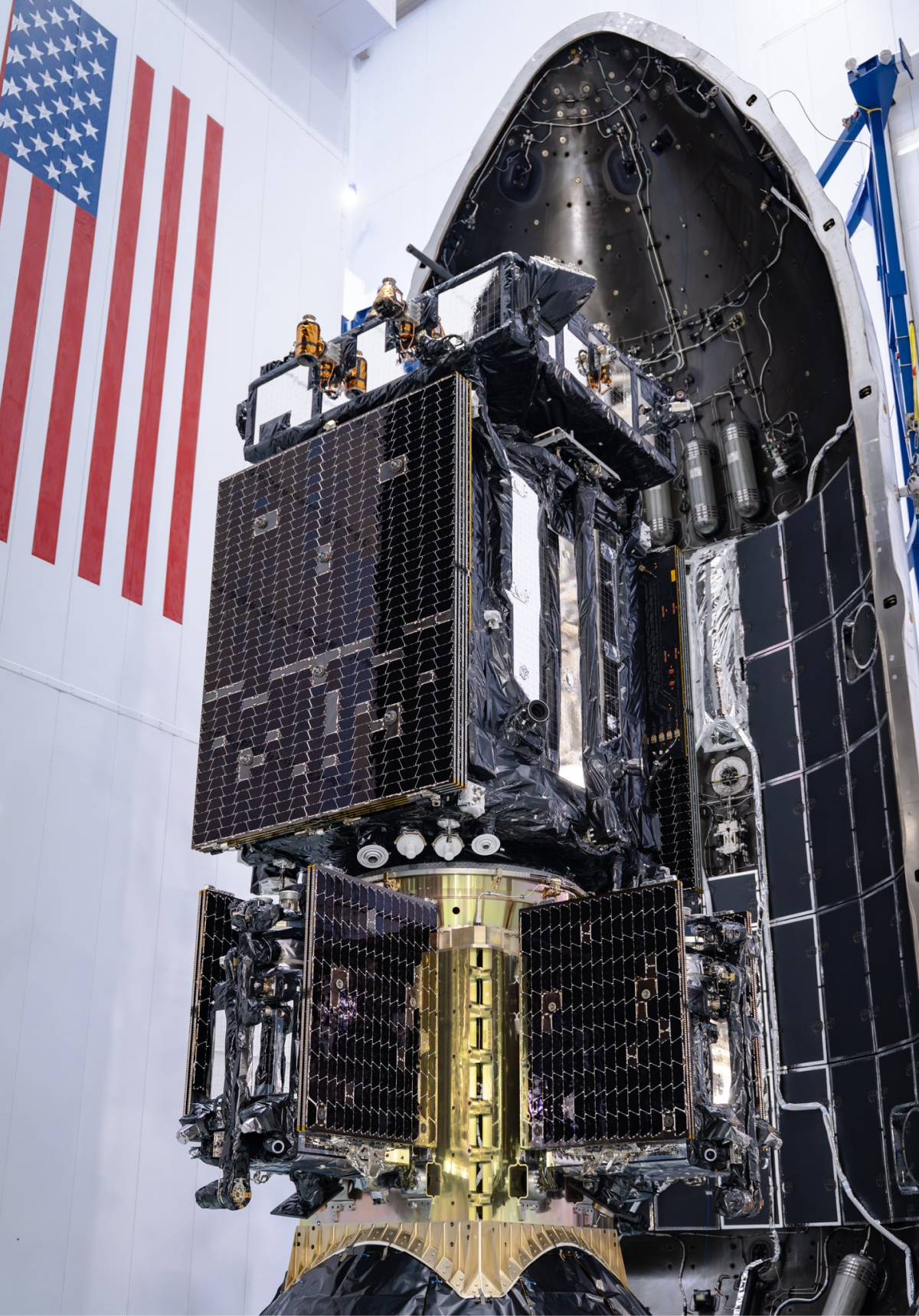
“Mission Robotic Vehicle (MRV)-1 with the 3 Mission Extension Pods (MEP) on top before encapsulation. MRV is a pioneering commercial ‘orbital mechanic’ designed to rendezvous with aging satellites in geosynchronous orbit, inspect them, and attach life-extending propulsion pods so they can keep working for years longer.” (@BassonBrain via X)
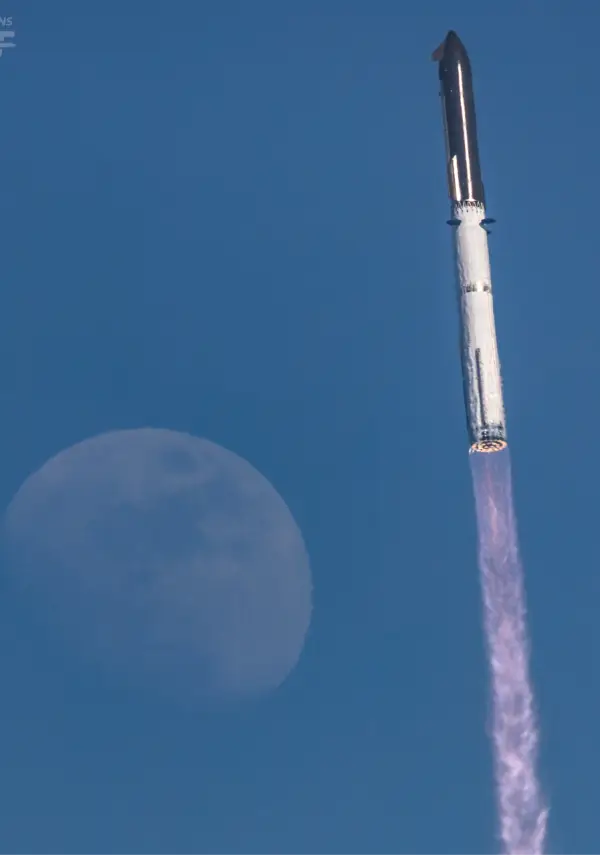
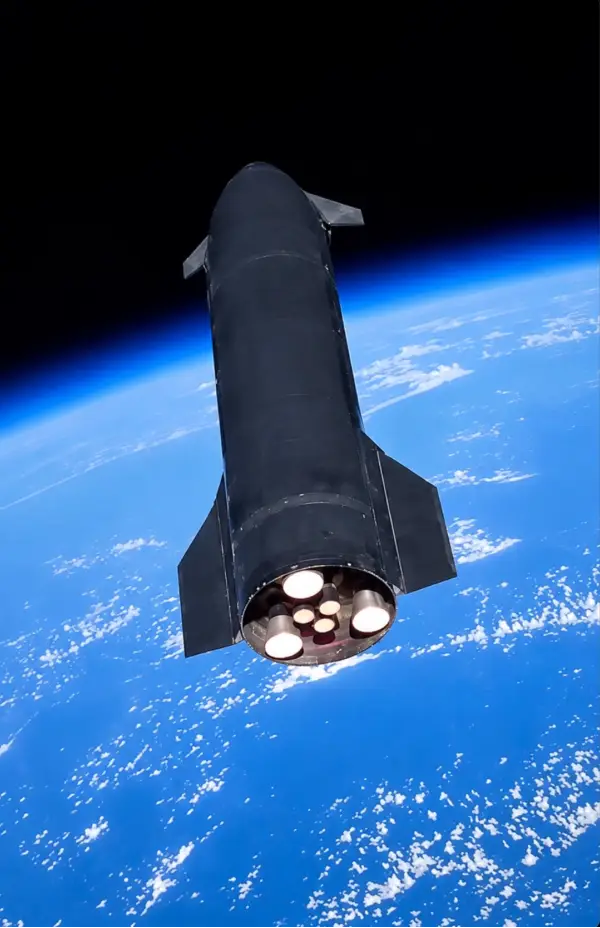
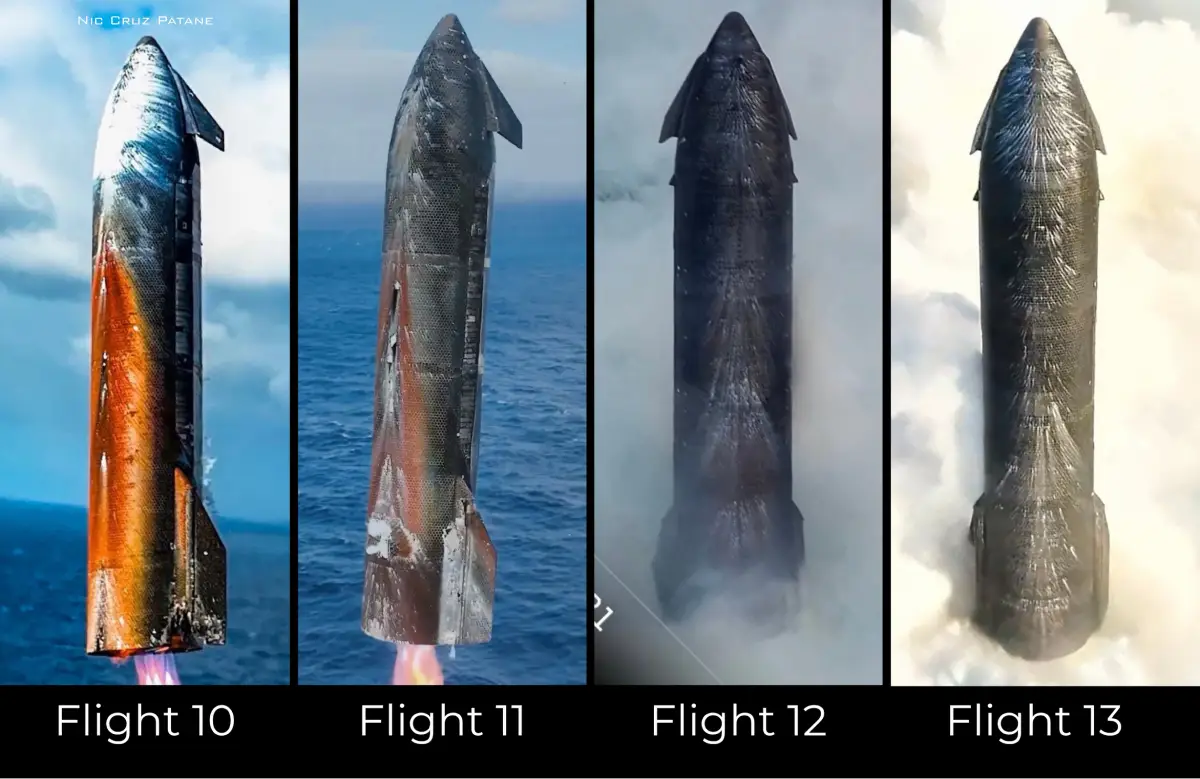
Many Memorable Images from Starship Flight 13. SpaceX Seems to be Making Good Progress on the Heat Shield Tiles!
(@NASASpaceflight @OmarJPimentel & @niccruzpatane via X)