
ISSUE 151 | August 11, 2026
The integrity flash
Analysis of Developments in the Space Domain
30 July 2026: China launched a Long March-6A with TJS-27A/B (100174/100176) satellites from Taiyuan. According to official sources, the satellites entered their planned orbits successfully and “will be mainly used for services such as satellite communications, broadcasting and television, and data transmission, as well as to carry out related technology tests and verification”. Western space observers identified the satellites in co-planar/circular orbits. The TJS-27 pair share a similar inclination as that of the YG-31 ELINT satellites (64.7° vs 63.4°) but that’s where the similarities end. I was unable to find other Chinese satellites in similar orbit. Launch Video.
- TJS-27A/B have an average altitude of 1,154km and an inclination of 64.7°.
- TJS-27A is orbiting ~1km higher than 27B resulting in 27B leading 27A by ~360km as of 3 Aug 2026 2040Z. This distance will continue to change if China does not equalize their SMAs.
- Including TJS-27A/B China has launched 26 TJS satellites. TJS-27A/B are the first to orbit in the LEO regime. TJS-13 and 21 are in HEO and the remainder are in Geosynchronous orbit.
- Observers have noted that TJS-27A/B is a combined effort between two of China’s state-owned space enterprises with CAST having built “27A” & SAST “27B”.
TJS-27A was developed by the Remote Sensing Satellite General Department of the Fifth Academy (China Academy of Spaceflight Technology), while TJS-27B was developed by the Eighth Academy (Shanghai Academy of Spaceflight Technology). - The LM-6A consists of a liquid core stage with two YF-100 engines and four strap-on solid rocket boosters. This launch vehicle is capable of delivering ~5,500kg to a 64.7° inclination and 1,154km SMA from Taiyuan. Unknown if the TJS-27A and 27B are similar in size. Their combined mass will need to be <5,500kg.
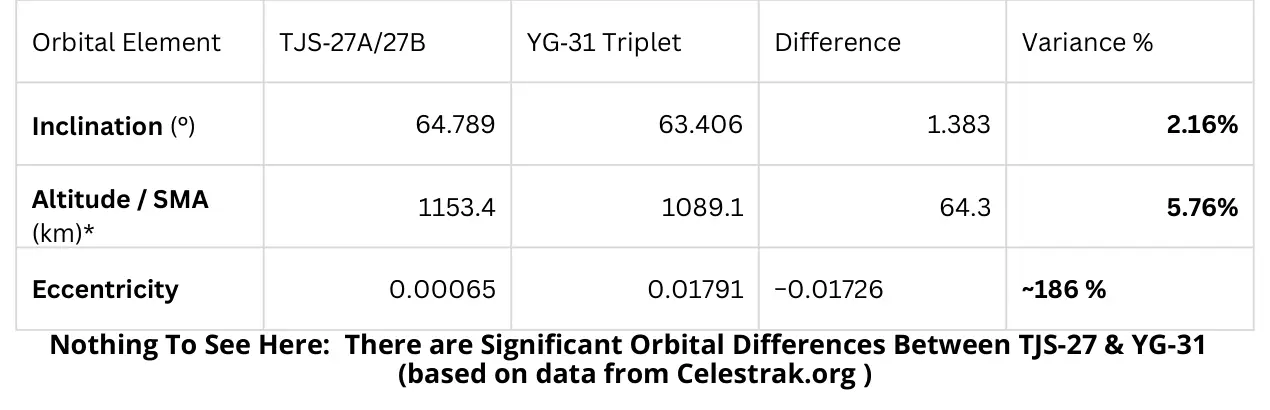
- While the TJS-27 satellites have a similar inclination as the 12 YG-31 satellites China launched between 2018 and 2021 they share no other similarities. TJS-27 satellites are orbiting 64km higher and in a circular orbit (eccentricity = .00065) The YG-31 satellites have an eccentricity nearly 3x greater (eccentricity = .01791) than that of the TJS-27 pair.
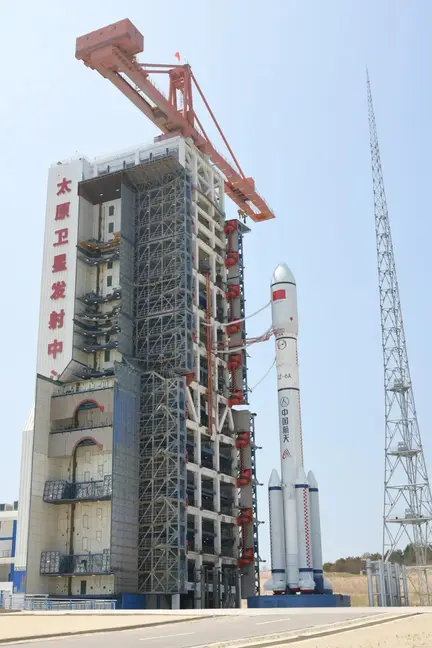
TJS-27A/B Prepares for Launch on LM-6A from Taiyuan (nasaspaceflight.com)

Residents in vicinity of 4 SRBs Drop Zone (Lingchuan County in SE Shanxi Province) take shelter in Hillside Bunker. (@Cosmic_Penguin via X)
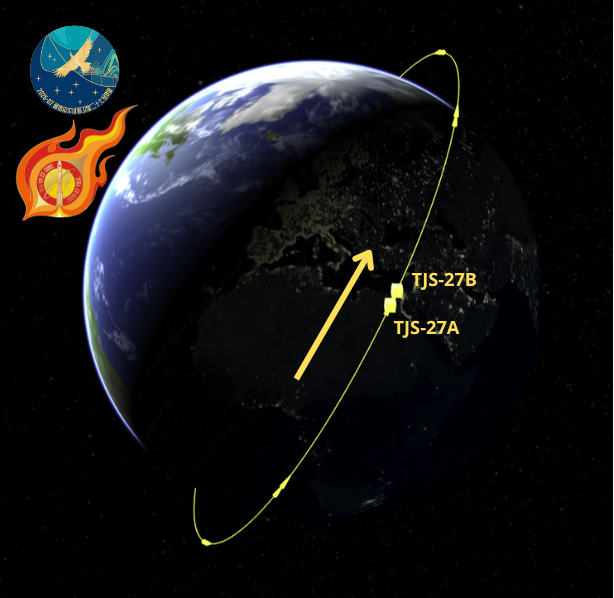
3 Aug 2026: TJS-27A/B Are Co-Planar with 27B Leading 27A by 360km…and Counting. Mission Patch & Launch Patch (Upper Right)
(saberastro.com)
29 July 2026: China launched a Long March-7A with data relay satellite Tianlian 3-01 (100172) from Wenchang. According to official sources, the satellite entered the preset orbit successfully and “is primarily used to provide data relay and TT&C (telemetry, tracking, and command) services for crewed spacecraft such as spaceships, space laboratories and space stations, as well as for medium- and low-Earth-orbit resource satellites”. Preliminary reporting from the Joint Commercial Operations Cell (JCO) noted the satellite with an inclination of 0.1° and parked at 94.1° E (parking location subject to change). China is not following an Inclination Biased approach for TL 3-01, meaning operators will likely conduct fuel expensive North/South stationkeeping maneuvers to maintain TL 3-01’s orbit near 0° inclination. Launch Video.
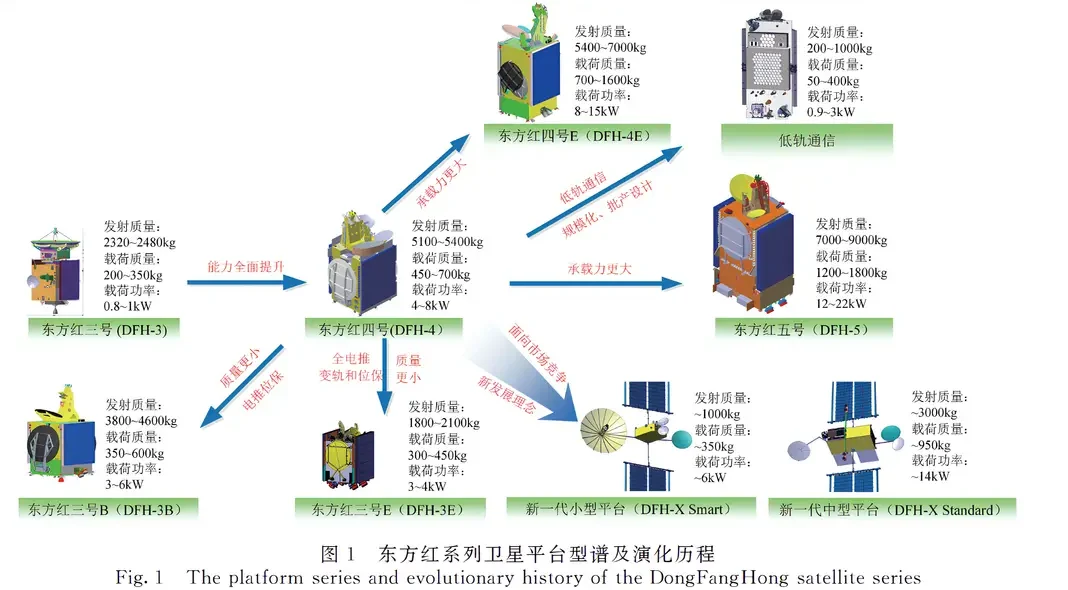
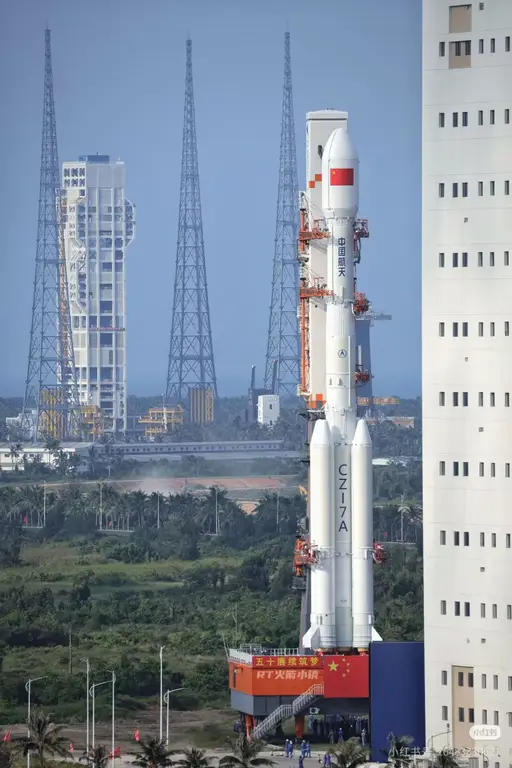
Per Chinese Media: “Tianlian-3 satellite platform and payload have undergone comprehensive upgrades: it adopts the Dongfanghong-4 enhanced platform, further improving the satellite platform’s carrying capacity; and it carries a new generation of payload products, significantly enhancing the satellite’s multi-user parallel data transmission capabilities.” China’s use of the LM-7A suggests TL 3-01 is a larger satellite than its predecessors (all previous TL satellites launched on a LM-3B/E or LM-3C). The Long March 7A can deliver 7,000kg to GTO…1,500 kilograms (1.5 metric tons) more mass than the Long March 3B/E.
TL 3-01 brings the number of operational Chinese data relay satellites to 9 (see table).
In addition, TL 2-06 (100140) (launched on 23 July 2026) has settled into GEO and is China’s first relay satellite in the Western Hemisphere (see map). Chinese space operators circularized the satellite’s orbit and appear to have parked at 169° W per the space-track.org catalog. China is following an Inclination Biased approach with TL 2-06. The satellite has an inclination of 2.9° and RAAN of 298° meaning that the sun/moon gravities will decrease TL 2-06’s inclination for the first 3+ years on orbit before it begins to naturally increase.
A data relay constellation enables China to task and stream their sensor data to Chinese ground stations for near real time processing and exploitation without the risks/delays associated with using ground-stations in foreign countries.
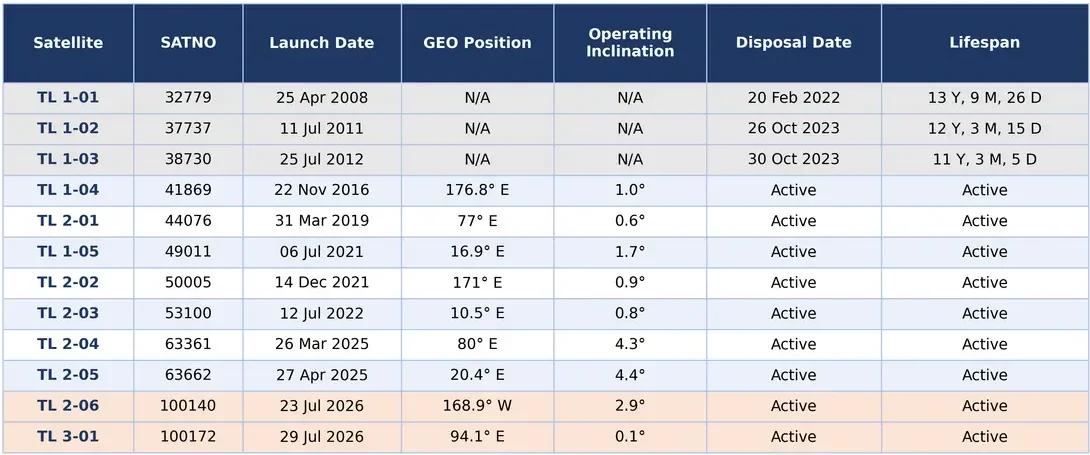
Table of Tianlian Satellites. China now has 9 operational relay satellites in Geosynchronous Orbit
(TL 2-06 and TL 3-01 Locations Based on Preliminary Data & Could Change all other orbits based on data from celestrak.org)
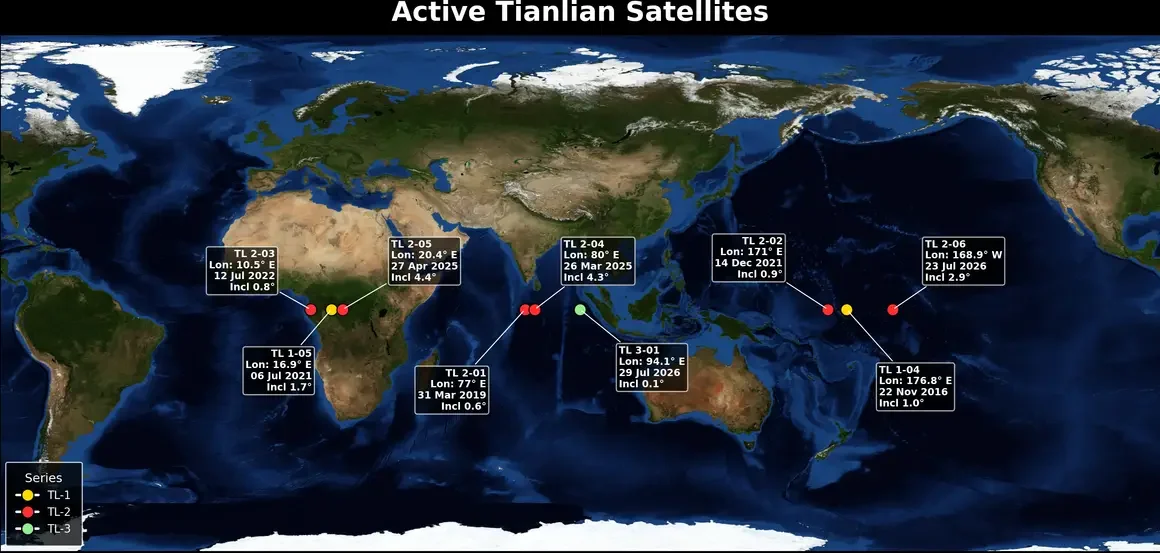
Map of Operational Tianlian Satellites (TL 2-06 and TL 3-01 Unofficial & May Change)
(based on data from celestrak.org)
TL 3-01 was the first Tianlian satellite to use the LM-7A (right). The LM-7A can deliver up to 7,000kg to GTO, 1,500kg more than the LM-3B/E.
TL 3-01 is using the larger DFH-4E bus.
(nasaspaceflight.com)
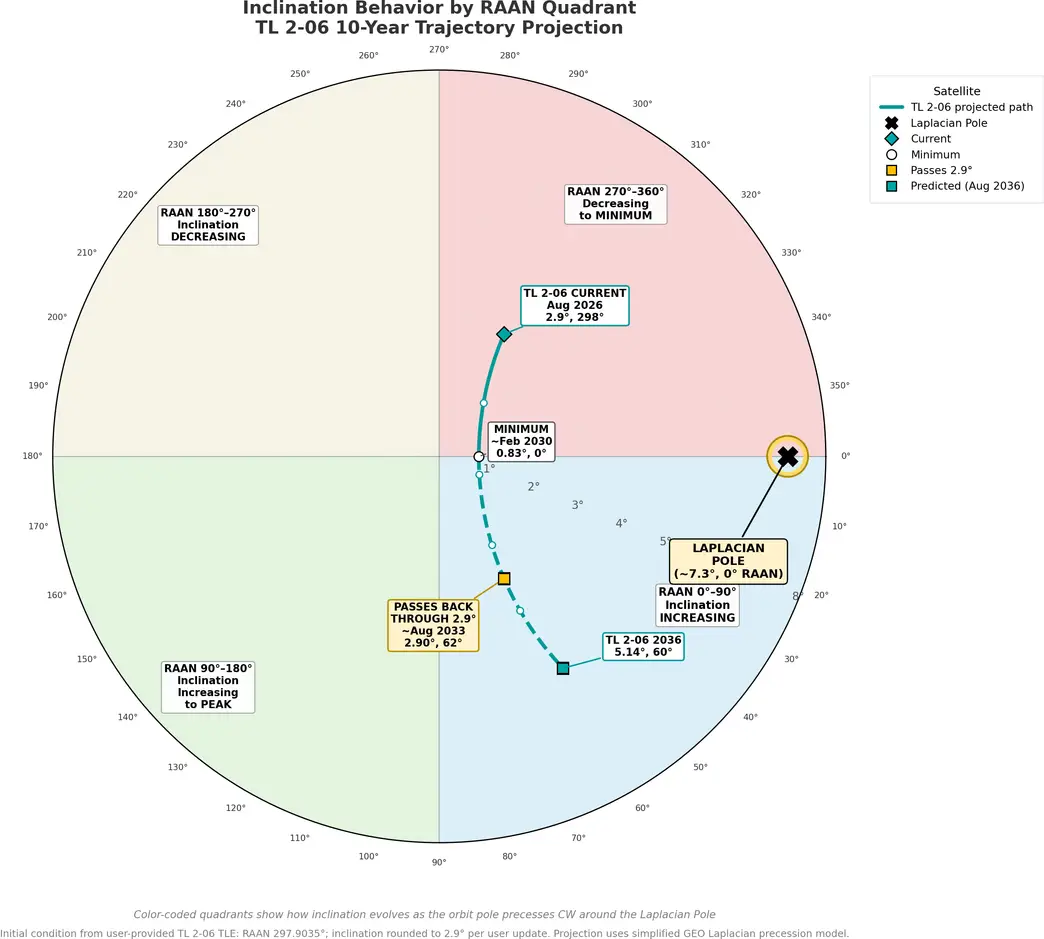
Using an Inclination Biased Approach TL 2-06 will remain at 2.9° inclination or lower until ~Aug 2033
(based on JCO data)
4 Aug 2026: China launched a Long March-8A with the 23d group of Guowang (China SatNet LEO) satellites from Wenchang. According to official sources, the 9 satellites (100203-100211) entered the preset orbit successfully. As with other Wenchang launches, China placed the satellites into an 50.0° inclined orbit. China launched Group 23 into an orbit only 1° west of Group 10. Due to LM-8A performance improvements China was able to deliver all 9 satellites into an orbit with an average altitude of ~1,100km which is ~180km higher than Group 22’s initial SMA. Delivering satellites closer to their operating altitude will considerably shorten deployment time and likely extend satellite lifespan. Watch Group 23 Launch Video.
- Per China In Space: “China Rocket detailed that the second-stage deploying the GuoWang satellites also coasted in space for multiple hours to bring them closer to their desired altitude.”
- Initial orbital data of Group 23 satellites confirms the LM-8A’s improved performance. The 9 Group 23 satellites were injected dramatically closer to the operational altitude than any previous Guowang 50° launch, Group 23 only needs to increase its SMA ~47km to reach its operational orbit at 1,149 km, whereas prior groups typically required 230 to 340 km of orbit raising. (see graph)
Unfortunately China is continuing its irresponsible launch protocol of depositing the upperstage rocket bodies in orbits which will take centuries (or longer) to decay and re-enter the Earth’s atmosphere. For this launch the LM-8A rocket body (100212) is in a 1,116x904km orbit…it will remain in orbit for a millennium (1,000+ years.)
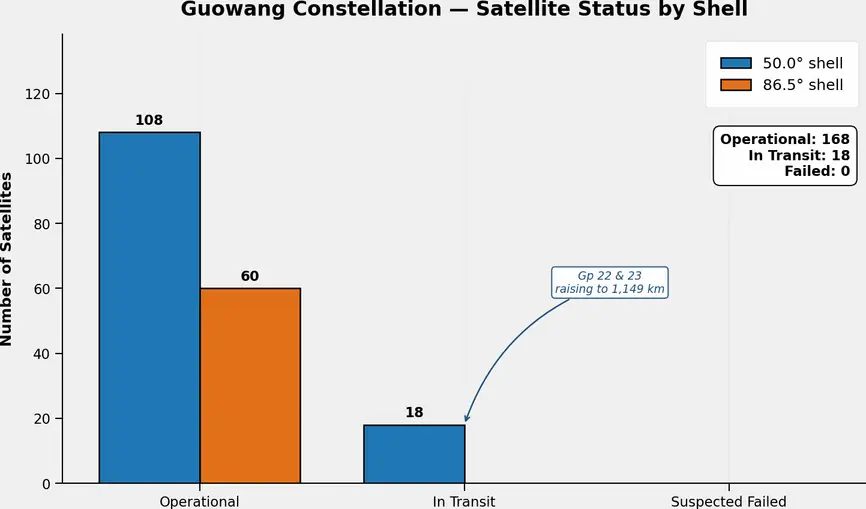
The Group 22 satellites (launched 17 Jun 2026) are nearing their operational altitude of 1,149km. All continue to increase their average altitudes; 4 Aug 2026 range is 992-1,020km. As time has passed their RAAN offset with Group 2 has decreased due to the J2 effect and Group 22 now has a <3° East RAAN offset with Group 2. China will time Group 22’s maneuvers to have them reach their operating orbits as they become co-planar with Group 2. Once this happens (next 4-6 weeks) the total number of satellites in that plane will be 18.
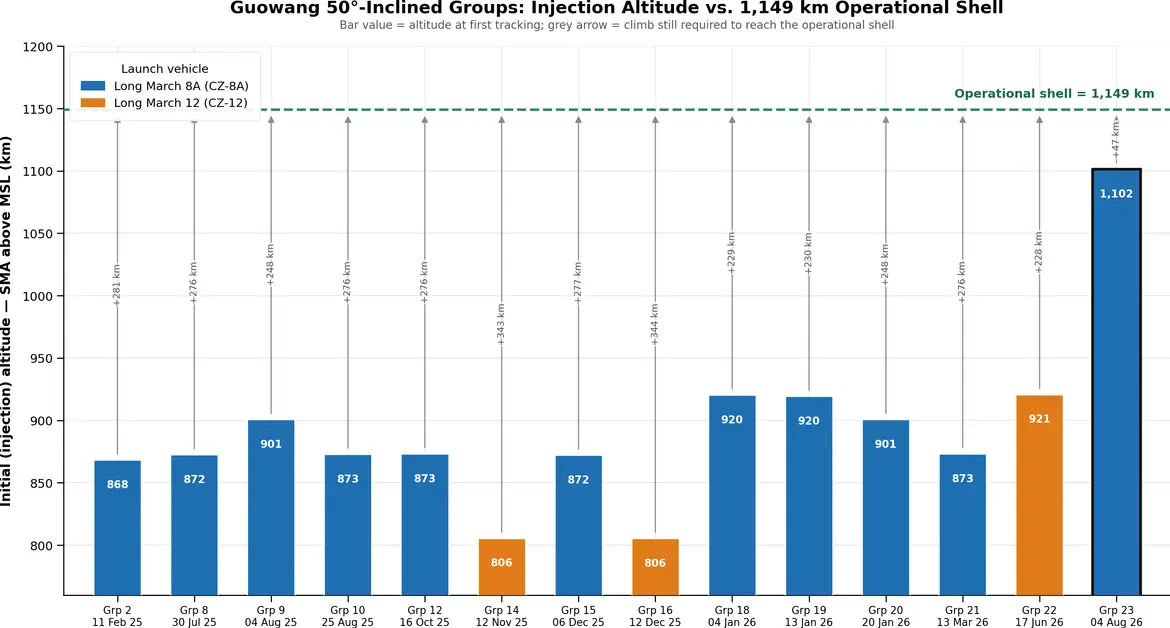
China Appears to Have Resolved a Significant Operational Hurdle with LM-8A Improvements. Group 23 Delivered Within 47km of Operational SMA (based on data from Celestrak.org)
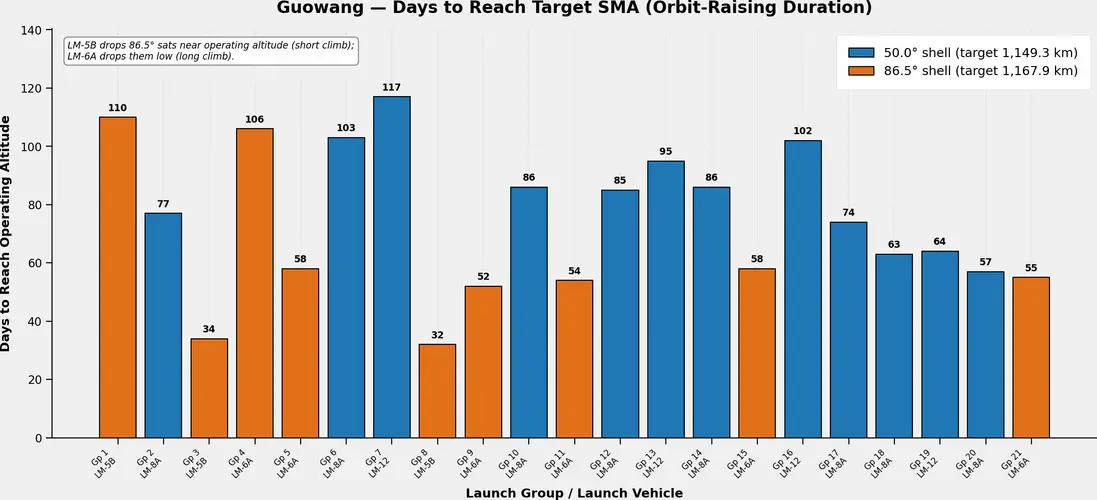
I expect Group 23 to reach operational altitude significantly faster than previous Groups. (based on data from Celestrak.org)
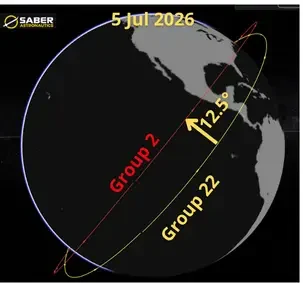
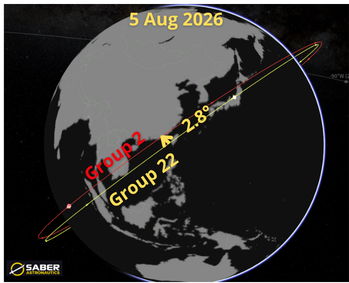
J2 Effect In Action! East RAAN Offset between Group 22 & Group 2 Reduced from 12.5° to 2.8° In One Month (saberastro.com)
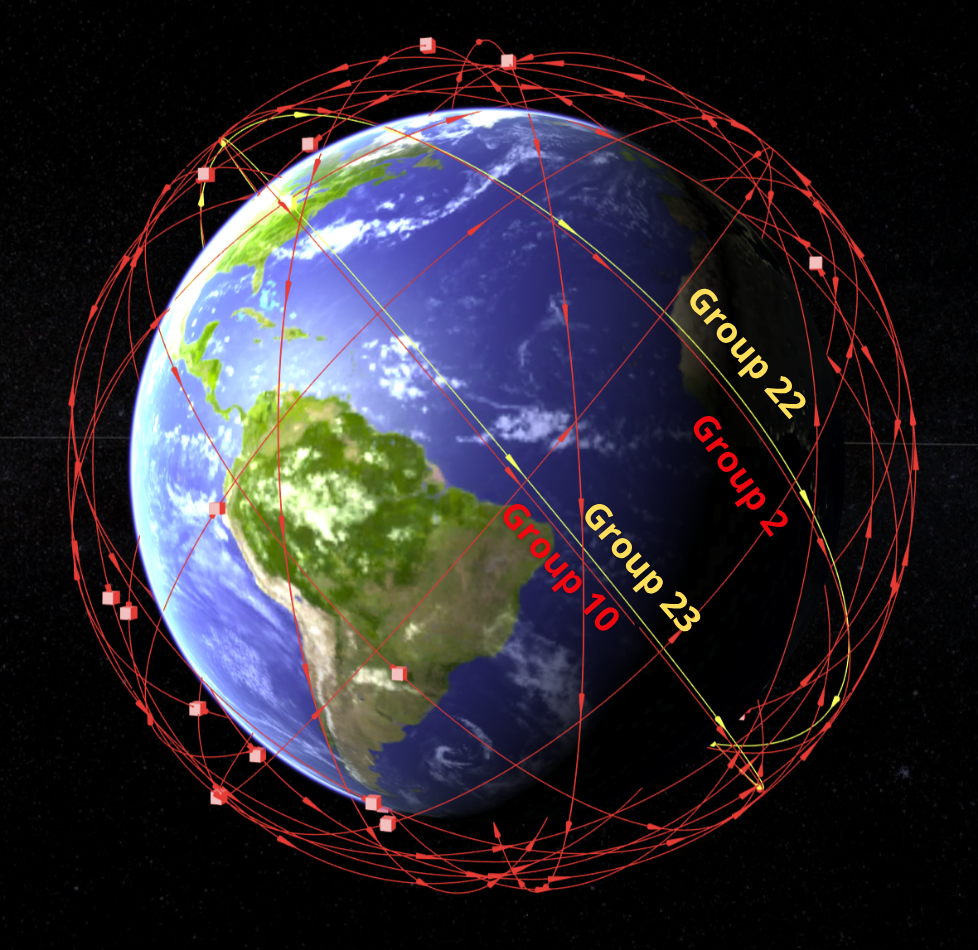
LM-8A Improvements Allowed China to Launch Group 23 into a 1,100km orbit (vs 800-900km previously). Notice Group 23 is nearly co-planar with Group 10. Group 23 will reach its operational altitude much faster than previous Groups. (saberastro.com)
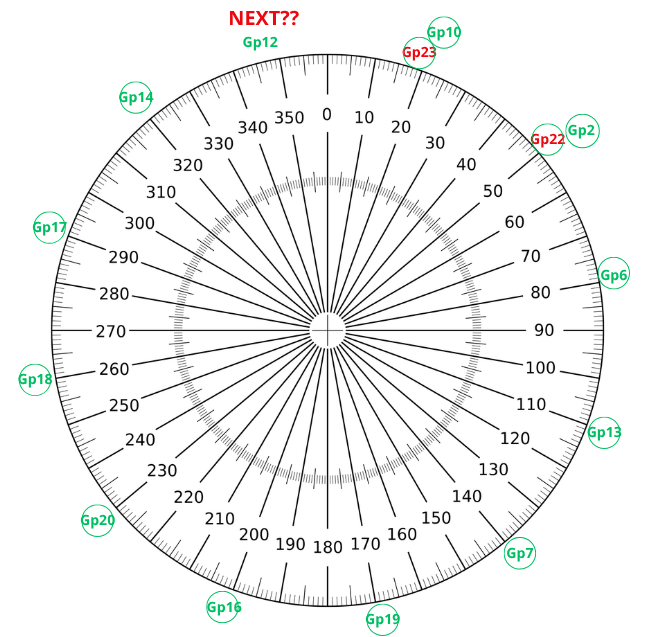
If China Continues to Follow the Pattern Established By Groups 22 & 23 the Next 50° Guowang Launch will be to Augment Group 12. (saberastro.com)
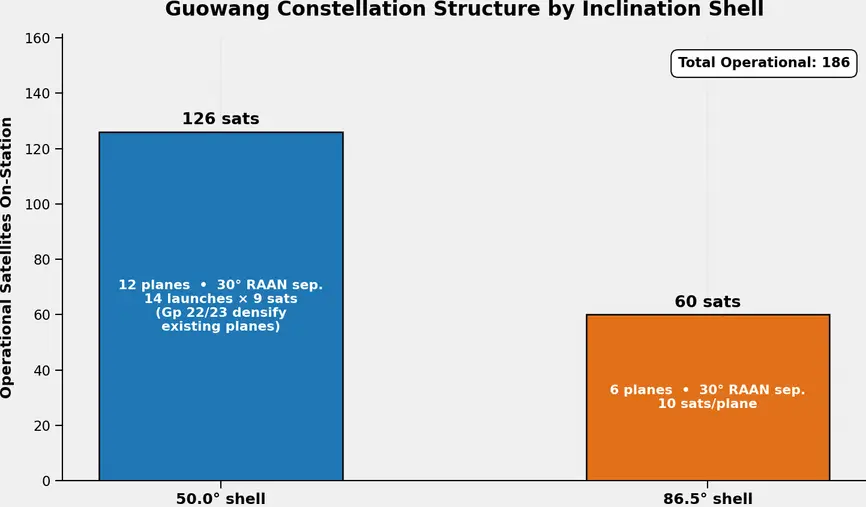
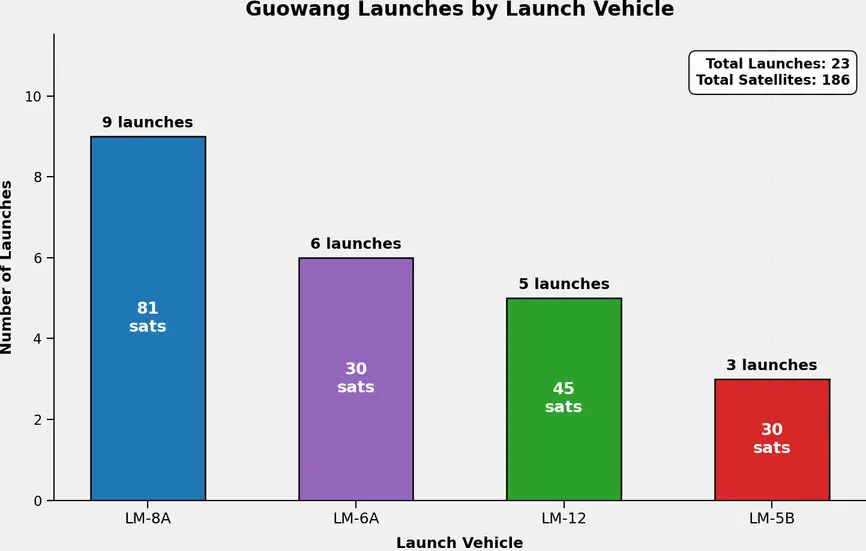
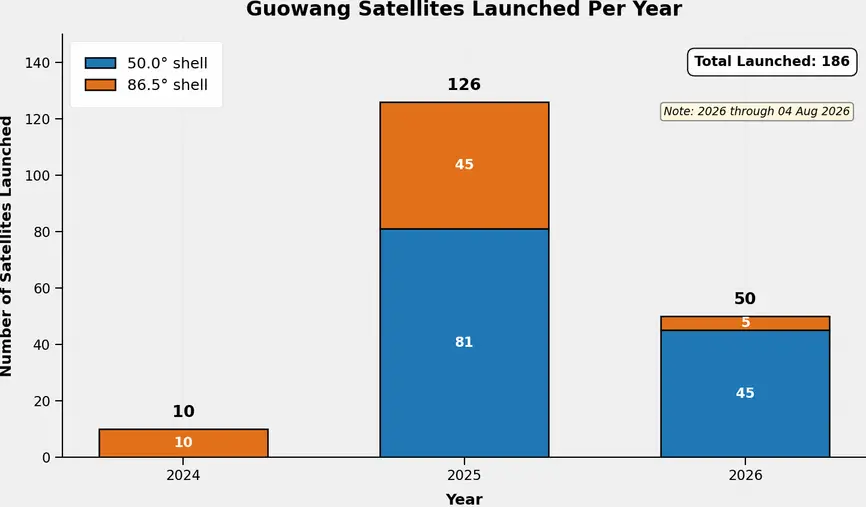
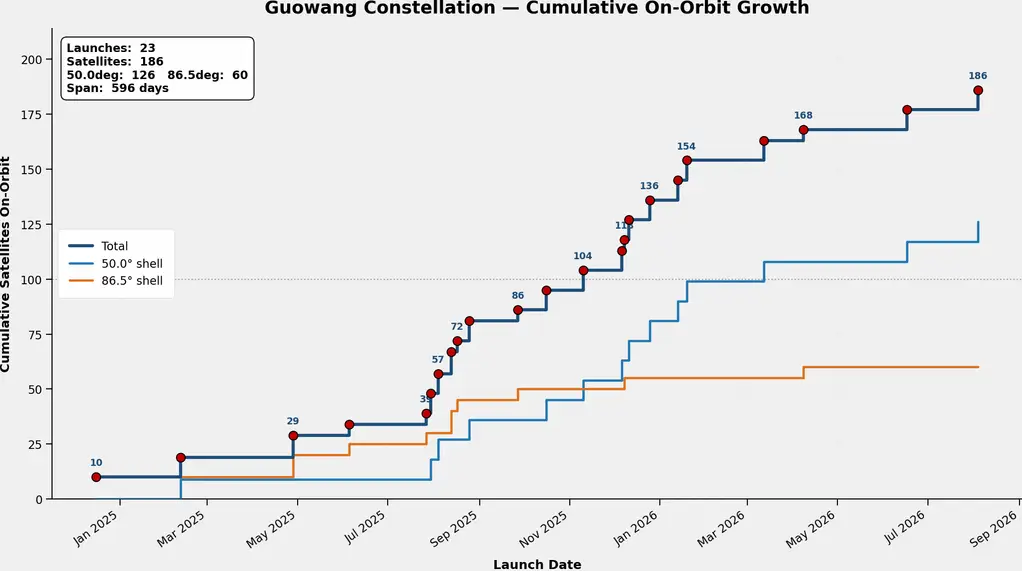
9 Aug 2026: There are now 186 operational Guowang satellites in LEO (there are also 3 GEO satellites associated with Guowang). As of 4 Aug 2026, 21 of 23 Guowang groups have reached their operational altitudes. With a stated goal of reaching 310 satellites on orbit by 2027, China will need to launch 122 satellites in the next 4 months.
Seven Sons: Nanjing University of Science and Technology
by Ron Lerch

Nanjing University of Science and Technology has a faculty of over 2,200 and has over 30,000 full-time students. In terms of outplacement, graduates from NJUST have served as a feeder for China Aerospace Science and Technology (CASC), which serves as China’s main contractor for its space program. In 2019, 92 of its graduates were recruited by CASC. Given their recent activities and research, this number is likely to have gone up significantly. Notably in 2023, NJUST launched their own satellite, the Tianyuan-1. The types of technologies onboard the spacecraft included micro-propulsion and formation flying. This demonstration likely had a direct influence on some of their most recent research efforts.
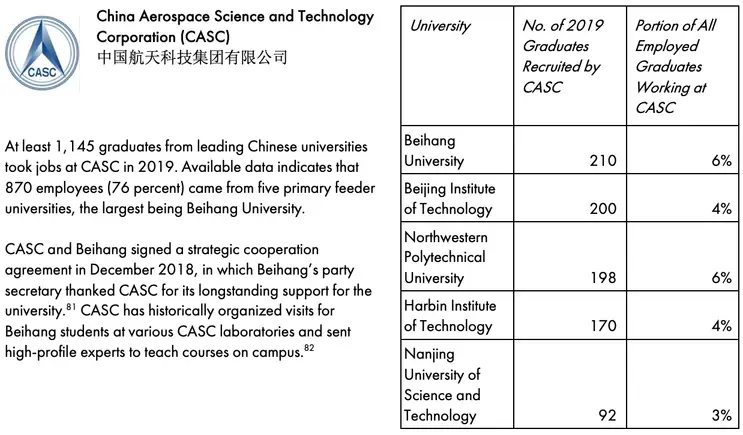
Overview of CASC and Seven Sons Graduates from 2019 (CSET)
For example, in June of 2026 researchers affiliated with NJUST’s School of Automation published their work related to multi-spacecraft, cooperative rendezvous operations. It proposed using satellite clusters sharing data with one another as a team, multi-impulse propulsion, and the use of a “sliding window” algorithm as means for sychronization. The paper even discusses simulations, one of which is based on a scenario in GEO: “A malfunctioning space target drifts under natural orbital motion at a distance of 5 km from the chief satellite. To conduct close-range reconnaissance of the detailed features of the target, the GEO satellite deploys a group of microsatellites. The microsatellite cluster then approaches the drifting target through pulsed-thrust manoeuvres.” Clearly, from the Tianyuan-1 to recent research, NJUST is exploring how to potentially scale cooperative satellite clusters.
NJUST’s research in recent years isn’t just limited to cooperative, formation-flying technologies. In 2024, NJUST published “Multifunctional Metamaterial with Reconfigurable Electromagnetic (EM) Scattering Properties for Advanced Stealth and Adaptive Applications.” As the name implies, the research was geared towards stealth applications for satellites. Eagle-eyed observers may recognize the satellite shape in the graphic below. The paper states, “to verify the effectiveness of the designed metamaterial in reconfiguring EM scatter properties, numerical simulations were based on the external shape of the launched TX-1 satellite.” This shows that the now famous satellite designed by Nanjing University of Aeronautics and Astronautics, serves as an analytic benchmark for other academic institutions conducting research into stealth on-orbit. Ultimately, NJUST’s research concluded that thru their use of metamaterials and bi-stable curved beams, a reduction of over 10 dBsm was achieved at 2.6 GHz. In short, they were able to reduce satellite’s radar cross section….or in other words reduce its ability to be detected by a radar operating at 2.6 GHz.
These are just a few examples of NJUST’s recent activities and ongoing research. Given their progress and potential applications, it’s clear why they serve as one of the Seven Sons. Moreover, awareness of their efforts can potentially help inform what the future holds for the constantly changing space domain.
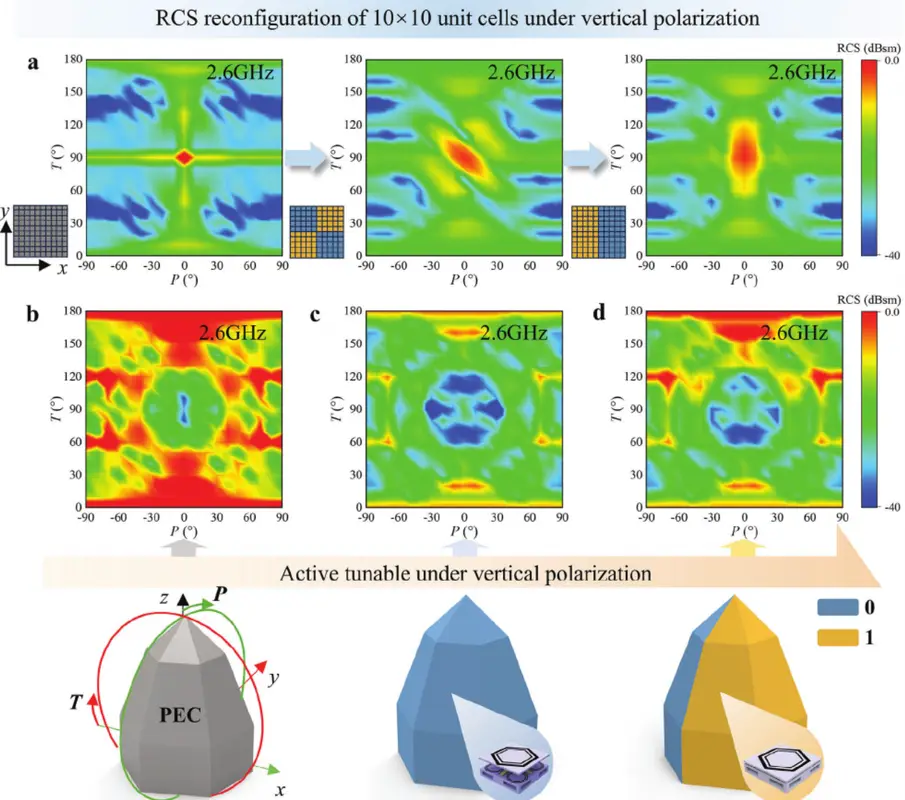
Graphic from NJUST’s Paper Referencing the TX-1 (Researchgate)
Pics o’ the Fortnight!
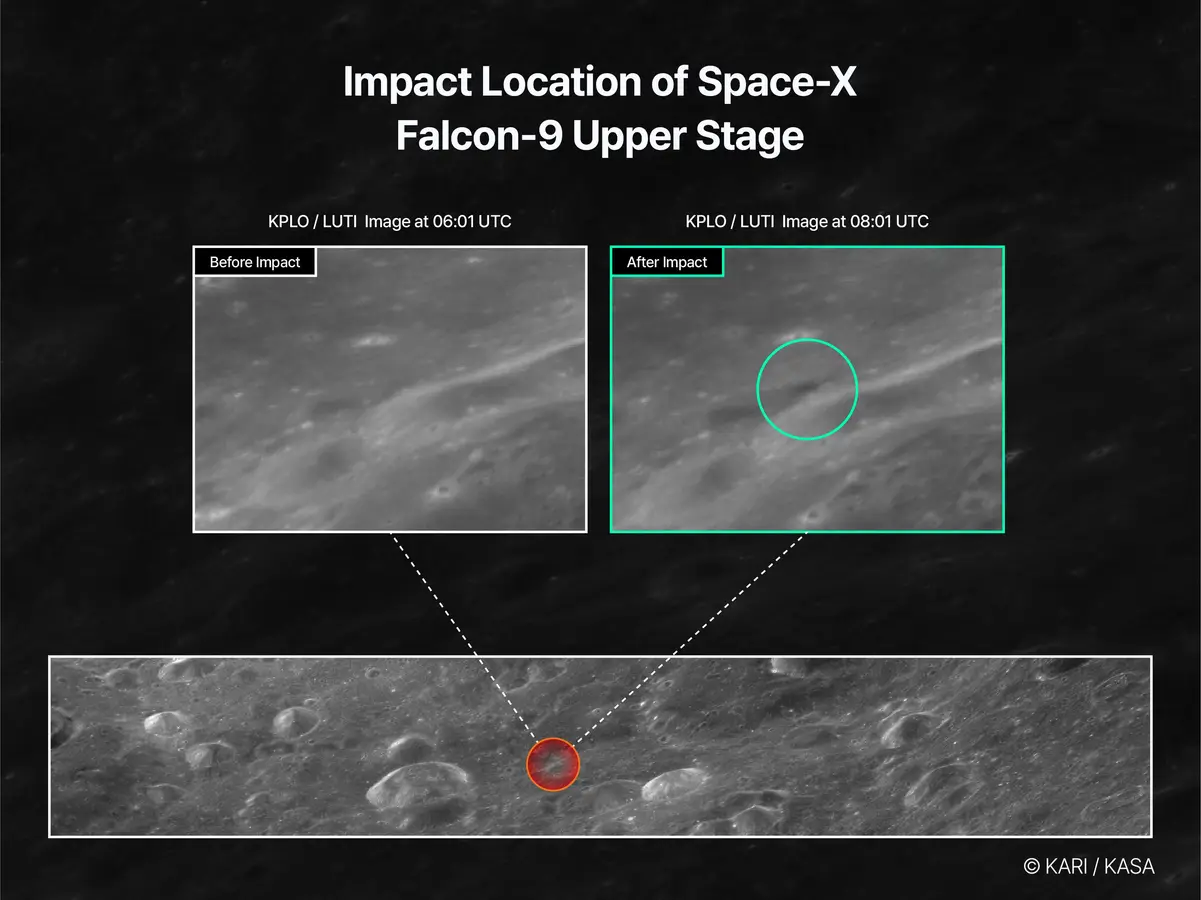
“Danuri Captures Before and After of Falcon 9 Upperstage Collision from Lunar Orbit…Danuri began observations about 30 minutes before the collision and, through orbit control, passed over the impact site multiple times, conducting a total of 8 imaging sessions.” (@kari2030 via X)
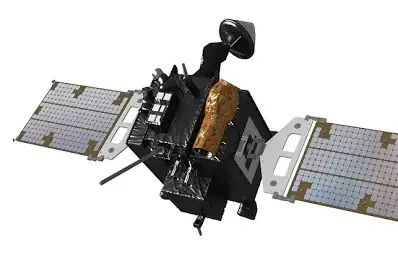
Danuri (Korea Pathfinder Lunar Orbiter) is South Korea’s first lunar mission. Launched on a SpaceX Falcon 9 in August 2022, it successfully entered lunar orbit in December 2022. (planetary.org)
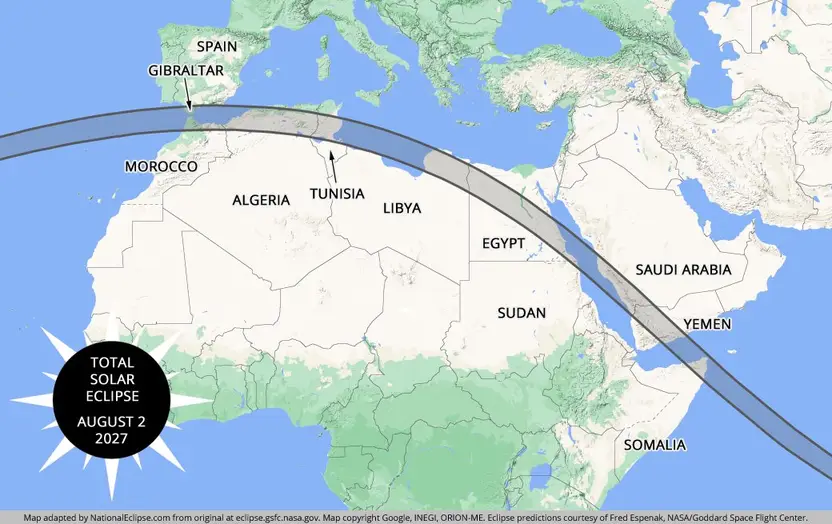
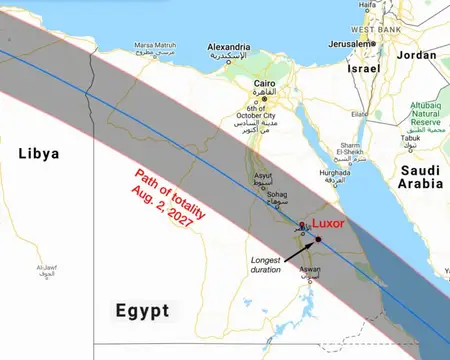
“It’s exactly one year to go until one of the longest total solar eclipses of our lifetime. The maximum duration of totality will be 6 minutes and 23 seconds in Egypt.” (@NationalEclipse via X)