
Analysis of Developments in the Space Domain
A publication of Integrity ISR and ISR University.
On August 15, Ukraine used domestically produced FP-5 Flamingo cruise missiles to strike the Progress Rocket and Space Centre in Samara, one of Russia’s primary rocket and spacecraft development and manufacturing facilities (see video). Progress is responsible for the design and production of launch vehicles and spacecraft supporting both Russia’s civilian and military space programs.
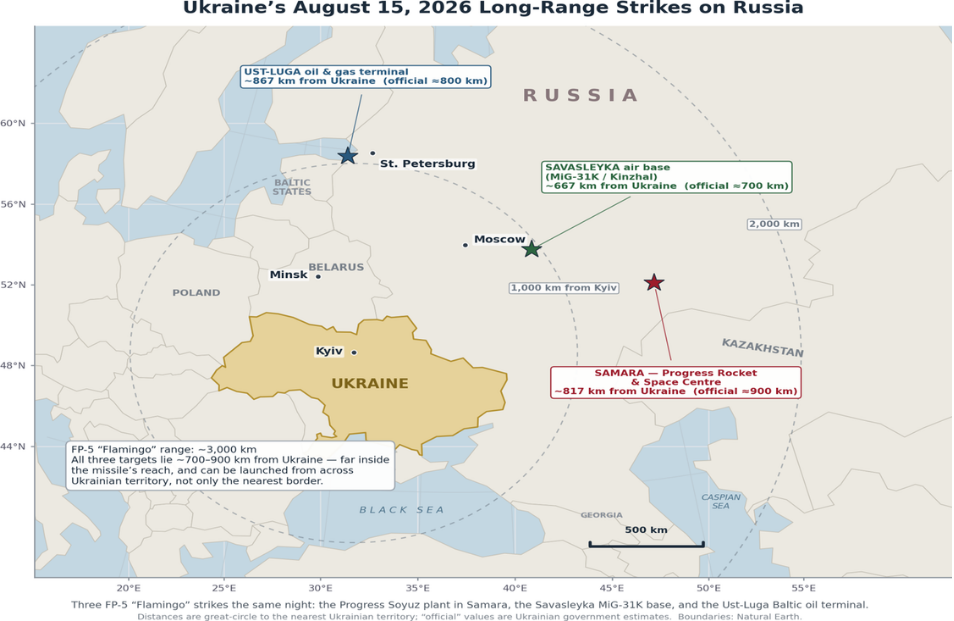
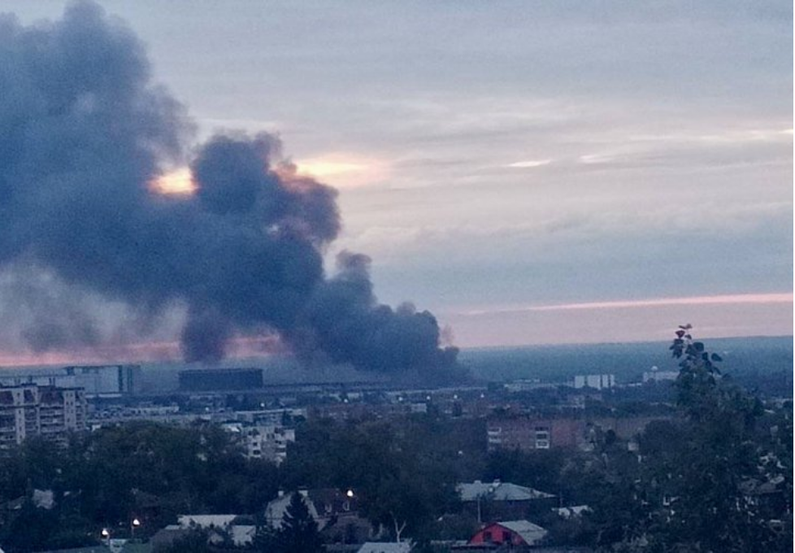
16 Aug 2026: Smoke Rising Over the Progress Facility
(@afec7032 via X)
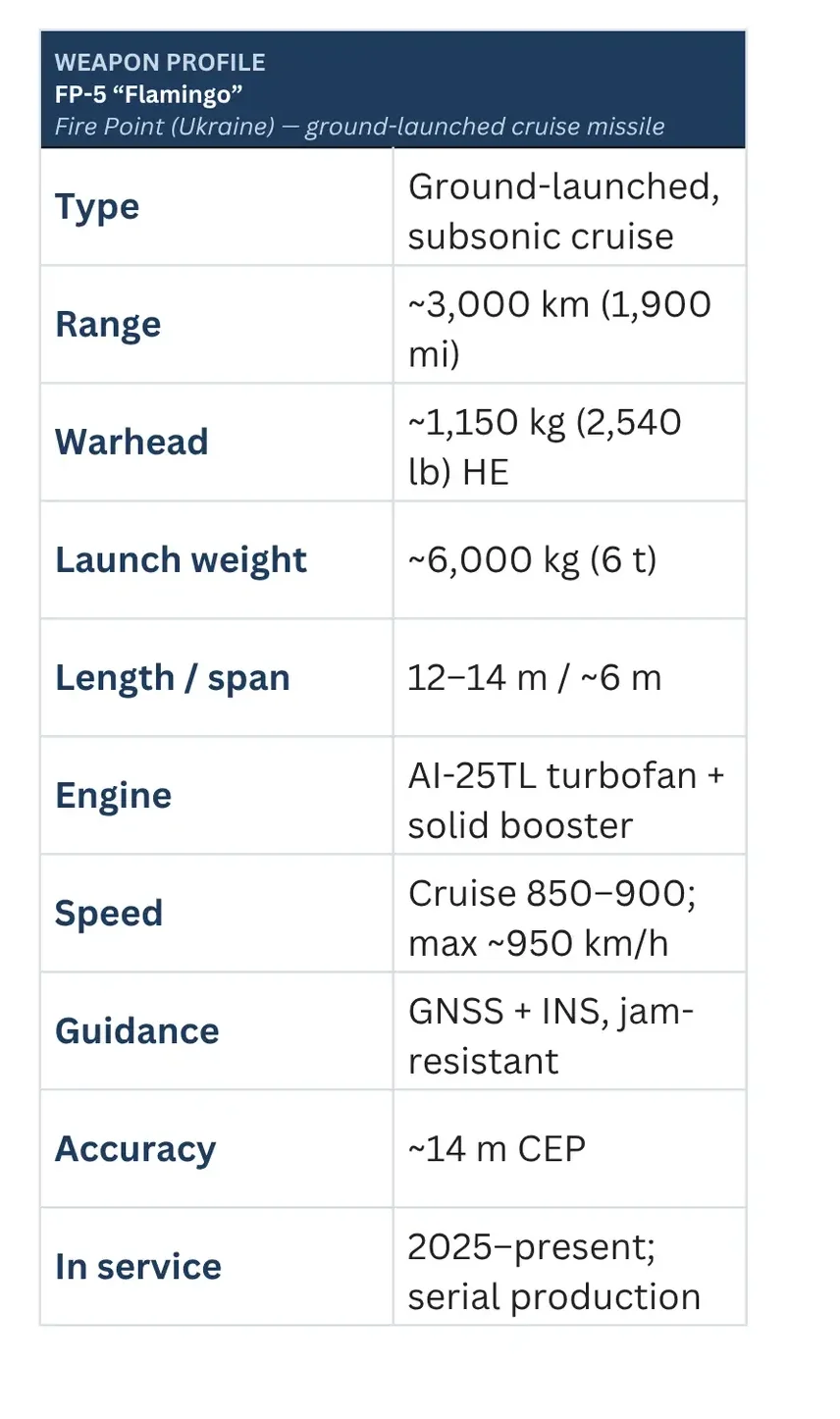
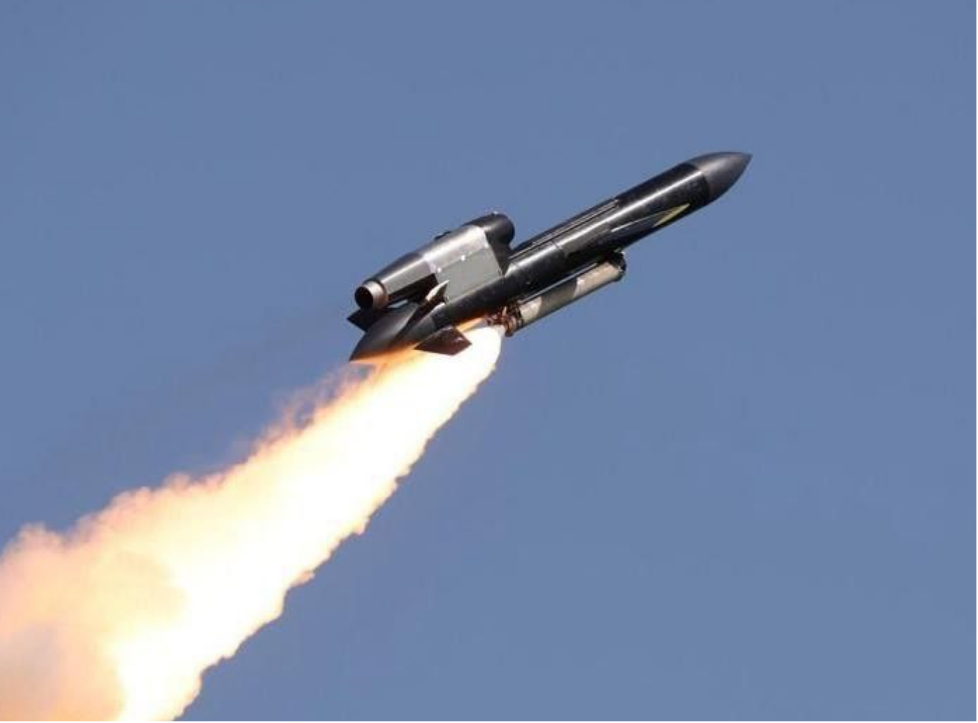
Ukraine’s Flamingo Cruise Missile
Watch Video
Image Source
Among its most important programs is the Soyuz launch vehicle family, which remains the workhorse of the Russian space program (see graph). Soyuz supports missions ranging from crewed and cargo flights to military reconnaissance, communications, and other national security launches. Progress-built Soyuz vehicles are also being used to deploy Rassvet, Russia’s developing proliferated low-Earth orbit communications constellation and intended Starlink alternative.
The importance of Progress lies not only in what it produces, but in how concentrated that production is. The Samara facility is the core manufacturing center for Russia’s active Soyuz launch vehicle family, making it a difficult-to-replace node in the country’s ability to maintain and replenish capabilities in orbit. Unlike a launch pad or individual spacecraft, disruption to a specialized production line can potentially affect multiple missions and programs moving through the same industrial pipeline.
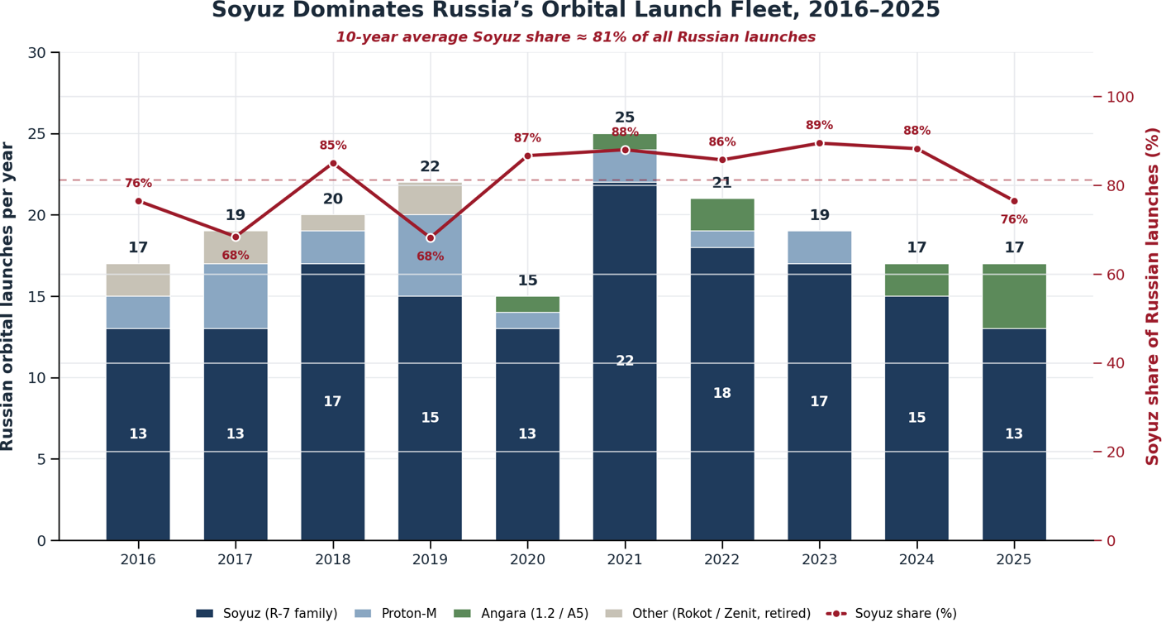
Soyuz Space Launch Vehicles (SLVs) Have Played a Critical Role in Providing Russia Access to Space (graph based on data from Gunther’s Space Page)
So far in 2026, Progress-built Soyuz rockets have supported several Russian military and dual-use launches from Plesetsk. These include multiple classified military satellites on February 5, the first group of Rassvet satellites on March 24, a likely Meridian military communications satellite on April 3, eight military spacecraft on April 17, and a second group of Rassvet satellites on July 19. The launch activity highlights the continued importance of Progress to Russia’s military space program.
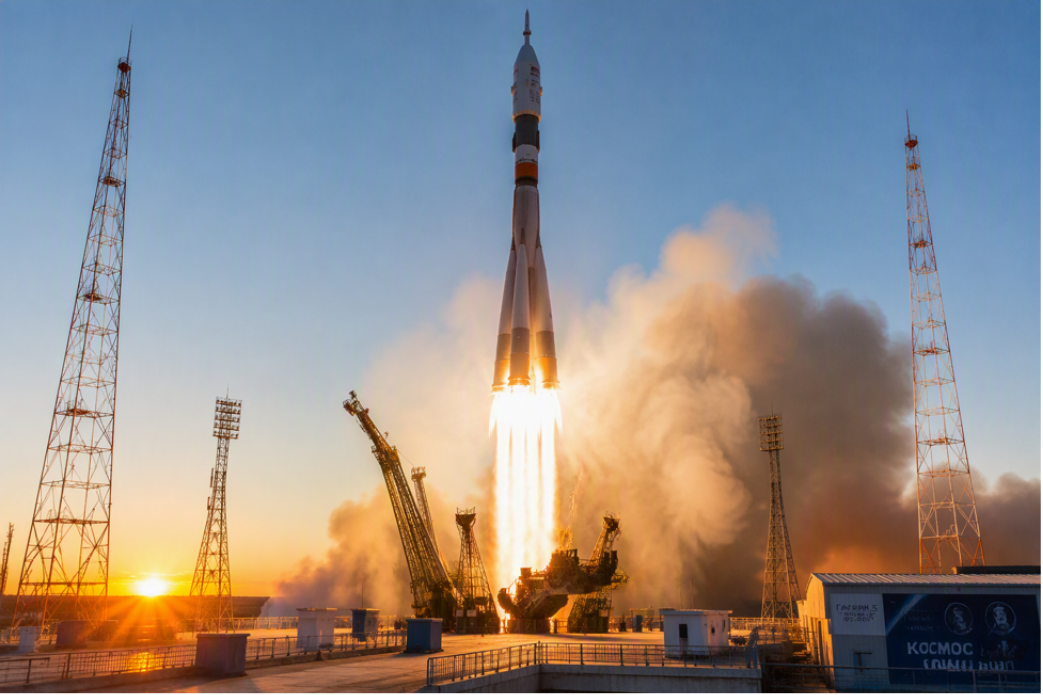
A Progress-built Soyuz lifts off. NASA “Expedition 73 Launch” (NASA/Joel Kowsky)
Just days before the strike on Progress, senior Ukrainian intelligence officials publicly discussed and brainstormed ways to counter Rassvet. Ukraine then struck the facility producing the Soyuz launch vehicles that have been used to put Rassvet satellites into orbit. There is no public evidence that the two events are directly linked, but the timing and choice of target are notable.
Before the strike, Russia planned to rapidly expand Rassvet, reportedly reaching 292 satellites by 2027 (18-20 launches) and 924 by 2035 (58-60 launches). Ukrainian officials have warned that a fully developed system could provide Russia with a Starlink-like communications capability, while Ukrainian presidential adviser Serhii “Flash” Beskrestnov has specifically raised the possibility of Russia using the network to control drones during attacks on Ukraine.
It is not yet clear how Russia planned to meet the launch requirements for Rassvet’s rapid expansion, or whether Soyuz would continue to play the same role as the constellation grew. It is also too early to determine the full extent of the damage at Progress or whether the strike will affect future Soyuz production or Rassvet launches. However, the attack introduces additional uncertainty into Russia’s plans to rapidly field a space capability Ukraine has publicly identified as a growing military threat.
Initial open-source analysis suggests the location of the strike may be significant. Ukrainian OSINT group CyberBoroshno assessed that the attack likely hit Building 106A, an area associated with the installation of onboard electrical equipment, instrumentation, cabling, and control systems on Soyuz launch vehicles. Building 106B, reportedly used for final assembly and integration, sits immediately adjacent. Post-strike imagery revealed 2 impact areas in 106A.
The central location of the targeted area to the overall Progress complex and the rail lines for pre (components) and post (finished products) movement make the targeted area a likely core part of the overall complex. In short, Ukraine likely knew very well what to go after and demonstrated a long-range, precision capability of significant firepower for doing so.
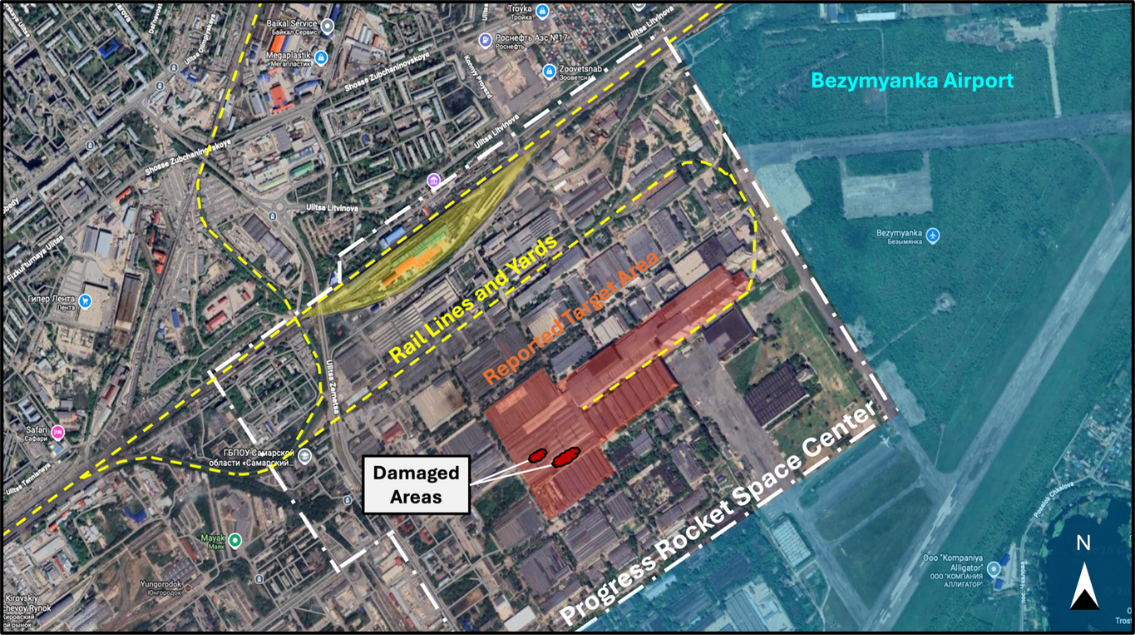
The Progress Rocket Space Center in Samara, Russia builds the iconic Soyuz family of launch vehicles. The facility serves as Russia’s sole serial assembly point for Soyuz-2 rockets; the primary rocket used to support crewed and automated flights, deploy critical military and civilian satellites, and supply low-Earth-orbit networks. As depicted on the graphic above, the area reportedly struck by Ukraine’s new FP-5 Flamingo cruise missiles on 15 August 2026 lies at the heart of the Progress Rocket Space Center.
(Image from Google Maps, Annotations Integrity ISR)
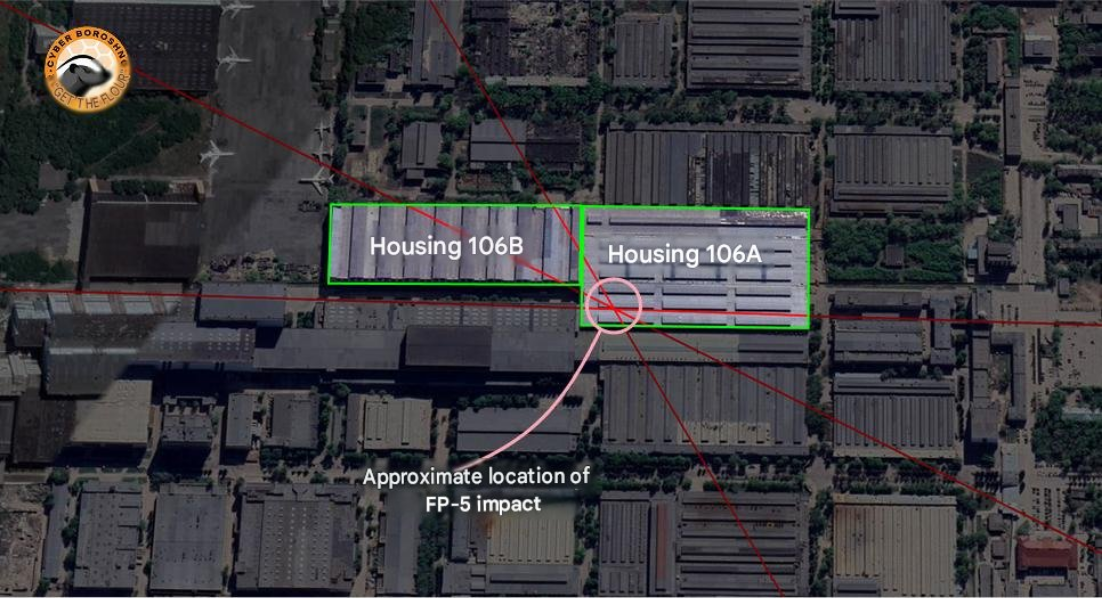
Pre-Strike Image Highlighting Bldgs 106A & B at the Progress Rocket and Space Centre . (@cyber_boroshno via X)
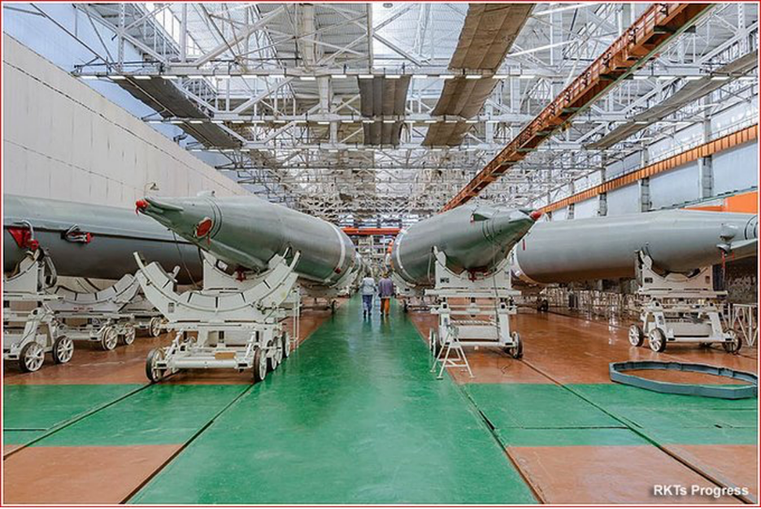
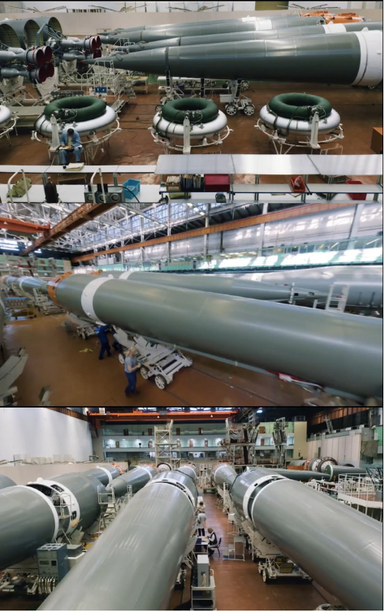
Pre-Strike Images from Inside Progress Rocket Centre
(russiaspaceweb.com & @afec7032 via X)

A close-up of post-strike imagery reveals that the more northern impact point likely caused significant structural damage to the northwest portion of a large, multi-story
building reported to serve as the Soyuz-2 rocket production/assembly area. The other impact area likely caused secondary fires and/or explosions that resulted in severe structural damage destroying a large section of the southeast portion of this large building. Both impact points would have also caused major damage to internal
tooling, system instrumentation, and/or stages of rocket production.
(Image Vantor; Annotations Integrity ISR)
The potential impact goes beyond damage to the building itself. Specialized equipment, tooling,
components, or launch vehicles already moving through production could take longer to replace than
the physical structure. For now, there is not enough publicly available information to determine
whether the strike will affect upcoming Soyuz launches.
Any disruption also comes at a time when projected demand for Soyuz was already expected to
exceed Progress’s annual production capacity. In January 2026, former Progress director Dmitry
Baranov said orders for Soyuz launch vehicles for the 2027–2030 launch campaign were
approximately 30 to 50 percent higher than the facility could produce during that period. Baranov
said meeting those requirements would require Progress to draw down its existing stock of rockets
before replenishing it, which he characterized as normal practice.
Those existing launch vehicles could give Russia some near-term cushion if new production is
disrupted. The precise size and composition of the current Soyuz inventory, particularly the number
available for military launches, cannot be confirmed from public information. An on-time Soyuz
launch in the weeks or months after the strike would therefore not necessarily mean Progress
escaped meaningful damage. Russia could continue launching vehicles completed before the attack
while effects on new production appear later.
That distinction becomes more important if disruption at Progress is prolonged. Russia was already
expecting to use existing stocks while meeting higher demand later in the decade. Continued military
launches, civilian requirements, and plans to rapidly expand Rassvet could place additional pressure
on that inventory. The effects of the strike may therefore show up less as an immediate halt to
launches and more through inventory drawdown, slower replenishment, or changes to future launch
schedules.
The strike against JSC Rocket and Space Centre Progress was also part of a much broader Ukrainian
campaign against Russian military and military-supporting infrastructure. During the same overnight
operation, Ukrainian forces struck Savasleyka Air Base in Nizhny Novgorod Oblast, which hosts MiG-
31K aircraft used to launch Kinzhal missiles against Ukraine. Fires were reported at both Progress
and Savasleyka.
The attacks came amid a wider series of Ukrainian strikes against Russian military, logistics, and
industrial targets. During August 14 and overnight into August 15, Ukrainian forces reported striking
a Strela-10 air-defense system in Kreminna, a drone storage facility in Vuhledar, a logistics and
materiel depot in Lysychansk, and command posts in Selydove and Mykhailivka. Earlier in the week,
Ukraine also struck the Russian naval base at Novorossiysk, reportedly damaging multiple warships.
Ukraine has continued strikes against logistics and energy infrastructure deeper inside Russia as well.
That broader campaign makes it difficult to identify any Russian action as retaliation specifically for
the strike on Progress. Russia has continued its own large-scale missile and drone campaign against
Ukraine, but those attacks are occurring within an already intense exchange of long-range strikes.
Russia’s response may instead be visible in how it protects and operates its space infrastructure.
Additional air defenses around Progress and other space-industrial facilities, tighter operational
security, changes in production activity, or changes to military launch schedules will all be worth
watching.
The extent of the damage at Progress and its impact on future Soyuz launches will likely become clearer over
time. Even a temporary disruption could complicate a production schedule already expected to rely on
existing rocket stocks to meet growing demand. More importantly, Ukraine placed at risk a concentrated
part of the industrial base Russia relies on to maintain existing military space capabilities and field new
ones. Changes in Soyuz inventory, production at Progress, and military launch activity will provide some of
the earliest indications of whether the August 15 strike had effects beyond the immediate damage in
Samara.
Original PDF links:
FP-5 Flamingo cruise missiles
video
Smoke Rising Over (@afec7032
Image Source
Gunther’s Space Page
multiple classified military satellites on February 5
first group of Rassvet satellites on March 24
likely Meridian military communications
eight military spacecraft on April 17
second group of Rassvet
NASA/Joel Kowsky
Ukrainian intelligence officials publicly
OSINT group CyberBoroshno
@cyber_boroshno
16 Aug 2026: It has been ~3 months since we covered the suspicious plane change maneuvers of
Cosmos 2610-14 (68758-59, 67862-64) in late-May 2026. Recall that all 5 satellites changed
their inclination ~0.8° resulting in being nearly co-planar with the US/Finnish satellites ICEYE
X36 (59103). The following is an update on the latest maneuvers of Cosmos 2610-14 and
projected close approaches with ICEYE X36. We do not have any information regarding the
mission or capabilities of the Russian satellites.
Updates
1. Planes remain matched
All five Cosmos and X36 stay clustered at ~97.8° inclination, and with their SMAs being
within 6km of one another their RAAN precesses at similar rates. The planes have naturally
remained aligned for three months.
No new plane‑change (cross‑track) maneuvers were detected on any of the five.
2. New maneuver: Cosmos 2613 raised its altitude
Cosmos 2613 (68763) performed an in‑track SMA raise of ~6 km on ~6 July 2026 (≈543.6 →
549.7 km). As a result 2613 moved from being just below X36 to now being the highest of the
Cosmos satellites and ~5.2 km above X36.
3. All 5 Cosmos satellites are now in higher orbits than X36 but none have equal orbital periods
In June Russia had 3 satellites above & 2 below X36. Now, all five Cosmos are above X36:
2612 +0.6 km, 2610 +2.1 km, 2611 +3.2 km, 2614 +4.4 km, and 2613 +5.2 km .
4. All five of the Cosmos satellites have a slightly different orbital period. As a result their
positions relative to one another are slowly changing (recall 10:1 rule).
4. ICEYE X36 also maneuvered.
From 25-27 June X36 decreased its SMA ~0.6km, its first detectable maneuver since March
2025.
It appears Russia is phasing the the Cosmos satellites throughout the orbit plane. Due to the
SMA differences of all 5 satellites their positions relative to one another are slowly shifting
within the plane. Once Russia achieves the desired formation equalizing the SMA for all 5
satellites would fix their locations relative to one another. We don’t know what the desired final
formation will resemble and the maneuvers may have nothing to do with the ICEYE satellite.
Cosmos 2610
546.2km
Cosmos 2611
547.2km
Cosmos 2614
548.4km
Cosmos 2612
544.6km
Cosmos 2613
549.2km
Aug 2026: Cosmos 2610-14 Continue Adjusting Position Relative to One Another
(saberastro.com)
Aug 2026: Cosmos 2610-14 Remain Co-Planar (Matching Inclination & RAAN) with ICEYE X36
(based on data from Celestrak.org)
16 Aug 2026: Cosmos 2610-14 Are All in Slightly Higher Orbits than ICEYE X36. As a Result X36 Has a Shorter Orbital Period & Will Occassionally Pass the Russian Satellites.
(based on data from Celestrak.org)
Satellite (NORAD)
Incl.
Δ Incl.
RAAN
Δ RAAN
SMA (km)
Δ SMA
Ecc. Δ Ecc.
(°)
(°)
(°)
(°)
(km)
ICEYE X36
97.8443 — 7.386 — 6928.05 — 0.0007273 —
Cosmos 2612
97.8618 0.0168 7.612 0.227 6928.67 0.62 0.001234 0.00051
Cosmos 2610
97.8134 −0.0316 7.084 −0.301 6930.19 2.14 0.0009905 0.00026
Cosmos 2611
97.8193 −0.0257 6.571 −0.815 6931.21 3.16 0.0010603 0.00033
Cosmos 2614
97.7859 −0.0591 6.082 −1.304 6932.46 4.41 0.0006725 −0.00010
Cosmos 2613
97.7882 −0.0568 6.912 −0.473 6933.29 5.24 0.0008233 0.0001
For My “Left-Brained” Friends: Table Showing Inclination/RAAN/SMA/Eccentricity for All 6 Satellites
(based on data from Celestrak.org)
Due to their co-planar orbits and slight altitude differences the X36 will have recurring close
approaches with the Cosmos satellites. For instance on 16 Aug 2026 the distance between X36 and
Cosmos 2611 was ~15.3km, and later that same day X36 was ~8km from Cosmos 2614. There were no
maneuvers associated with the events. At their current altitudes predictable close approaches will
continue at regular intervals.
Cosmos 2611 ICEYE X36
16 Aug 2026 0024Z: ~15.3km Point of Closest Approach (POCA) Between
Cosmos 2611 and ICEYE X36. No Maneuvers Associated with this POCA,
Occurred Naturally as X36 Passed Cosmos 2611.
(saberastro.com)
Cosmos 2614
ICEYE X36
16 Aug 2026 1445Z: ~8km Point of Closest Approach (POCA) Between Cosmos 2614
and ICEYE X36. No Maneuvers Associated with this POCA, Occurred Naturally as
X36 Passed Cosmos 2614.
(saberastro.com)
Original PDF links:
As of July, China has amassed over 1,500 satellites on orbit, a feat they wouldn’t have been able
to accomplish if it weren’t for their continued recognition of the need to have a diverse launch
infrastructure to support its state-owned systems and a blossoming private sector. Before
diving into the key decisions China made to expand its infrastructure, let’s first quickly review
China’s infrastructure for accessing space. The graphic below outlines multiple aspects of
China’s space infrastructure, to include its four inland launch facilities and at-sea launch
locations.
Overview of Chinese Space Infrastructure (DIA)
China’s first operational launch facility was Jiuquan Satellite Launch Center, which became
operational in 1956. Today, Jiuquan continues to be a solid workhorse for both state and
commercial launches. Furthermore, it has dedicated launch infrastructure for commercial
providers, such as CAS Space, Space Pioneer, and LandSpace. It even has a pad dedicated to
solid rockets for government and commercial use. Since the beginning of this year, Jiuquan has
seen 18 launches of the 56 total thru 17 Aug. Notably, it is the only facility in China that
launches/recovers its experimental spaceplane and conducts crewed launches. This year, it has
provided access for spacecraft entering sun synchronous orbit (SSO), crew orbit, and polar
orbits. Compared to other launch sites, Jiuquan has more accessibility to the public due to its
support for Taikonauts and their missions to China’s space station.
Jiuquan Satellite Launch Center
Then came Taiyuan Satellite Launch Center in 1964. This site has conducted 9 launches of the
56 total thru 17 Aug. This year, it has launched notable, government-owned satellites such as
the TJS-27A/B and Yaogan-50-01/02. Taiyuan is more restrictive compared to Jiuquan and
Wenchang due to the lack of dedicated commercial launch pads. All nine launches this year have
been government-owned Long March rockets. Furthermore, it currently has three operational
launch pads. All but one of the launches this year provided satellites access to SSO.
In 1970, Xichang Satellite Launch Center was founded and became operational in 1984. Xichang
does not support high-inclination launches due to its location, and is instead focused on
acessing GEO. This location has supported six launches of the 56 total thru 17 Aug this year.
Some notable satellites launched from here include SJ-31, TJS-24, and the SY-30-03/04. This
facility has two operational launch pads; however, neither of them are dedicated commercial
pads. Xichang joins Taiyuan in terms of restricted access compared to Jiuquan and Wenchang.
Commercial growth near Xichang has been long-rumored. In 2024, it was reported that
Liangshan Prefecture, in which Xichang is located, and Sichuan Development (Holding) Co., Ltd.
held a ceremony for the signing of a strategic cooperation agreement and the unveiling of
Sichuan Development International Commercial Spaceport Co., Ltd. Recently, a 100-page
government brochure was discovered that detailed expansion across four areas: a new launch
platform, a supporting launch vehicle assembly and technical area, hardware testing facilities,
and a tourism center. If all four parts of the expansion receive investment, the total cost is
expected to be around 12.21 billion Yuan, or 1.81 billion USD.
Lastly in terms of inland launch facilties, we have Wenchang Space Launch Site (founded in 2007
with first launch in 2016) and Wenchang Commercial Space Launch site (first launch 2025). Both
sites enabled 17 launches of the 56 total thru 17 Aug this year. Wenchang has served as the
workhorse for fiedling China’s proliferated LEO constellations, Thousand Sails and SatNet.
Other notable satellites placed on-orbit supported via Wenchang include three separate TJS
and a single 3 generation Tianlian data relay to GEO. Wenchang has three operational
launchpads while the commercial section has two operational launchpads.
Overview of Future Launch Pads (3 & 4) at Wenchang Commercial Site
Wenchang joins Jiuquan in terms of accessibility by the public. This is largely due to the
dedicated commercial section. Of note, two additional launchpads are nearing completion at the
commercial section of Wenchang. Once these pads are complete and successfully support a
launch, the entire commercial site is expected to support alone up to 60 launches per year.
China has also conducted six, at-sea launches from Haiyang this year. The first launch from
Haiyang occurred in June 2019. China has leveraged this location to help alleviate it’s launch
bottleneck for both commercial and government providers. Launching from over the ocean
allows access to certain inclinations not always possible from its inland locations as it removes
concerns about launching over populated areas and rockets falling into neighboring countries.
China doesn’t share very much information about investments regarding its launch
infrastructure, let alone its space program. However, there were critical policy milestones that
drove the expansion of infrastructure. In November 2014, China's State Council issued a policy
commonly referred to as "Document 60" (Guofa No. 60). It opened significant portions of the
space sector to non-state capital and private investment. Prior to this, launch vehicles,
satellites, and most space activities were effectively monopolized by large state-owned
organizations such as CASC and CASIC. Over the course of the next decade, additional key
policies & documents that further propelled the prioritization of space included Made in China
2025, 2x Five-Year Plans, and the elevation of military-civil fusion to national strategy. Most
recently, CNSA, which is akin to NASA, released “China National Space Administration Action
Plan to Promote the High-Quality and Safe Development of Commercial Spaceflight (2025-
2027).” Notably, it calls for the establishment of a National Commercial Spaceflight Fund,
regulate and guide the construction of infrastructure such as commercial space launch tests;
collaboratively promote the construction of commercial space launch sites; and promote the
integrated development of state infrastructure and commercial infrastructure. While exact
amounts of investment aren’t often openly stated, the past decade and continuing prioritization
of space suggest its launch infrastructure will only continue to grow.
Launch Totals per Site (above) Launch Totals in 5 Yr Increments (below) (based on data from GCAT <J. McDowell, planet4589.org>)
By Dr. Larissa Beavers
On 18 August 2026, Chinese commercial launch company LandSpace successfully completed the second flight of its ZhuQue-3 Y2 (ZQ-3 Y2) rocket; the vehicle placed the Honghu-03 (100370) satellite into its designated orbit and successfully recovered its first-stage booster using a controlled, propulsive landing on deployable legs. The mission marked the first successful ground-based recovery of an orbital-class booster by a Chinese private company and demonstrated that China’s commercial space sector has advanced beyond experimental vertical-landing tests toward operationally relevant reusable launch. While ZhuQue-3 remains far behind Falcon 9 in flight heritage and demonstrated reuse, Y2 represents an important inflection point because it validates many of the technologies necessary for China to pursue lower-cost, higher-cadence launch and more rapidly deploy or replenish space architectures. Launch Video.
Capability Demonstrated: ZhuQue-3 lifted off from Jiuquan on August 18, 2026, completed its orbital mission, then the first stage performed a propulsive descent and landed upright on the designated pad. A Commercial Reusability: This is the first time a Chinese commercial company has fully succeeded an orbital insertion plus first-stage vertical landing; moving LandSpace into the small group of providers that have demonstrated orbital reusability. Launch Capacity Could Accelerate: If LandSpace achieves its planned rapid turnaround and approximately 20 uses per booster, ZhuQue-3 could increase China's launch capacity without requiring proportional growth in first-stage production. What it Means for the U.S.: ZQ-3 Y2's success narrows the gap in reusable-launch capability with U.S. providers. It introduces new competition, could drive down prices further, and accelerates China’s ability to iterate and field space capabilities at scale. Strategic Takeaway: China now has both state and commercial pathways to reusable launch. The key metric going forward is not just landing success, but how quickly LandSpace can demonstrate reflight, turnaround time, and reliability.
ZQ-3 Y2 Ready for Launch (above) 1 Stage on landing pad after successful
touchdown
(nasaspaceflight.com)
Honghu-03 463km SMA
21 Aug 2026: The ZQ-3 Successfully Placed the Honghu-03 Satellite into a 523.5 x 402.6km
orbit with an Inclination of 55°. Watch Video of Solar Panel Deployment.
(saberastro.com & @CNSpaceflight via X)
ZQ-3 Y2 Flight Plan (nasaspaceflight.com)
Landspace Deployed Firefighting Robots Shortly after 1 Stage Landing st (nasaspaceflight.com)
In spite of the firefighting robots ZQ-3 Y2 had leftover propellant caught
fire. The blaze weakened the vehicle's support, causing the booster to
eventually topple over and collapse.
(@CNSpaceflight via X)
Reusable launch is becoming a measure of space competitiveness. Ars Technica author Eric Berger reports that new research demonstrates how significantly Falcon 9, reusability, and high launch cadence have reshaped global launch economics. Additionally, recent research published in Economic Letters indicates that the United States accounted for more than 82 percent of global payload mass in 2024, while researchers estimate its average launch cost at $3,225 per kilogram, compared with $5,809 per kilogram in China and $9,897 per kilogram in Europe (see graphics below). Reuse, larger launch vehicles, and frequent launches have therefore created more than a technical advantage for the United States—they have produced an economic and strategic advantage in access to space.
Comparative Average Price/Kg to Low Earth Orbit
(sciencedirect.com)
Nearly 10 Years from its 1 Reusable Flight in 2017 the Impact of the Falcon 9 Is Undeniable. st
(sciencedirect.com)
China is now attempting to narrow that advantage. LandSpace’s successful 18 August 2026 ZhuQue-3 Y2 orbital mission and propulsive first-stage landing demonstrate a reusable architecture similar to the model that helped drive Falcon 9’s cost and cadence advantages. The landing itself does not establish parity; the key indicator is whether LandSpace can turn recovery into routine reflight. If ZQ-3 achieves rapid turnaround, repeated booster reuse, and higher launch cadence, China could reduce its launch-cost disadvantage while increasing its ability to rapidly deploy and replenish large satellite constellations—making ZQ-3 an important component of China’s broader competition with the United States in space.
9-10 Aug 2026: Shiyan (SY) 12-01 (50321) decreased its average altitude 62km to reverse its
westward drift. China conducted the maneuver as SY 12-01 approached Tianlian (TL) 1-05 at
16.7°E. This is the 7 turn-around SY 12-01 has conducted since its launch in December 2021.
As we’re nearing the 5 year anniversary for China’s GEO inspectors I thought it would be helpful
to do a pattern of life analysis on the SY 12 twins (SY 12-02 is 50322) and their SJ-23 (55131)
counterpart.
First Patrol 2022-23: SY 12-01 and 12-02 Begin Neighborhood Watch
The Shiyan-12 pair reached GEO in early 2022 and immediately drew a crowd. When the U.S.
inspector USA 270 (41744) maneuvered in for a closer look, the two Chinese satellites split and
departed in opposite directions—SY-12 02 tucking itself between the Sun and USA 270, a classic
counter-surveillance geometry that backlights the observer (watch COMPSOC video). After that
notable encounter SY 12 01/02 went their separate ways in Feb 2022 and have consistently
maintained the patrol area between ~17°E to ~178°E.
For their first two years of operations SY 12-01/02 patrolled in antiphase (or out of phase by
180°…two satellites moving through the same cycle at the same rate but offset by exactly half a
cycle). With only two effective GEO-patrol satellites China had one satellite heading east toward
the ~178°E eastern limit while the other headed west for the ~17°E limit.
SJ-23 Arrives 2023-Present
SJ-23 launched one year later (Jan 2023) and after spending a couple of weeks in
Geosynchronous Transfer Orbit circularized to GEO and moved straight into an GEO patrolling
campaign, most prominently against China’s own Tianlian data-relay satellites: a <4 km approach
on Tianlian-1 03 (Mar 2023), and an ~30–83 km pass of Tianlian-2 02 (Oct–Dec 2023).
Simultaneously China conducted what appear to be phasing maneuvers with SJ-23. The result
was integration with the SY 12 pair and the creation of a 3-satellite formation with each satellite
phased ~120° apart. This pattern solidified in early-2024 and continues to the present day with
one of the satellites turning at their limits every ~81 days. SY-12 01’s 10 Aug 2026 turnaround
fits the rhythm exactly. (see graph)
Mid-August 2026: Position & Drift Rates for China’s GEO Inspectors
(based on data from Celestrak.org)
2022-2026: Evolution of Chinese GEO Inspection
(based on data from Celestrak.org)
Energy Efficient & Similarly Inclined
Notably China has NOT conducted fuel expensive North/South stationkeeping maneuvers with
any of its GEO inspector satellites. China launched SY 12 01/02 into an inclination biased orbit
in which the sun/moon gravity reduced the inclination for both satellites from 0.5° to near 0.1°
before beginning a gradual increase which continues through today (and will continue for the
next couple of decades barring any inclination maintenance maneuvers). At the time of SJ-23's
launch the SY 12 01/02 satellites had returned to their original 0.5° inclination. Interestingly SJ-
23's initial inclination was also 0.5°. As with SY 12 01/02, SJ-23's inclination is now naturally
increasing. The three satellites are essentially plane matched. (see graph)
Radial Diagram Showing Orbital Plane Precession About Laplacian Pole
Note SY 12-01/02 & SJ-23 Are Nearly Plane Matched
(based on data from Celestrak.org)
While none of the three satellites have maintained their inclination, all have conducted significant
East/West maneuvers. As you all know East/West “stationkeeping” are in-track maneuvers to
change the satellite’s SMA and require far less energy in comparison with North/South cross-track
maneuvers. We covered this a while back…in GEO it takes about .04 m/sec to change SMA ~1km
while you would need ~54 m/sec to change inclination a 1°. In limiting their GEO inspectors to in-
track maneuvers China has flown very energy efficient profiles. The one possible exception is SJ-
23's frequent in-track maneuvers in 2023 when it ran through its testing and conducted staging
maneuvers to join the SY 12 01/02 formation. (see graphs below)
SY 12-01/02 & SJ-23 Maneuver Summary & Energy Estimate
(based on data from Celestrak.org)
Energy Consumption Comparison with US GSSAP:
Open source reporting has compared the SY 12 pair with the US GSSAP inspector satellites. For fun
& sport I compared the orbital history of SY 12-01/02 & SJ-23 with three US GSSAP satellites, USA
270 (41744), USA 271 (41745) and USA 324 (51280).
The comparisons below show each GSSAP satellite has used more energy (delta-V) than all three of
the Chinese inspectors combined. The difference is likely even greater than I show here due to a
paucity of orbital data for the US satellites. For example, on average there are 60+
observations/month of the Chinese satellites, while the orbits for USA 270/271 are updated 4
times/month and only 3 times/month for USA 324. We’re also missing the first 3 years of orbital data
for USA 270/271.
USA 270/271 (launched August 2016)…no orbital data available before Sep 2019:
USA 270: has used more delta-V (96 m/sec) than all 3 Chinese inspectors combined (81 m/sec)
2020–2021: 3 inclination reductions drove inclination down to ~0.02° (~49 m/s of N-S control)
2022 onward: it released inclination to free-drift — climbing steadily to ~4.3° today, exactly
like the Chinese trio's uncontrolled climb
USA 271: has used more delta-V (127 m/sec) than all 3 Chinese inspectors combined (81m/sec).
This difference is primarily due to 3 inclination reductions:
Sep–Oct 2021: inc 1.17°→0.56° (~33 m/s)
Oct–Nov 2021: inc 0.56°→0.02° (~31 m/s)
Jan 2023: a small reset 1.11°→0.98° (~7 m/s)
USA 324 (launched April 2022): has used 192 m/sec during its first 4.5 years on orbit.
USA 324 has maneuvered 9 times to maintain inclination below ~1.9° for four years.
Bottom Line: US space operators conducted cross-track maneuvers to maintain inclination during the first
5 years of operating USA 270/271. The pattern seems to be holding with USA 324 as it has been on orbit
for nearly 4.5 years and maintained its inclination throughout; China has not followed suit.
What’s Next
I suspect all three of the Chinese the satellites have 2-3 productive years remaining. The main
limitation will not be fuel but rather GEO-style “orbital decay”. Barring any cross-track maneuvers,
inclination growth will ultimately make imaging operations more challenging (see graph). Distance
and differential velocity between the inspectors and targets will increase making high-resolution
imagery collection more challenging if not impossible. No doubt China has learned a great deal from
operating the Shiyan (experiment) and Shijian (practice) satellites and will incorporate into future
variants.
16 Aug 2026: China launched a Long March-12 with the 24th group of Guowang (China SatNet
LEO) satellites from Wenchang. According to official sources, the 9 satellites (100356-100364)
entered the preset orbit successfully. As with other Wenchang launches, China placed the
satellites into an 50.0° inclined orbit. China launched Group 24 into an orbit only 12.4° west of
Group 12. The LM-12 delivered its payload into 920km orbits, the satellites will slowly increase
their altitudes to reach the desired 1,149km. Watch Group 24 Launch Video.
Unfortunately China is continuing its irresponsible launch protocol of depositing the upperstage
rocket bodies in orbits which will take centuries (or longer) to decay and re-enter the Earth’s
atmosphere. For this launch the LM-12 rocket body (100365) is in a 909x793km orbit…it will
remain in orbit for the next 200-400 years.
UPDATE: The Group 22 satellites (launched 17 Jun 2026) are nearing their operational altitude
of 1,149km. All continue to increase their average altitudes; 23 Aug 2026 all were above
1,100km. As time has passed their RAAN offset with Group 2 has vanished due to the J2 effect
and Group 22 now has a <1° East RAAN offset with Group 2. Group 23 satellites are deploying
within their orbital plane and have SMAs 1,110-1,136km. Group 23 has a <1° East RAAN offset
with Group 10. China appears to be following a deployment pattern of moving from West to
East, if this pattern holds Group 25 will be joining Group 14.
CONSTELLATION OVERVIEW: There are now 195 operational Guowang satellites in LEO (there
are also 3 GEO satellites associated with Guowang). As of 23 Aug 2026, 21 of 24 Guowang
groups have reached their operational altitudes. With a stated goal of reaching 310 satellites on
orbit by 2027, China will need to launch 115 satellites in the next 4 months.
Group 12 Group 12
12.4° 12.4°
Group 24 Group 24
Group 10 Group 10
Group 23 Group 23
Group 2 Group 2
Group 22 Group 22
Group 24 Launched into 920km orbit. Group 24 will increase altitude over next 2 months allowing RAAN
precession differences to result in co-planar orbit with Group 12.
Note Groups 22 & 23 Are Now Co-Planar with
Groups 2 & 10 Respectively.
(saberastro.com)
Gp2
Gp22
Gp6
Gp10
Gp23
Gp24
Gp13
Gp12
Gp7
Gp14
NEXT??
Gp19
Gp17
Gp16
Gp18
Gp20
If China Continues to Follow the Pattern Established By Groups 22-24
the Next 50° Guowang Launch will be to Augment Group 14.
(saberastro.com)
Constellation Overview Graphics: The Following Graphics are based on data from Celestrak.org.
The Moon’s Famous Shackleton Crater. This image is a mosaic and combines images from NASA’s Lunar Reconnaissance Orbiter and the ShadowCam instrument on South Korea’s Danuri orbiter (NASA/KARI/ASU).
Starship Nearing Christmas Island. (@schweitzer_wil via X)
Northrop Grumman’s Mission Extension Vehicle 1 Has Successfully Undocked from Optus D3. (@NGCNews via X)
We use cookies to personalize content, provide social media features, and analyze our traffic. We also share information about your use of our site with our analytics partners. You can change your preferences at any time. For more information, please see our Privacy Policy and Cookie Policy. Privacy Policy
You must be logged in to post a comment.